Plumbing business marketing helps service companies attract local customers, turn inquiries into booked jobs, and encourage repeat business. A practical strategy connects local search visibility, targeted advertising, a useful website, and consistent customer communication.
The goal is not simply to generate more calls. It is to attract work your team can serve profitably and give each qualified inquiry a clear path to booking.
This guide covers seven plumbing marketing strategies, how to prioritize them, and which metrics reveal whether your spending produces completed jobs.
Key Takeaways
- Match your marketing to the services, locations, and working hours your team can support.
- Build local visibility with accurate business information and useful service pages.
- Evaluate advertising by qualified leads and completed jobs, not clicks alone.
- Request honest reviews consistently and keep referral rewards separate from review requests.
- Connect lead sources with booking outcomes, job revenue, and follow-up activity.
In This Article
- What Is Plumbing Business Marketing?
- Strengthen Your Google Business Profile and Local SEO
- Run Targeted Paid Advertising
- Turn Your Website into a Booking Tool
- Build Trust Through Reviews and Referrals
- Publish Helpful Content and Build Local Relationships
- Follow Up and Encourage Repeat Business
- Measure Marketing Through to Completed Jobs
- How to Prioritize Your Plumbing Marketing Plan
What Is Plumbing Business Marketing?
Plumbing business marketing includes the activities that help customers discover, evaluate, and contact a plumbing company.
It serves different types of demand. Someone with a burst pipe needs an available provider quickly. A homeowner considering a water heater replacement may compare options, reviews, and estimates before booking.
Your marketing should reflect those differences.
| Customer Need | What the Customer Wants | Marketing Priority |
|---|---|---|
| Urgent repair | Availability, service coverage, and a fast response | Local visibility and a clear phone contact |
| Planned installation | Relevant experience, options, and an estimate | Detailed service pages and project examples |
| Routine maintenance | Convenience and a reliable provider | Reminders and straightforward scheduling |
| Commercial service | Scope, responsiveness, and ongoing support | Relevant experience and a clear inquiry process |
Before choosing channels, define which services you want to grow, where you can deliver them, and how much additional work your team can handle.
1. Strengthen Your Google Business Profile and Local SEO
Your Google Business Profile helps customers find business information in Google Search and Maps.
Start with accurate details: business name, phone number, website, category, service coverage, and operating hours. Make sure emergency availability reflects the service you actually provide.
Google explains that local ranking depends mainly on relevance, distance, and prominence. A complete profile helps Google understand the business, but it does not guarantee a particular position.
Keep Business Information Consistent
Use the same business identity and contact details across your website and relevant directories. Review old listings for incorrect phone numbers, outdated hours, or services you no longer offer.
Add authentic photos of your team and completed work where you have permission to use them.
Create Useful Service and Location Pages
Give important services their own pages rather than placing every offering on one generic page.
For example:
- Drain cleaning.
- Leak detection and repair.
- Water heater installation.
- Emergency plumbing.
- Commercial plumbing maintenance.
Each page should explain the problem, your service scope, the areas covered, and how to request help.
Create location pages only where you can provide useful, distinct information. Replacing a city name across otherwise identical pages gives visitors little reason to choose your business.
2. Run Targeted Paid Advertising
Paid advertising can help you reach customers searching for specific plumbing services. Results depend on targeting, competition, landing pages, and how effectively your team handles inquiries.
Start with a narrow campaign around a service and area your team can support.
Separate Different Types of Demand
Emergency repairs and planned installations need different messages.
An emergency campaign should make availability and contact options clear. An installation campaign should explain the service and provide a straightforward estimate request.
Send visitors to the relevant service page rather than a homepage that requires them to search again.
Control Where Your Budget Goes
Review search terms, locations, and lead outcomes regularly.
Exclude irrelevant searches, such as employment or training queries, when they do not match your campaign goals. Schedule campaigns around the times your team can handle inquiries and fulfill the advertised service.
Before expanding spending, confirm that leads are:
- Within your service area.
- Requesting work you perform.
- Reachable by your booking team.
- Converting into suitable jobs.
Clicks alone cannot establish whether a campaign is working.
3. Turn Your Website into a Booking Tool
A plumbing website should help visitors answer three questions quickly:
Do you handle this problem? Do you serve my area? How can I contact you?
Make those answers easy to find on mobile devices.
Make the Next Step Clear
Use visible phone contact details, concise inquiry forms, and clear calls to action.
Ask for information that helps the team respond: service location, problem type, urgency, and contact details. Avoid lengthy forms that request information you do not need at the first contact.
If visitors can request an appointment online, explain whether they are requesting a time or receiving a confirmed booking.
Show Relevant Evidence
Use real project photos, accurate credentials, and customer testimonials with permission.
Explain what customers can expect when they contact you, including the booking process and any applicable call-out or diagnostic charges.
Avoid promises such as guaranteed arrival times or round-the-clock service unless the business can consistently fulfill them.
Test the Full Inquiry Process
Check more than the appearance of the page.
Submit a test inquiry, confirm who receives it, and verify that someone follows up. Test phone links, form delivery, and booking notifications on mobile.
A functioning contact form has little value if the inquiry does not reach the person responsible for responding.
4. Build Trust Through Reviews and Referrals
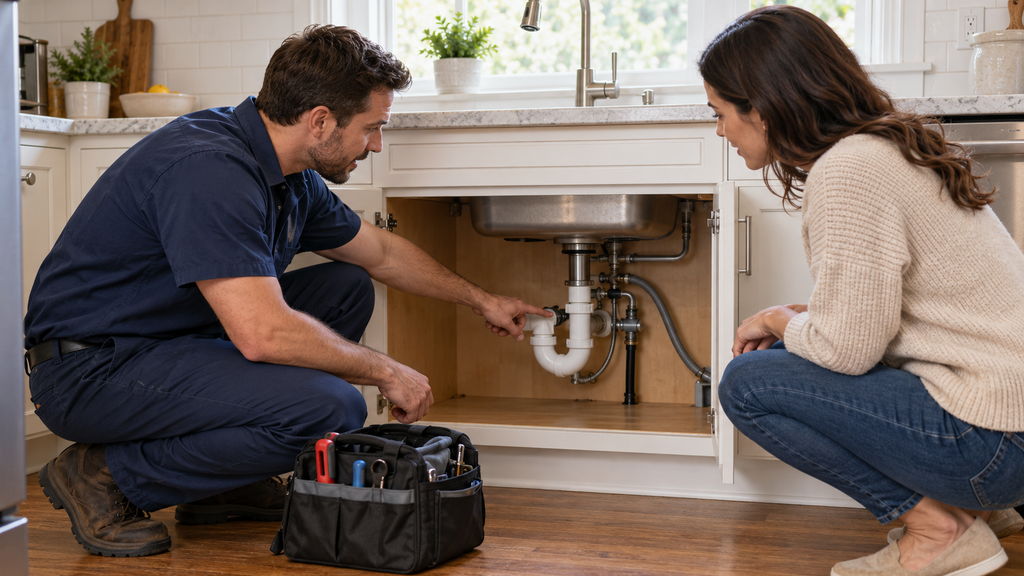
Customers need confidence that a plumber will communicate clearly, respect their property, and explain the work performed. Reviews, referrals, and professional service help make that experience visible.
Ask for Honest Reviews
Create a consistent process for inviting customers to share feedback after a completed job.
Use a direct review link and a brief request. Ask for an honest account of the experience rather than a specific rating.
Google’s guidance on getting more reviews allows businesses to request feedback but prohibits incentives in exchange for reviews.
Respond professionally and avoid sharing private customer or job details in public replies.
Keep Referral Programs Separate
A referral program rewards an introduction that leads to new business. It should not depend on posting a positive review.
If you offer referral credits, define when the reward applies, which services qualify, and how the referral is recorded.
Track whether referred customers become completed jobs so the program can be evaluated alongside other acquisition channels.
Make the Service Experience Worth Recommending
Explain the repair, summarize the work completed, and clarify any next steps before leaving.
Consistent communication gives customers a concrete reason to recommend your company. Marketing can highlight that experience, but the service team must deliver it.
5. Publish Helpful Content and Build Local Relationships
Useful content helps potential customers understand a problem and decide when to contact a professional.
Choose topics connected to the services you want to book.
Examples include:
- Signs that a recurring drain blockage needs professional assessment.
- What to expect during a water heater replacement visit.
- Information to have ready when requesting an estimate.
- How your team investigates a suspected leak.
- The difference between requesting urgent help and scheduling routine service.
Keep explanations practical and connect them to the appropriate service page.
Use Social Media to Show Your Work
Share project examples, service explanations, and answers to common customer questions.
Get permission before publishing customer properties or identifiable details. Explain what the work involved rather than posting a photo without context.
For example, a short project post could describe the reported issue, the repair completed, and how the customer was informed.
Develop Relevant Local Partnerships
Build relationships with property managers, real estate professionals, and complementary service businesses.
Clarify service coverage, contact procedures, and the types of work you accept. A useful partnership needs a reliable handoff process, not simply an exchange of contact details.
Track partner referrals separately to understand which relationships generate suitable work.
6. Follow Up and Encourage Repeat Business
Follow-up communication should serve a clear customer need.
After a completed job, confirm that the issue has been resolved and provide an easy way to raise questions. For an outstanding estimate, offer a helpful opportunity to discuss the proposed work.
Match Messages to the Job
Avoid sending the same promotion to every customer.
A customer who requested an installation estimate needs different communication from someone whose emergency repair is complete.
Useful follow-up categories include:
- Post-service checks.
- Unanswered estimate follow-ups.
- Appointment confirmations.
- Relevant maintenance reminders.
- Updates about an agreed next step.
Base maintenance reminders on the equipment, service history, and relevant guidance rather than assuming every customer needs the same schedule.
Assign Ownership
Each follow-up should have a responsible person and a visible status.
Record whether the customer responded, booked, declined, or requested contact later. Stop messages that no longer apply once the job is booked or the issue is resolved.
Consistent follow-up depends on accurate records and clear responsibility.
7. Measure Marketing Through to Completed Jobs
Website visits and calls show activity. Booking and job outcomes show whether that activity contributes to the business.
Connect each inquiry with its source, requested service, qualification status, and final outcome.
Define a Qualified Lead
For a plumbing business, a qualified lead might be a genuine service inquiry within the operating area for work the company performs.
Document the definition before comparing channels. Otherwise, one campaign may count every call while another counts only suitable requests.
Track These Core Metrics
| Metric | Calculation or Definition | What It Helps You Assess |
|---|---|---|
| Cost per qualified lead | Campaign cost ÷ qualified leads | Cost of generating suitable inquiries |
| Lead-to-booking rate | Booked jobs ÷ qualified leads × 100 | How effectively suitable inquiries become bookings |
| Booking completion rate | Completed jobs ÷ booked jobs × 100 | How much scheduled work reaches completion |
| New-customer acquisition cost | Defined acquisition costs ÷ new customers acquired | Cost of winning new customers |
| Average completed job revenue | Revenue from completed jobs ÷ completed jobs | Revenue associated with the work generated |
| Lead response time | Time from inquiry receipt to first response | Where contact delays occur |
Use consistent reporting periods and cost definitions. Allow enough time for inquiries to become completed jobs before judging a campaign.
Review Lost Opportunities
Record why suitable inquiries did not book.
Common categories might include unavailable appointment times, no response from the customer, estimate declined, or a missed initial contact.
These reasons help separate a marketing problem from a booking or capacity problem.
For example, increasing advertising spend will not resolve a pattern of unanswered calls.
Consider Profitability and Attribution
High job revenue does not necessarily mean high profit. Review the labor, materials, travel, and other costs associated with the work generated.
Customers may also encounter several channels before booking. A referral, a Google search, and a website visit can all contribute to one job.
Use tracking data alongside customer-reported sources, and avoid treating attribution as a perfect account of every decision.
How to Prioritize Your Plumbing Marketing Plan
Start with the weakest part of the path from discovery to completed work.
| Current Problem | First Priority |
|---|---|
| Customers cannot find accurate business information | Correct your profile, contact details, and service pages |
| Website visitors rarely contact you | Improve mobile usability and contact options |
| Advertising generates unsuitable inquiries | Refine services, locations, search terms, and messaging |
| Suitable leads fail to book | Review response times, availability, and estimate follow-up |
| Customers rarely return | Improve service records and relevant follow-up |
| Channels generate activity but results are unclear | Connect lead sources with completed jobs and costs |
Choose a specific change, record a baseline, and review the outcome before expanding.
For example, a company receiving enough inquiries but missing calls should improve inquiry handling before paying for more traffic. A company with spare capacity and a reliable booking process may be ready to test a focused acquisition campaign.
Conclusion: Build a Connected Plumbing Marketing System
Effective plumbing business marketing connects visibility, trust, booking, and service delivery.
Build an accurate local presence, give visitors useful service information, and make contacting your team straightforward. Then track what happens after the inquiry: response, booking, completion, and repeat business.
Prioritize the stage that currently limits growth. A connected process makes it easier to understand what is working and where the next improvement belongs.
Turn Marketing Leads into Organized Plumbing Jobs
Generating inquiries through search, advertising, and referrals is the first step. Your team also needs a clear process for organizing service requests, scheduling work, and tracking job progress.
Discover how FieldPie helps plumbing companies connect service requests with organized field operations.