



✦ Key Takeaways
Over 60% of product recalls stem from confusing reactive inspection with proactive quality control systems.
- → Inspection catches defects; control prevents them from occurring.
- → Mixing up both roles costs manufacturers millions in avoidable rework.
- → Separating these functions cuts defect rates by up to 3x.
In this article:
- What Is the Difference Between Quality Inspection vs Quality Control?
- Why Are Quality Inspection and Quality Control Often Confused?
- What Is Quality Inspection?
- What Is Quality Control?
- Quality Inspection vs Quality Control: What Are the Key Differences?
- Common Mistakes Businesses Make
Key takeaway: Treat quality control as your strategy and inspection as just one tool within it.
What Is the Difference Between Quality Inspection vs Quality Control?
Over 70% of product defect costs are already locked in by the time an auditor flags them — making verification a receipt, not a remedy.
Conflating these two tools isn’t a vocabulary problem — it’s a structural guarantee that your operation uncovers failures too late to prevent their cost.
A quality inspection definition starts here: it is a point-in-time measurement — a pass/fail verdict on what already exists.
Quality control, by contrast, is the ongoing system of processes, standards, and corrective loops that governs whether flaws form in the first place — a distinction Amrepinspect frames as the difference between reactive detection and proactive prevention.
In practical food quality management and across manufacturing, the QC vs QI debate isn’t semantics — it’s the difference between a system that learns and one that merely tallies failures.
Organizations that rely on verification checkpoints as their primary mechanism aren’t managing standards; they’re auditing damage after it’s done.
That raises the harder question: if the distinction is this clear, why do experienced operations teams keep conflating the two?
Why Are Quality Inspection and Quality Control Often Confused?
That structural cost guarantee exists partly because the two terms entered industry vocabulary through the same channels — vendor checklists, ISO documentation, and shop-floor training that use inspection and control interchangeably. According to Iiot World, manufacturers that rely primarily on end-of-line checks catch defects an average of 3–5 production cycles too late to avoid full rework costs.
The confusion isn’t accidental — it’s baked into how quality roles are scoped and sold. Most management frameworks bundle verification tasks inside “QC departments,” making QC vs QI look like an org-chart question rather than a strategic one.
Why the Terms Sound Similar
Both disciplines live inside the same quality management umbrella, which is why even seasoned operations leads conflate them. Researchgate contributors consistently note that industry training rarely distinguishes the two as separate mechanisms with separate timing and scope.
Vendor marketing compounds this — software platforms routinely label verification checklists as “QC tools,” collapsing a critical strategic boundary into a feature name. The distinction gets absorbed into broader terminology until it disappears entirely.
The Main Difference Between Inspection and Control
One is a verdict rendered after the fact; the other is the system that shapes conditions before a defect has a chance to form. Reviewing food quality control practices makes this gap visceral — a failed product audit at shipping is not proactive oversight, it’s expensive confirmation.
Treating point-in-time checks as a substitute for systemic prevention is a structural error, not a vocabulary slip. Companies that make it are guaranteed to fund defect discovery instead of defect avoidance — every single cycle.
📊 By the Numbers
Defects caught at end-of-line cost up to 10× more to fix than those prevented mid-process.
Before you can close that gap, you need a precise understanding of what each function actually does — one that stops treating the two as interchangeable.

What Is Quality Inspection?
That structural blurring isn’t accidental — it reflects how inspection entered quality workflows first, long before control systems existed. Inspection is a point-in-time verification activity: a trained evaluator examines a product, process, or output against a defined standard and records a pass or fail.
The problem isn’t what inspection does — it’s what it can’t do. By the time an inspector flags a defect, the cost to produce that defect has already been paid.
Definition and Purpose
A quality inspection definition comes down to one function: detect nonconformance after it occurs. It answers “did this meet the standard?” — not “why did it fail?” or “how do we prevent it?”
That narrow scope is useful in the right context. It becomes dangerous when organizations treat it as a quality management system substitute rather than one input within one.
Common Types of Quality Inspection
The four most operationally relevant inspection types are pre-production, in-process, final, and loading checks. Each targets a different moment in the production timeline — but all share the same structural limitation: they arrive after conditions have already produced an outcome.
- Pre-production: Verifies materials and inputs before work begins
- In-process (DUPRO): Checks output mid-production, typically at 20–30% completion
- Final (FRI): Evaluates finished goods before shipment
- Loading inspection: Confirms shipped quantities and packaging integrity
Industries That Use Quality Inspection Most
Manufacturing, food and beverage, pharmaceuticals, and construction run the highest inspection volumes globally. Pharmaceutical alone accounts for over $15 billion in annual quality-related costs — a figure driven largely by late-stage defect detection (Forbes Business Council).
The NRF reports retail product recalls cost U.S. brands an average of $10 million per incident — most triggered by defects inspection missed or caught too late to contain.
📊 By the Numbers
U.S. retail product recalls average $10 million per incident — most tied to defects caught after production.
Inspection tells you what broke. It has no mechanism to tell you what’s about to — and that gap is exactly where quality control begins.
What Is Quality Control?
That timing gap — defects found after they exist — is exactly what quality control is designed to eliminate. Where inspection reacts, quality control prevents by embedding standards into the process itself, not the output.
Confusing the two isn’t a vocabulary mistake — it’s a structural one. Companies that treat inspection as their primary quality mechanism are guaranteed to absorb defect costs that a real QC system would have stopped upstream.
Definition and Core Objectives
Quality control is a systematic process that monitors and regulates production conditions to prevent nonconformance before it occurs. It operates continuously — not as a checkpoint, but as an embedded feedback loop inside operations.
Its core objective isn’t to find bad product — it’s to make bad product statistically unlikely. That shift in intent is what separates quality management systems from simple inspection programs.
How Quality Control Prevents Operational Problems
Defects caught during production cost a fraction of defects caught after delivery — the cost multiplier between in-process correction and field failure routinely exceeds 10x. Quality control captures that savings by acting on process signals, not finished-product symptoms.
This is the core argument in the quality inspection vs quality control debate: inspection tells you what went wrong; QC tells you why it’s about to. One is forensic, the other is preventive — and only one protects margin.
Key Elements of a Quality Control Process
- Process standards: Defined acceptable ranges for inputs, conditions, and outputs — not just final specs.
- Real-time monitoring: Continuous measurement during production, not post-run audits.
- Corrective triggers: Predefined thresholds that initiate action before a defect is produced.
- Documentation loops: Records that feed back into process improvement, closing the QC cycle.
📊 By the Numbers
Companies with mature QC systems report up to 40% lower cost of poor quality than inspection-first operations (Moz)
Understanding what quality control is only matters if you can see exactly where it diverges from inspection — and that boundary is sharper, and more consequential, than most operations teams realize.

Quality Inspection vs Quality Control: What Are the Key Differences?
Absorbing defect costs upstream isn’t a process failure — it’s a structural one baked into how most teams sequence their quality tools.
Reactive vs Preventive Approach
Inspection reacts to what already exists. Quality control prevents the conditions that create defects in the first place.
A reactive strategy guarantees late discovery. Late discovery guarantees higher remediation cost — every time.
Process Monitoring vs Product Checking
Quality control monitors the process continuously — catching drift before it produces a bad output. Inspection checks the finished product after the process has already run.
One intervenes at the source. The other documents the damage. These are not interchangeable roles in quality management strategy.
Cost, Accuracy, and Efficiency Differences
Defects caught in-process cost up to 10x less to fix than defects found post-production (Sciencedirect). That gap compounds across every production cycle.
Inspection accuracy also degrades under volume and fatigue. QC systems embedded in the process don’t suffer the same human error ceiling.
| Dimension | Quality Inspection (QI) | Quality Control (QC) | Business Impact |
|---|---|---|---|
| Timing | Post-production snapshot | Continuous in-process monitoring | QC catches drift before output fails |
| Defect Cost | Up to 10x higher post-discovery | Reduced by early intervention | Prevention saves $8–$10 per $1 spent |
| Scope | Finished product or batch sample | Entire production process | QC covers root cause, not just symptom |
| Human Error Risk | High — fatigue degrades accuracy ~20% | Lower — system-driven checkpoints | QC reduces inspector dependency |
| Strategic Role | Verification tool | Prevention system | QC reduces rework rates by 30–50% |
| Feedback Loop | Delayed — after defect exists | Real-time — during production | QC enables corrective action in minutes |
Depending Only on Final Inspections
Final inspections catch defects at the most expensive possible moment — after labor, materials, and time are already spent. Over 70% of defect-related costs are locked in before a product ever reaches end-of-line review (Statmodeling Stat Columbia on quality control as a process model).
Companies structured around final-gate inspection are not managing quality — they are auditing failure. This is the core strategic error that separates reactive operations from resilient ones.
Using Manual Quality Processes
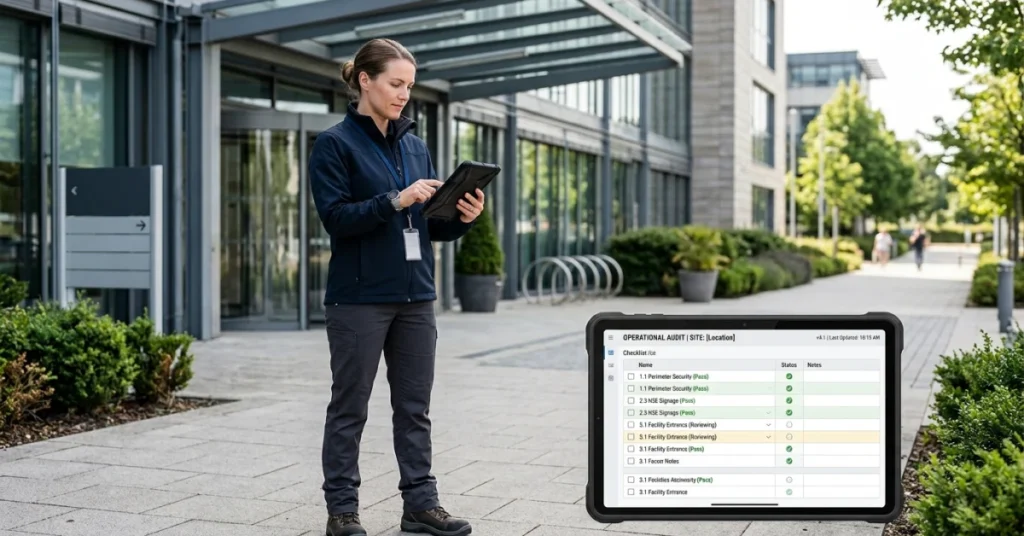
Manual checklists and paper-based inspection logs create reporting gaps that make quality inspection vs quality control distinctions impossible to enforce at scale. FieldPie replaces those gaps with real-time customizable forms, photo capture, and digital reporting — so process deviations surface before they become defects.
Field teams using manual processes spend more time documenting than correcting. That inversion is a structural problem, not a training one.
Delayed Reporting and Inconsistent Standards
Forbes Business Council contributors consistently identify delayed reporting as one of the top operational failures in field-heavy industries — and it directly undermines any quality management system. When standards vary by site or shift, inspection data becomes incomparable and control decisions become guesswork.
Inconsistent standards are not a documentation problem — they signal that no real cost control framework governs the process. Without standardized thresholds applied in real time, the gap between inspection and control widens with every reporting cycle.
The businesses that survive on quality are not the ones that inspect the most — they are the ones that have made defect prevention structurally unavoidable, which raises one final question: does your current workflow actually do that?
Conclusion
Defect costs don’t spike at the point of discovery — they compound from the moment a flawed process runs unchecked. Companies that treat quality inspection as their primary quality mechanism lock in failure costs before any inspector ever arrives on-site.
The distinction between quality inspection vs quality control is not semantic — it is structural. According to Content Marketing Institute, organizations that align content and operational strategy around prevention-first frameworks reduce rework costs by up to 40% compared to detection-only approaches.
Most field teams struggle to separate QC vs QI in practice because their workflows were never designed to enforce that boundary. FieldPie captures real-time field data through customizable audit forms and photo-based reporting, so quality deviations surface during execution, not after.