


Property damage costs landlords an average of $1,750 per incident, making rental property inspections a key protective measure in property management.
Rental property inspections are structured evaluations of a unit’s condition, safety, and housing code compliance, conducted at important stages of the lease. They help:
- Document property condition and create a legal baseline
- Identify maintenance issues early
- Protect landlord and tenant interests
- Reduce security deposit disputes
Inspections typically review structural condition, safety features, appliances, and general wear to distinguish normal wear and tear from actual damage.
The most important stage is the rental property move-out inspection report, which compares the property’s condition at lease end to the move-in record. This documentation supports security deposit decisions and potential legal proceedings.
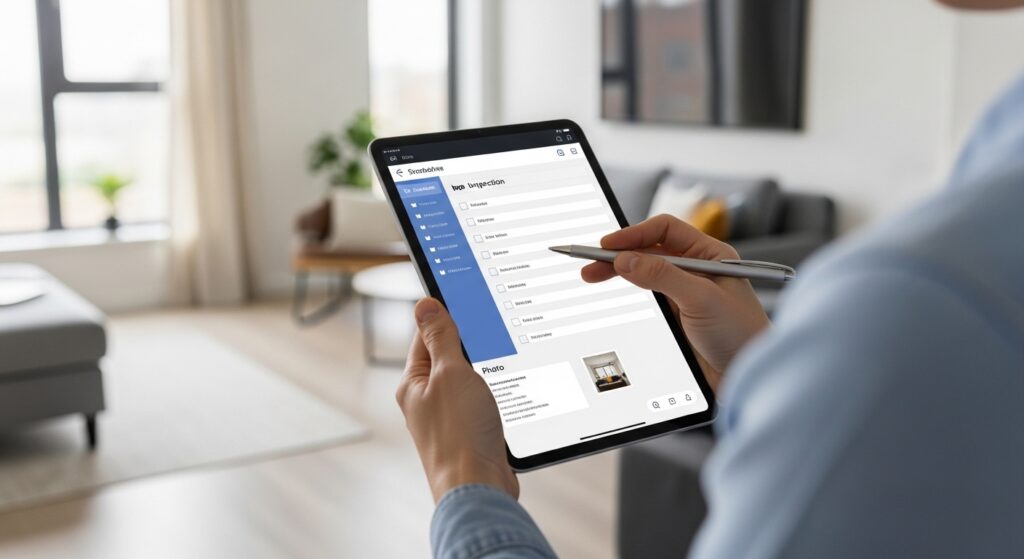
Many landlords now use digital inspection tools to standardize documentation and reduce conflicts.
Types of Rental Property Inspections
Rental property inspections fall into several categories, each serving a specific purpose throughout the tenancy lifecycle. Understanding these types helps landlords protect their investment while maintaining clear tenant communication.
Main Types of Rental Property Inspections
- Move-In Inspection – Establishes the baseline property condition before the tenant takes possession.
- Routine or Periodic Inspection – Conducted during tenancy to detect maintenance issues early.
- Move-Out Inspection – Compares lease-end condition with the move-in record to determine security deposit outcomes.
- Preventive Inspection – Focuses on specific systems to avoid costly emergency repairs.
- Emergency Inspection – Performed after urgent tenant reports or severe weather events.
- Exterior or Drive-By Inspection – Visual check of exterior condition without entering the unit.
Each inspection type requires proper documentation and awareness of legal notice requirements.
Move-In Inspection
The move-in inspection is the most critical baseline in rental property inspections. Conducted before occupancy, it documents the property’s condition at lease start and protects both landlord and tenant from future disputes.
Documentation typically includes:
- Written reports
- Photos and videos
- Tenant acknowledgment and signature
Focus areas include walls, flooring, appliances, cleanliness, and existing maintenance issues.
Studies show that properties with documented move-in inspections experience 40% fewer security deposit disputes. This record becomes the legal benchmark for the move-out comparison.
Routine / Periodic Inspection
Routine inspections are typically conducted annually or bi-annually to prevent minor issues from becoming costly repairs. These inspections help monitor lease compliance and maintain property standards.
Research indicates that proactive rental inspections reduce emergency repair costs compared to reactive maintenance.
Best practices include:
- Maintaining a consistent schedule
- Providing 24–48 hours advance notice as required by state law
- Using digital inspection tools for standardized documentation
These inspections protect both property value and tenant satisfaction.
Move-Out Inspection
The move-out inspection serves as the final condition checkpoint when a tenant vacates. It compares the unit’s current condition with the documented move-in baseline.
Landlords assess damage beyond normal wear and tear and determine security deposit deductions accordingly.
According to the State of Property Management Industry Report, properties with documented move-out inspections experience 23% fewer security deposit disputes.
For accuracy, inspections should be conducted within 24–48 hours of tenant departure.
Exterior / Drive-By Inspection
Exterior inspections allow landlords to assess property condition without entering the unit. These are useful for quarterly monitoring or when addressing specific concerns.
They typically evaluate:
- Roofing and siding condition
- Foundation visibility
- Driveways and landscaping
- General curb appeal
However, exterior inspections cannot detect interior issues. Digital tools improve consistency by enabling mobile documentation and photo capture.
A standardized exterior inspection checklist ensures uniform evaluation across multiple properties.
How to Conduct a Rental Property Inspection
Conducting effective rental property inspections requires structured preparation and documentation.
1. Prepare Before Arrival
- Provide proper legal notice
- Bring a checklist and camera
- Review maintenance history
Preparation helps identify recurring or high-risk areas.
2. Inspect Systematically
Follow a room-by-room process, starting from exterior areas and moving through interior spaces. Document:
- Existing damage
- Signs of wear
- Potential maintenance concerns
Take detailed notes and time-stamped photos. Rental property inspections are comprehensive evaluations designed to protect property value and reduce disputes.
3. Communicate With Tenants
Explain findings clearly, distinguish normal wear and tear from actual damage, and provide tenants with copies of the inspection report. Clear communication strengthens landlord-tenant relationships.
Digital inspection tools improve consistency, standardize documentation, and simplify reporting across multiple properties.
4. Create an Action Plan
Conclude each inspection by:
- Prioritizing identified issues
- Setting repair timelines
- Scheduling follow-up inspections if needed
This structured approach ensures thorough evaluation while supporting long-term maintenance planning.
How Often Should Rental Property Inspections Be Done
The frequency of rental property inspections depends on property age, tenant history, and local regulations.
Most property managers conduct inspections every 3–6 months to maintain standards while respecting tenant privacy.
- Annual inspections are the minimum standard but may miss developing issues.
- Quarterly inspections are recommended for older or higher-risk properties.
- Monthly inspections can strain tenant relationships and may violate privacy laws in some jurisdictions.
Industry data shows that properties over 20 years old typically require more frequent monitoring due to aging systems. High-turnover properties also benefit from increased inspection frequency to detect damage early.
The key is balancing property oversight, tenant rights, and operational capacity. Using modern tracking systems helps landlords maintain consistent inspection schedules and proper documentation across their portfolio.
Rental Property Inspection Laws and Tenant Rights
Rental property inspection laws protect both landlords and tenants while ensuring compliance with federal and state regulations. Landlords are legally required to maintain safe and habitable living conditions, making regular rental property inspections essential.
Most states require 24–48 hours advance written notice before inspections, except in emergencies. Tenants typically have the right to:
- Be present during inspections
- Request reasonable scheduling adjustments
- Quiet enjoyment and privacy
- Timely repairs of habitability issues
Many jurisdictions prohibit retaliatory inspections after tenant complaints and may limit inspection frequency to prevent harassment.
Properly documented rental property inspections also protect landlords legally. Inspection reports serve as critical evidence in security deposit disputes, liability claims, and potential discrimination cases, provided records are accurately maintained.
Common Rental Property Inspection Mistakes
Even experienced landlords can make inspection errors that lead to legal issues and tenant conflicts.
Most Common Mistakes
1. Inadequate Notice
Failing to provide proper legal notice is the most frequent violation. Many landlords misunderstand when rental property inspections are legally permitted under state law.
2. Inconsistent Documentation
Without detailed records from previous inspections, it becomes difficult to distinguish gradual deterioration from tenant-caused damage. The 5th Annual State of Property Management Industry Report notes that inconsistent documentation significantly contributes to security deposit disputes.
3. Ignoring Safety Checks
Overlooking smoke detectors, carbon monoxide alarms, or electrical hazards creates serious liability risks and potential regulatory violations.
4. Poor Timing
Scheduling inspections during holidays or inconvenient hours damages tenant relationships and increases resistance to future visits.
Avoiding these mistakes strengthens rental property inspections, protects property value, and reduces legal exposure.
Benefits of Regular Rental Property Inspections
Regular rental property inspections deliver measurable financial and operational benefits.
Key Benefits
1. Lower Repair Costs
Proactive inspections reduce emergency repair expenses by up to 40%, according to industry analysis. Early detection prevents minor issues from becoming major repairs.
2. Higher Tenant Retention
Consistent inspections show commitment to maintenance, strengthening tenant relationships. Well-maintained properties support higher rental rates and lower vacancy periods.
3. Better Legal Protection
Ongoing documentation creates defensible records for security deposit disputes and insurance claims, clearly establishing timelines for damage or deterioration.
4. Optimized Inspection Frequency
While frequency depends on property age and tenant history, quarterly inspections typically provide the best balance between oversight and tenant privacy.
Modern digital inspection tools improve efficiency by standardizing documentation and simplifying reporting.
FAQ — Rental Property Inspections
Q: How often should I inspect my rental property?
Most landlords conduct rental property inspections quarterly or bi-annually. High-turnover properties may require monthly checks. State laws typically allow inspections with 24–48 hours notice.
Q: What should I look for during inspections?
Focus on safety hazards such as faulty electrical outlets, water damage, structural issues, and HVAC functionality. Document cosmetic wear, appliance condition, cleanliness, smoke detectors, and locks to distinguish normal wear from damage.
Q: Can tenants refuse an inspection?
Tenants cannot refuse lawful rental property inspections with proper notice, except in emergencies. They may request reasonable rescheduling within the legal timeframe.
Q: What if I find lease violations?
Document violations with photos and timestamps and issue written notice following state cure-or-quit procedures. Minor issues often allow a 30-day correction period, while serious violations may require immediate action.
Q: Should I hire a professional inspector?
Professional inspections cost $300–500 and provide comprehensive assessments and liability protection. DIY inspections are suitable for routine checks, but complex systems may require expert evaluation.
Regular rental property inspections remain one of the most effective tools for protecting property value while maintaining transparent and professional landlord-tenant relationships.
Conclusion
Rental property inspections are essential for protecting property value, reducing disputes, and ensuring legal compliance. With damage averaging $1,750 per incident and documented inspections reducing disputes by 40% and 23%, consistent documentation and proper scheduling make a measurable difference. A structured inspection strategy turns risk into control.
Still managing rental property inspections with paper checklists and scattered photos?
FieldPie streamlines inspections with digital checklists, real-time photo documentation, and centralized reporting — all in one place.