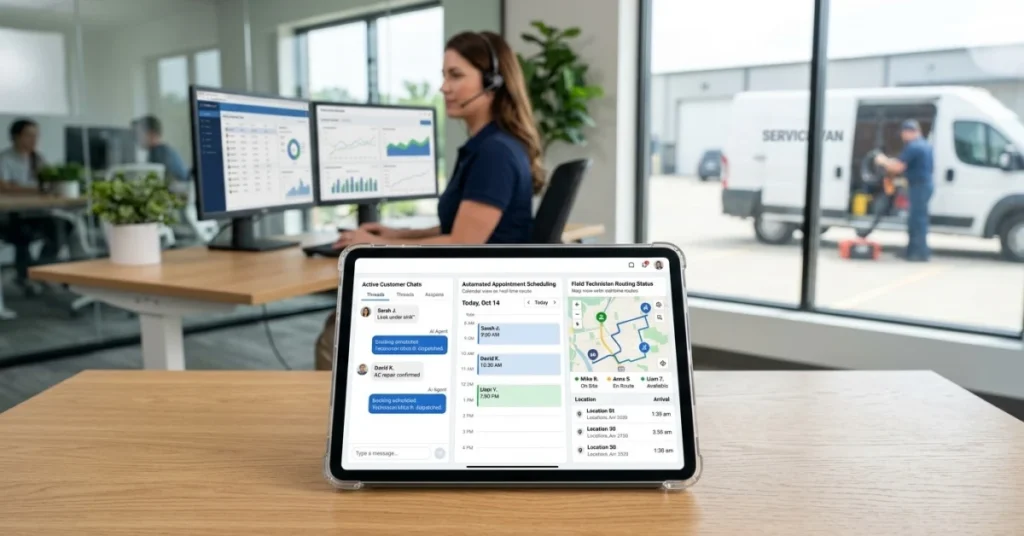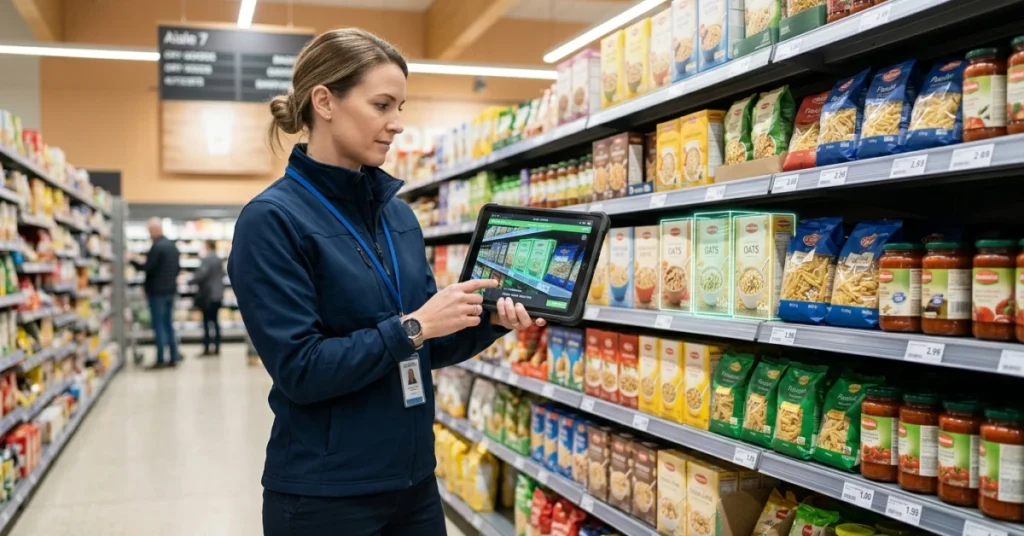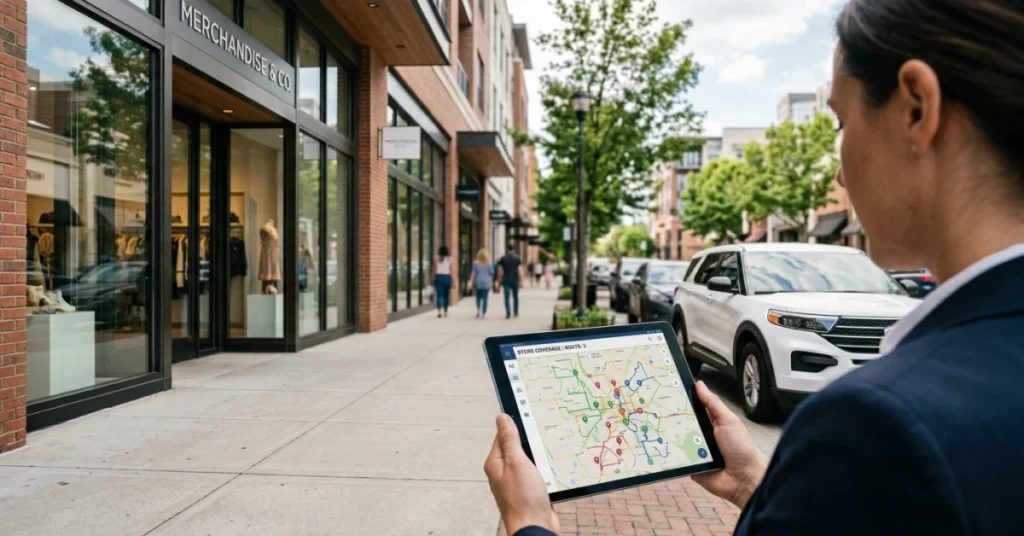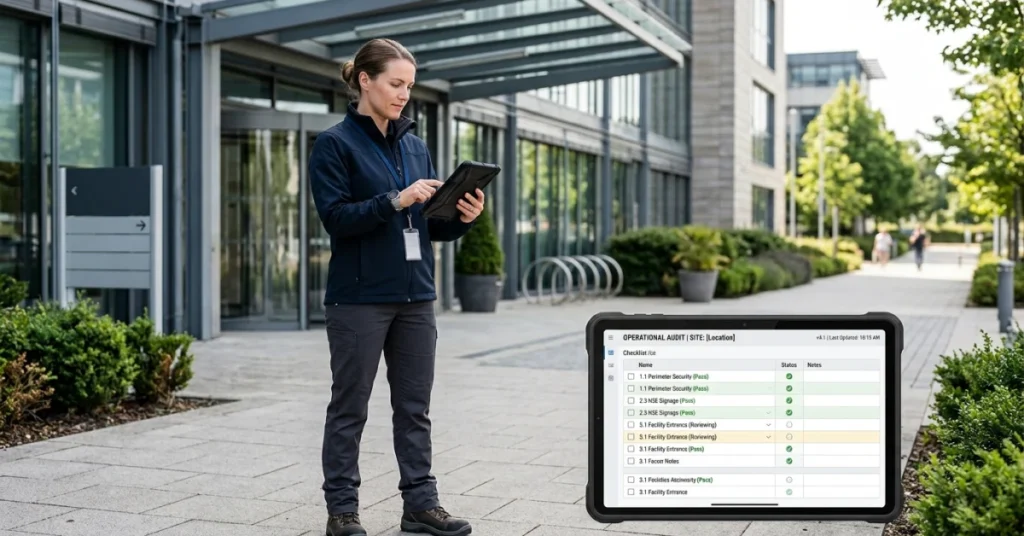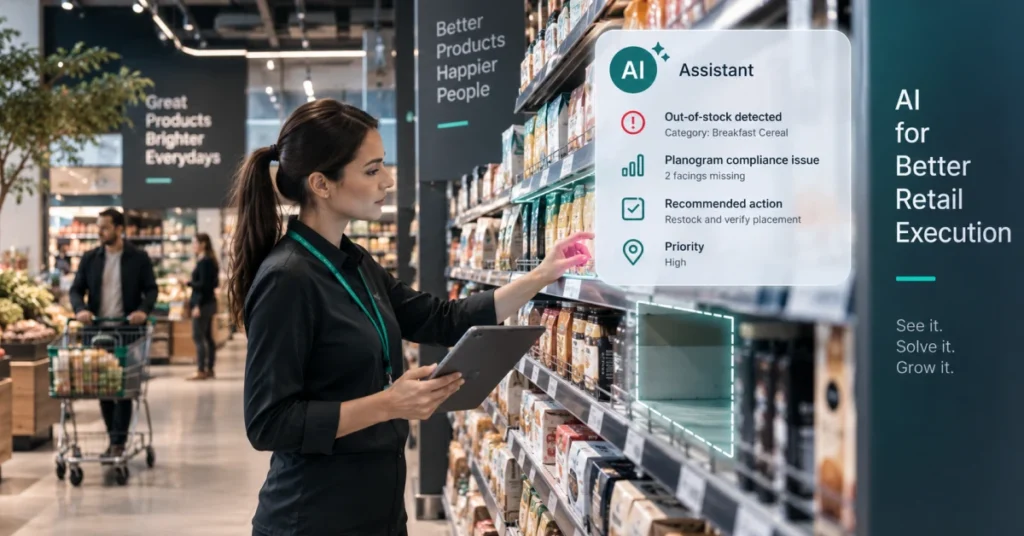



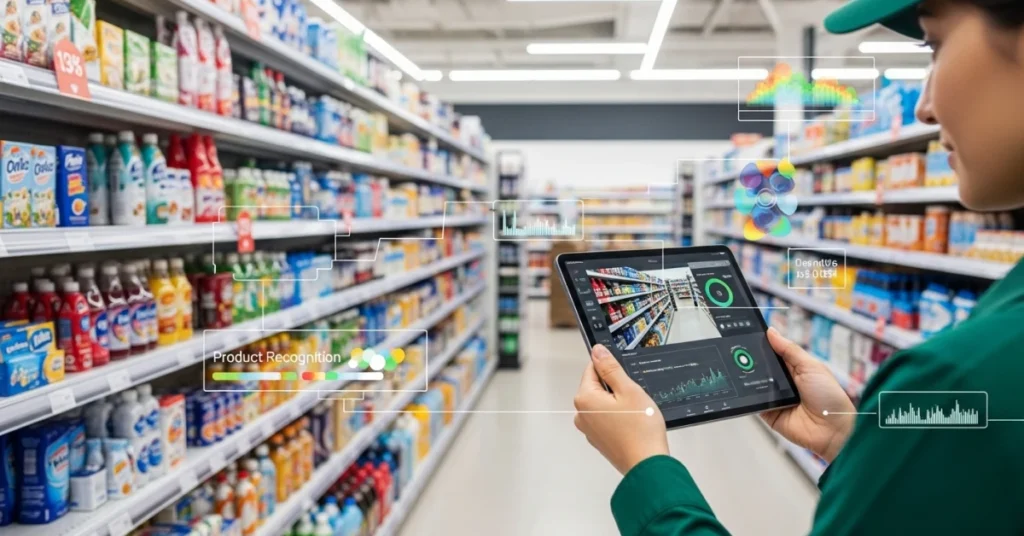
The visual merchandising software market has experienced rapid growth. Analysts value the market at around US$ 1.5 billion in 2022, with projections of a compound annual growth rate of about 12 % in the coming years, driven by demand for technology‑driven store design, planogram automation and data‑driven analytics. Despite this growth, many brands still rely on manual planograms, emails and spreadsheets for store displays. Paper guidelines and one‑off inspections are giving way to intelligent platforms that distribute planograms, capture store photos, verify execution with AI and flag issues instantly. Visual merchandising software brings all store guidelines into one place, helping retailers design, execute and monitor displays to ensure consistency and improve shopper experience.
This article reviews the best visual merchandising software solutions based on real field needs, usability and long‑term scalability.
Why Your Visual Merchandising Program Needs Software
Retailers increasingly depend on digital solutions to stay competitive and consistent across their networks. Here’s why investing in visual merchandising software makes sense:
- Manual planograms and paper guidelines are slow and error‑prone. Digital tools automate distribution, track acknowledgements and provide real‑time execution status, reducing delays and miscommunication.
- Planograms boost sales and customer experience. Accurate shelf layouts optimize product placement, guide shoppers and improve store performance. Software ensures planograms are executed correctly and adapted quickly when assortments change.
- AI‑powered compliance catches problems early. Computer vision can detect missing SKUs, misplaced items and shelf gaps from store photos, enabling continuous shelf verification rather than periodic audits.
- Centralized software brings visibility, control and scalability. Real‑time dashboards and analytics help retailers compare visual compliance across stores, identify trends and adjust layouts or promotions quickly.
- Mobile and offline functionality keeps teams productive. Field staff can capture photos, access guidelines and report on displays even without internet connectivity.
What These Visual Merchandising Software Solutions Have in Common
Though each platform focuses on different aspects of store execution, they share a common mission: supporting consistent visual execution at scale — from planogram design to field verification and reporting.
These tools were selected because they:
- Replace manual tools such as paper planograms and fragmented communications. They distribute updated layouts, tasks and guidelines centrally.
- Centralize planogram distribution and execution, connecting headquarters teams with store staff and ensuring every display matches brand standards.
- Support photo capture, AI‑powered shelf compliance and offline mode, so teams can document displays, flag issues and sync data later.
- Improve visibility with real‑time dashboards and analytics, offering heatmaps, compliance reports and trend charts.
Together, these capabilities replace fragmented tools with a single system for design and execution. This foundation helps retailers manage more stores, keep displays consistent and scale without added complexity.
Top Visual Merchandising Software Solutions
This list highlights leading visual‑merchandising software solutions built for modern store operations. The platforms below support consumer‑goods brands and multi‑unit operators by combining shelf auditing, task management and reporting to help teams manage field work and scale efficiently. Each solution supports different business sizes, from small networks to complex, multi‑region operations.
1. FieldPie
The Best Visual Merchandising & Field Execution Platform for Any Scale
FieldPie is a modern platform designed for merchandising audits and field operations. It supports teams of all sizes—from small networks to companies with hundreds of locations. By combining store‑visit planning, task management, customizable merchandising forms and real‑time reporting in a single system, it eliminates manual processes.
Core capabilities include:
- End‑to‑end field management: Plan store visits, assign merchandising tasks, conduct shelf audits and complete follow‑ups in one continuous workflow.
- Smart planning and route optimization: Mobile‑first workflows guide merchandising teams to the right stores, supported by GPS tracking and service history.
- Offline operation and synchronization: Collect photos, signatures, bar‑code scans and merchandising forms offline, with automatic sync once connectivity is restored.
- Flexible merchandising forms: Fully customizable forms and checklists tailored to planogram audits, product availability, display compliance and promotional execution.
- Real‑time visibility: Live dashboards provide insights into audit status, location and merchandising performance.
- Role‑based permissions: Detailed access control for merchandisers, supervisors and brand managers.
- Comprehensive reporting: Operational and performance reports with detailed analytics—without requiring complex enterprise tools.
Where FieldPie stands out:
FieldPie is designed as a long‑term platform rather than a short‑term tool. It combines advanced field capabilities with a clean and intuitive user experience. It scales naturally from small teams to large distributed operations, improving operational efficiency through route optimization, offline audits and customizable workflows. By consolidating multiple functions into one system, it reduces the need for separate merchandising software.
Things to consider:
FieldPie focuses on field execution and operational excellence rather than specialised add‑ons like marketing or campaign management. If additional modules are needed—such as advanced promotional analytics—consider integration options.
2. Trax Retail
Trax Retail provides AI‑driven image‑recognition software for shelf monitoring and merchandising execution. It uses photo capture and computer vision to detect planogram compliance, product placement and out‑of‑stock (OOS) situations. Trax is widely used by large retailers and consumer‑goods brands to automate shelf audits and generate actionable insights.
Core capabilities include:
- AI‑powered image recognition: Automatically identifies products, counts facings and flags planogram compliance issues from photos.
- OOS and shelf‑condition detection: Real‑time detection of out‑of‑stocks, misplaced items and shelf gaps.
- Planogram compliance automation: Compares shelf images to master planograms to highlight deviations and track display standards.
- Predictive analytics: Dashboards and alerts that identify trends and predict stock issues.
- Integration with retail systems: Connects to POS data, sales metrics and inventory systems to enrich merchandising insights.
Where Trax stands out:
Trax is recognized for its enterprise‑grade computer‑vision technology. Its ability to scan shelves, identify each SKU and quantify shelf share or OOS conditions makes it a leader in automated planogram compliance. The platform is particularly strong for large brands that require high accuracy and real‑time shelf analytics.
Things to consider:
Trax’s advanced AI stack can increase cost and complexity. Smaller teams may find its enterprise‑oriented pricing and implementation heavier compared with more lightweight merchandising tools.
3. Repsly
Repsly helps retail and CPG companies manage in‑store execution through field teams. It combines merchandising audits with broader field‑management tools such as visit planning, territory management and team performance tracking.
Core capabilities include:
- Visit and task planning: Team calendars, territory hierarchies, route planning and GPS‑verified visit tracking.
- Flexible data collection: Custom forms, barcode scanning and photo galleries to capture in‑store conditions and merchandising data.
- Order and returns management: Field teams can manage orders and returns directly within the app.
- Time and mileage tracking: Monitor rep performance with timesheets and mileage reports.
- Integrated reporting and sales data: Combine audit results with POS data; optional image recognition can verify planogram compliance.
Where Repsly stands out:
Repsly integrates audit workflows with field‑team management. This allows companies to plan visits, track execution and monitor performance within a single platform. GPS check‑ins and offline capabilities further enhance field productivity.
Things to consider:
Repsly’s audit workflows are flexible but may be less structured compared with dedicated merchandising audit platforms. Advanced analytics and certain features may require additional licensing. Some capabilities may be unnecessary for companies without large field teams.
4. Vispera
Vispera provides an AI‑first visual‑merchandising platform that uses image recognition and deep‑learning technologies to monitor store shelves. Its solutions help brands ensure product availability, measure shelf share and maintain planogram compliance.
Core capabilities include:
- Shelf image recognition: Detects product availability, shelf share/on‑shelf availability, planogram compliance, out‑of‑stock and damaged exposures from photos.
- Competition and promotion analysis: Captures competitor activity and promotional compliance.
- End‑to‑end solution: Provides mobile image collection (StoreSense) and fixed camera monitoring (ShelfSight) with data processing, KPI engines and reporting.
- Granular annotations and deep‑learning models: Proprietary computer‑vision models deliver high accuracy in SKU identification and shelf segmentation.
- Custom integrations and reports: Integrates with enterprise systems and offers standard or custom dashboards for performance tracking.
Where Vispera stands out:
Vispera excels in computer vision. Its ability to recognise products, measure shelf share and monitor planogram compliance with high accuracy makes it ideal for FMCG companies seeking detailed shelf analytics. Its two products—StoreSense for mobile image collection and ShelfSight for fixed cameras—offer flexibility in data capture.
Things to consider:
Vispera’s focus on AI and analytics means its workflow and task‑management features are lighter than full field‑execution platforms. Organisations requiring scheduling and broader field management may need complementary tools.
5. Shelvz
Shelvz offers a smart retail‑execution platform that combines real‑time shelf monitoring, AI‑powered image recognition and guided workflows to help brands maintain perfect in‑store execution. Its merchandising solution emphasizes data accuracy, proactive task management and predictive analytics.
Core capabilities include:
- Real‑time shelf monitoring: Field teams use a mobile app to report stock levels, facings and planogram compliance; data syncs instantly to a central dashboard.
- AI‑powered image recognition: Automatically identifies products, counts facings and detects out‑of‑stocks from photos, improving accuracy and speeding data collection. Advanced image‑recognition technology cross‑references shelf images against master planograms to flag discrepancies with high accuracy.
- Dynamic task management and guided workflows: Create smart workflows that prioritise OOS checks and other critical tasks based on real‑time data.
- Actionable insights and predictive analytics: Analytics engine identifies patterns in OOS and root causes, provides predictive alerts and helps teams move from reactive to proactive merchandising.
- Seamless integration: Integrates with ERP, CRM and supply‑chain systems to unify retail data.
- Additional merchandising modules: Tools for automated schedule renewal, offline mode, multi‑language data capture, share‑of‑shelf measurement, planogram audits, promotions and competitor promotions, POS material auditing, checklists, stock counts and expiry audits.
Where Shelvz stands out:
Shelvz focuses on eliminating human bias and ensuring objective, real‑time data. Its AI image‑recognition engine not only detects every SKU and price tag but also compares shelf images against planograms to highlight discrepancies with 99 % accuracy. Real‑time feedback allows field reps to correct issues during visits, turning shelf insights into immediate actions. The platform also offers predictive analytics and deep integrations, making it a comprehensive solution for brands seeking both insight and execution.
Things to consider:
Shelvz’s advanced AI and analytics capabilities can increase device load and configuration complexity. Organisations looking for simple checklists or basic audits may find its feature set more extensive than necessary.

Your Strategic Roadmap: How to Choose the Right Visual Merchandising Software
Choosing the right visual merchandising software starts with understanding your operations, growth goals and daily execution needs. As teams scale, visibility into planogram compliance, store layouts, execution status and analytics becomes as important as core merchandising processes.
Must‑Have Features for Visual Merchandising Software
Industry benchmarks show that the most commonly used tools focus on:
- Planogram creation & distribution: Drag‑and‑drop builders for 2D/3D layouts, automatic version control and store‑specific variations.
- Photo and video capture: Mobile apps to capture images of displays, tag by aisle or campaign and compare with reference guidelines.
- AI shelf compliance: Computer vision to detect missing SKUs, misplaced items and shelf gaps, providing instant compliance scores.
- Offline mode & mobile support: Full functionality without Wi‑Fi; offline data collection and automatic sync.
- Real‑time dashboards & analytics: Live compliance scores, heatmaps and performance breakdowns accessible from any device.
- Execution workflows & task management: Custom checklists, SLA‑based escalations and campaign tracking.
- Centralised communication: Ability to push visual guidelines, SOPs and promotional assets to stores, ensuring consistency.
- Role‑based access: Permissions for visual merchandising managers, field teams and regional leaders to ensure secure data sharing.
Beyond these features, advanced capabilities like AR/VR visualisation, IoT heatmap integration, predictive analytics and natural‑language reporting can differentiate leading platforms.
How to Choose the Right Visual Merchandising Software
- Define core needs: Consider your number of stores, store formats, display complexity and brand standards.
- Planogram vs execution focus: Decide whether you need powerful 3D design tools, AI compliance, execution workflows or a combination.
- Ease of use: A simple, intuitive interface encourages adoption across store teams with minimal training.
- Scalability: Ensure the software supports more stores, categories and users as you grow; check multi‑region deployment and store‑specific planograms.
- Integration & data: Look for open APIs and integration with ERP, POS, DAM and CRM systems to link merchandising with sales data.
- Support & training: Strong onboarding, documentation and responsive support make a real difference.
- Pricing & value: Evaluate pricing tiers, hidden costs and the total value delivered by features and scalability.
- Pilot tests & demos: Always test the software in real scenarios before committing, to validate planogram accuracy and store execution.
Conclusion: Choosing Software for Visual Merchandising Programs
The right visual merchandising software should support how your teams execute today while scaling with your retail operations tomorrow. While all tools on this list address core needs like planogram compliance, photo capture and reporting, FieldPie stands out by combining end-to-end field execution with a clean, intuitive experience — making it equally effective for small teams and large, multi-store networks.
See it in action. Schedule a FieldPie demo and explore real-world merchandising workflows, planogram compliance, shelf audits and in-store execution.