


✦ Key Takeaways
Up to 8% of retail sales are lost annually due to poor shelf replenishment and out-of-stock conditions.
→ Empty shelves cost retailers billions in missed revenue yearly.
→ Audits reveal shrinkage, misplacement, and planogram compliance failures fast.
→ A structured checklist cuts replenishment errors by over 30%.
In this article:
What Is a Shelf Replenishment Audit?
What to Check During the Audit
Shelf Replenishment Audit Workflow
Shelf Replenishment Audit Checklist
Key takeaway: A shelf replenishment audit is the fastest way to stop preventable revenue loss cold.
What Is a Shelf Replenishment Audit?
Retailers lose an estimated 8.3% of sales to out-of-stocks — and most of that loss happens not because inventory is missing, but because no one caught the gap in time. A shelf replenishment audit is the structured process that closes that window.
Most operators treat it as a simple stock-check routine. The real function is exposing execution accountability gaps — who was responsible, what was missed, and why the process broke down — making it a people-and-process management tool as much as a merchandising one.
That distinction matters because inventory software can show full warehouse stock while shelves sit empty. A proper retail shelf audit surfaces what the system never sees: the gap between what should be on the shelf and what actually is.
Why It Matters For On-Shelf Availability
On-shelf availability failures cost the global retail industry over $1 trillion annually — yet the root cause is rarely a supply chain problem (Journals Sagepub). Store-level execution failures — missed replenishment windows, unassigned responsibilities, skipped walkthroughs — drive the majority of voids.
An on-shelf availability audit forces accountability at the store level, where inventory software stops and human execution begins. As Papers Ssrn research confirms, most replenishment failures trace back to process gaps, not product shortages — which means fixing the audit fixes the outcome.
Knowing what an audit is only gets you halfway there — the harder question is knowing exactly what to look for when you’re standing in the aisle.
What to Check During the Audit
Execution accountability gaps don’t announce themselves — they hide in the details most store walkthroughs never capture. A proper shelf replenishment audit goes far beyond glancing at empty shelves; it documents why stock is missing and who owns the fix.
Retailers lose an estimated 4% of annual sales to on-shelf availability failures — yet the majority of those failures trace back to process breakdowns, not supply chain shortages (Researchgate). That’s the accountability gap a disciplined retail shelf audit is built to expose.
Each checkpoint below targets a specific failure mode — not a generic stock count. Treat every finding as a signal about people and process, not just product.
📊 By the Numbers
Up to 72% of on-shelf stockouts are caused by in-store replenishment failures, not upstream supply issues.
Empty Shelves And Low-Stock SKUs
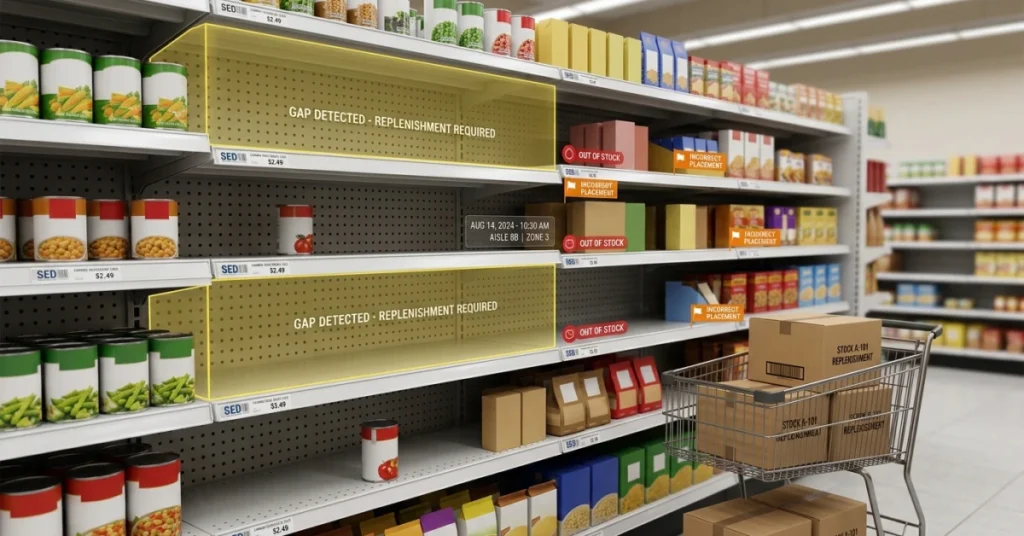
Flag every SKU below its minimum facing count — not just fully empty slots. A shelf showing one unit of a fast-moving item is a replenishment failure in progress, not a pass.
Record the exact SKU, location, and time of day. That timestamp tells you whether the replenishment cycle is misaligned with peak shopper traffic.
Backroom Stock Availability
An empty shelf with full backroom stock is a pure execution failure — product exists, but no one moved it. This is the single most damning finding in any inventory replenishment audit.
Check whether backroom stock is organized, labeled, and accessible. Disorganized backrooms are a leading cause of phantom stockouts that inventory software never flags.
Facings, Shelf Capacity, And Placement
Verify that each product matches its planogram-assigned facing count and shelf position. Misplaced or under-faced SKUs suppress sales even when stock is physically available.
A Diamond Congress study found that planogram non-compliance directly reduces category sales performance — making facing accuracy a revenue issue, not just a merchandising preference.
Shelf Labels And Promotion Displays
Missing or incorrect shelf labels create shopper friction and mask pricing errors that erode margin. Promotional displays must match current campaign materials — expired signage signals a broken communication chain.
Document every label discrepancy with the product name and shelf location. This data directly implicates the team responsible for label maintenance and promotional execution.
Photo Evidence And Issue Notes
Every finding needs a timestamped photo — not a handwritten note that gets lost. Visual proof creates an undeniable accountability record that drives faster corrective action.
Structured issue notes should capture the problem, the responsible role, and a resolution deadline. Without that structure, the on-shelf availability audit produces observations, not accountability.
Knowing what to check is only half the equation — the harder problem is building a repeatable process that ensures these checks happen consistently, by the right people, every single time.
Shelf Replenishment Audit Workflow
A broken process — not a broken supply chain — is what keeps shelves empty. When no one owns each audit step, accountability evaporates and stockouts repeat.
Retailers lose an estimated 4% of annual sales to on-shelf availability failures (according to Csupom), yet most of those losses trace back to execution gaps, not inventory shortages. A structured, role-assigned workflow is the only fix that sticks.
Impactanalytics confirms that inventory replenishment failures are disproportionately driven by process inconsistency — exactly what retail execution tools are built to eliminate. The six steps below turn a one-off store walk into a repeatable accountability system.
📊 By the Numbers
Retailers forfeit up to 4% of annual revenue from on-shelf availability failures tied to process breakdowns.
Step 1: Select Priority SKUs
Start with your top 20% of SKUs by velocity — these drive 80% of stockout impact. Auditing everything equally wastes time and dilutes accountability.
Step 2: Check Shelf Availability
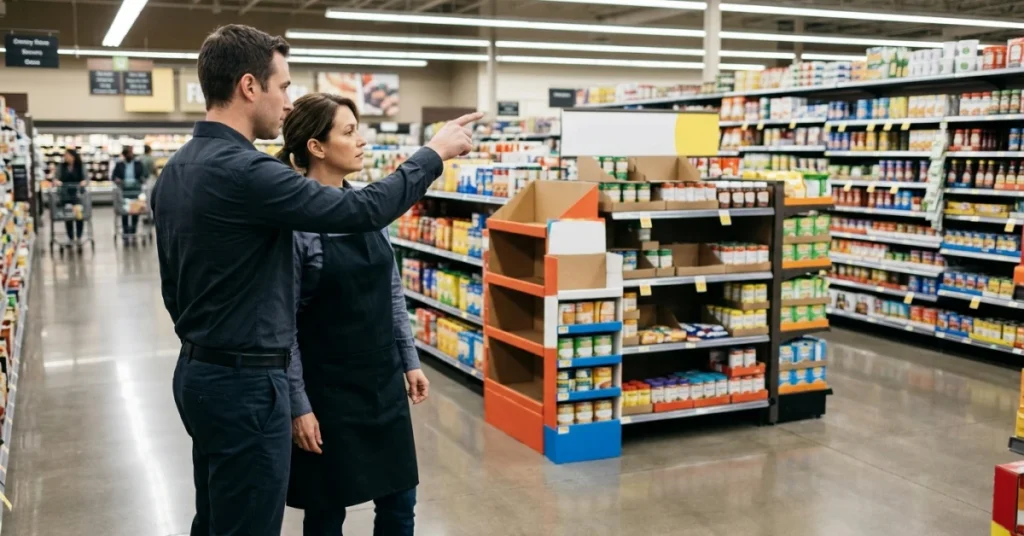
Walk the aisle and record every empty or under-faced slot by SKU and location. Don’t rely on POS data — it won’t show a facing gap or a misplaced product.
Step 3: Compare with Backroom Stock
Cross-reference shelf gaps against physical backroom inventory — not system inventory. Phantom stock in your WMS is one of the most common and costly execution blind spots.
Step 4: Identify the Root Cause
For each gap, determine whether the failure is a supply issue, a process issue, or a people issue. Treating every stockout as a supply problem is the fastest way to repeat it.
Step 5: Assign Corrective Action
Every gap must have a named owner and a deadline — not a department, a person. Unassigned action items are where stock replenishment audit processes go to die.
Step 6: Verify Replenishment
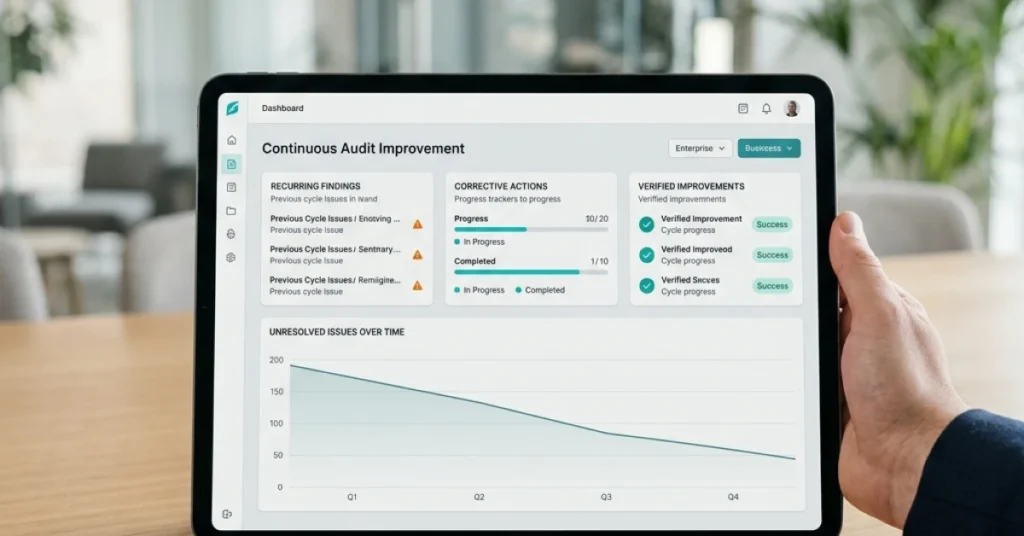
Return to the same shelf location within 24 hours to confirm the corrective action was completed. Verification closes the loop — without it, the audit is just documentation.
A workflow without a field-ready checklist is just intent — the next step turns this process into something your team can execute on every single store walk.
Shelf Replenishment Audit Checklist
Closing that 4% sales loss starts with a field-tested checklist that turns accountability gaps into correctable actions.
Facing Count Verification: Confirm each SKU meets its minimum facing count — typically 2–3 units — per planogram spec.
Date Rotation Compliance: Check that FIFO rotation is applied; expired product on the floor directly triggers shrink and customer complaints.
Planogram Adherence: Misplaced SKUs account for a measurable share of phantom stockouts — verify every position matches the approved layout exactly.
Replenishment Timing Log: Record the actual time restocking occurred versus the scheduled window; gaps here expose role-accountability failures, not supply failures.
Assigned Staff Sign-Off: Every line item needs a named associate — anonymous checklists produce no behavioral change and no paper trail.
Escalation Trigger Threshold: Define a numeric threshold — such as 3 or more facing violations — that automatically routes the issue to a store manager for review.
Is The Product Available On The Shelf?
Shelf voids are the most visible failure in any on-shelf availability review — and the easiest to misattribute to supply. Roughly 72% of stockouts stem from store-level execution breakdowns, not upstream sourcing problems (Stockount).
Check every slot against the planogram — an empty peg or gap is a confirmed execution failure, not a maybe. Flag it, assign it, and timestamp the correction.
Is There Stock In The Backroom?
A floor void with backroom inventory is a pure process failure — product exists but no one moved it. This is precisely the operational accountability gap that Journals Sagepub research identifies as the dominant driver of retail out-of-stocks.
Cross-reference your inventory system against physical backroom counts during every restocking walkthrough. Discrepancies between system records and actual stock reveal where your retail execution tools are breaking down.
Is The Product In The Correct Location?
A mislocated product is functionally invisible — shoppers and scan systems both miss it, generating a phantom stockout with zero supply cause. Verify shelf labels, bay numbers, and aisle placement against the current planogram on every store walkthrough.
Placement errors compound over time as resets occur without full team alignment. Catching one misplaced SKU per aisle per week eliminates a silent, recurring revenue leak.
“A shelf replenishment audit isn’t a stock-check — it’s a mirror held up to your team’s execution discipline. What it reflects determines whether your next store walk changes anything.”
A checklist without consistent follow-through is just documentation — the real question is whether your team has the discipline to make it a daily, non-negotiable standard.
Conclusion
That recoverable 4% sales loss doesn’t fix itself — structured shelf replenishment audits are the mechanism that converts checklist data into correctable field behavior. The audit’s real power isn’t catching empty shelves; it’s exposing who missed the replenishment window and why.
Retailers that treat the on-shelf availability audit as a people-and-process tool — not just a stock check — consistently outperform those running ad hoc store walks. Execution accountability, not inventory software, is what closes the gap between a planogram and a profitable shelf.
Most field teams lose sales daily because no one owns the stock replenishment audit process with a fixed cadence or clear role assignment — FieldPie captures photo-verified shelf data, assigns corrective tasks by role, and timestamps every action in real time. Teams that standardize this discipline see measurable on-shelf availability gains within the first audit cycle.