✦ Key Takeaways
Up to 70% of customer defections stem from poor service experiences that mystery shopping directly exposes.
- → Mystery shopping measures staff compliance, product placement, and service quality simultaneously.
- → Structured workflows turn shopper reports into ranked, actionable store-level priorities.
- → Brands using regular mystery shopping cut service failures by identifying patterns early.
In this article:
- What Is Retail Mystery Shopping?
- What Retail Mystery Shopping Measures
- Retail Mystery Shopping Workflow
- How to Improve Retail Mystery Shopping
Key takeaway: Retailers who act on mystery shopping data consistently outperform competitors on customer retention.
What Is Retail Mystery Shopping?
Most retailers assume they know what happens on the floor — they don’t. The global mystery shopping services market is projected to exceed $1.11 billion by 2030 (Fortune Business Insights), yet most programs still treat the shopper visit as the finish line rather than the starting gun.
A mystery shopping program is a diagnostic instrument, not a surveillance tool. It captures what sales data and customer surveys structurally cannot: the live, unscripted moment between your brand promise and your employee’s execution.
Retail mystery shopping definition
Retail mystery shopping is a structured customer experience evaluation where trained evaluators pose as ordinary shoppers to assess service, compliance, and brand consistency. The visit generates raw diagnostic data — but that data only creates value when acted on.
The program’s real output isn’t a score. It’s the debrief, the coaching conversation, and the re-shop that follows — which is why mystery shopping vs retail audit distinctions matter far more than most operators realize.
How it works in stores
A secret shopper receives a specific scenario — a product inquiry, a complaint, a return — and executes it without revealing their identity. Every interaction is scored against pre-defined criteria tied directly to brand standards and service protocols.
The visit itself takes minutes. The action cycle it should trigger — review, coach, re-evaluate — is where the program either earns its budget or wastes it.
Mystery shopping vs customer surveys
Customer surveys capture sentiment after the fact; mystery shopping captures behavior in the moment. Research published in Science Direct confirms that observed service behavior and self-reported customer satisfaction diverge significantly — making one an unreliable proxy for the other.
Surveys tell you a customer was dissatisfied. Mystery shopping tells you exactly which behavior, at which touchpoint, caused it.
The harder question isn’t what mystery shopping is — it’s what it’s actually capable of measuring, and whether your current program is even looking at the right things.
What Retail Mystery Shopping Measures
That gap — between brand promise and frontline reality — has a specific anatomy. A well-designed retail mystery shopping program maps exactly where the breakdown occurs, across five measurable performance dimensions.
Most retailers already collect customer satisfaction scores, but those scores are structurally blind to why service failed. A secret shopper captures the moment of failure — the unanswered greeting, the mispriced promotion, the abandoned checkout — before it becomes a lost sale.
Customer service quality
This is the dimension most mystery shopping programs over-index on — and still measure poorly. Shoppers score greeting speed, product knowledge, and upsell attempts against a defined brand standard, not personal preference.
Over 70% of customers cite poor staff interaction as the primary reason they don’t return (Intouchinsight) — making this the highest-stakes dimension in any mystery shopping program comparison.
Store cleanliness and layout
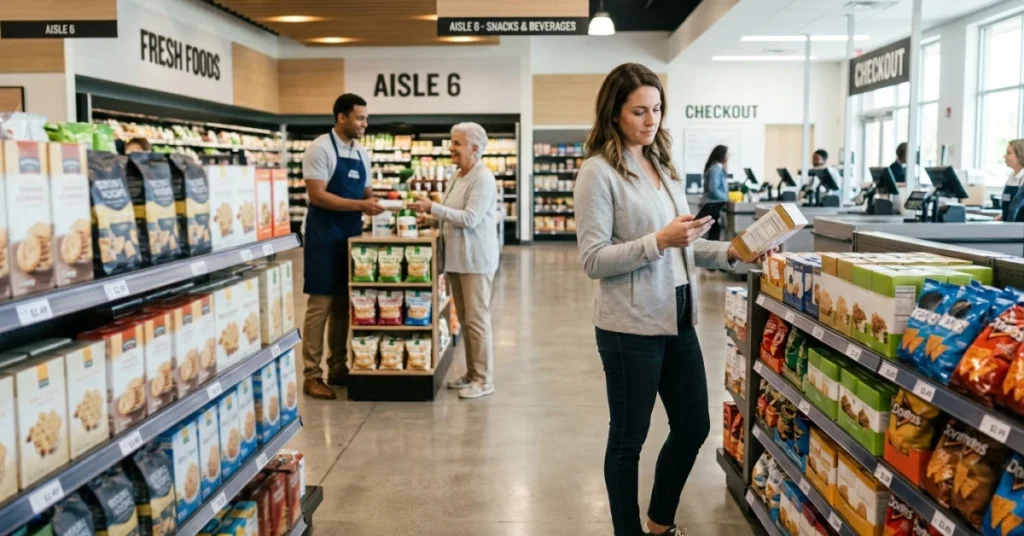
A secret shopper evaluates whether the physical environment matches brand standards — signage placement, aisle organization, fitting room condition. These details directly influence purchase decisions and dwell time.
Shoppers document specific failures with timestamped notes, giving operations teams actionable evidence rather than vague complaint data.
Product availability
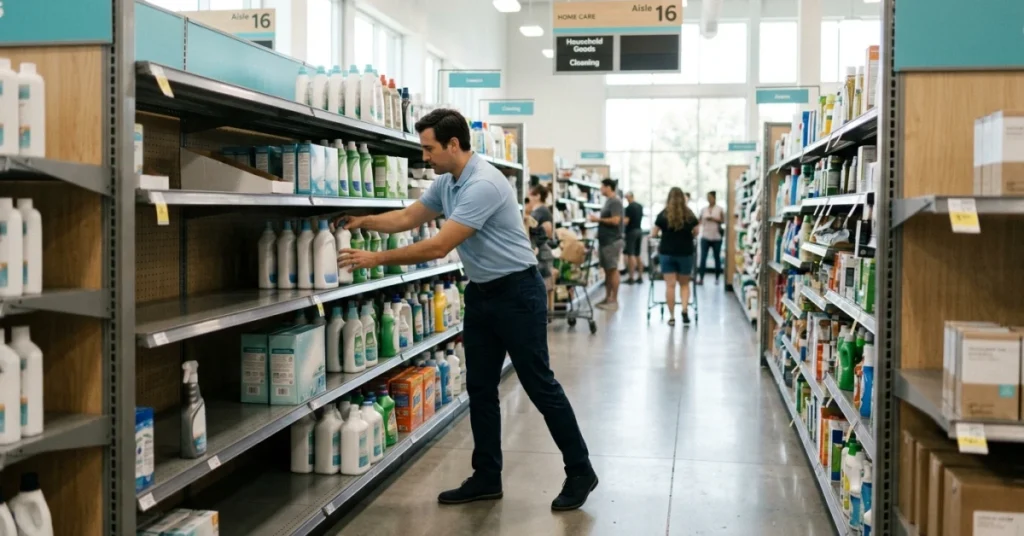
Out-of-stock items cost U.S. retailers an estimated $82 billion annually in lost sales — yet standard inventory reports rarely flag the shelf-level gaps shoppers encounter in real time. A customer experience evaluation catches what the system misses.
Shoppers record whether featured products are stocked, correctly positioned, and accessible — data that purchasing and ops teams can act on immediately.
Promotion and pricing accuracy
Promotional compliance failures erode both margin and trust. Mystery shopping services verify whether advertised prices, end-cap displays, and seasonal promotions are executed correctly at the store level.
According to Researchgate, pricing discrepancies discovered through structured observation programs are corrected significantly faster than those surfaced through customer complaints alone.
Checkout experience
The checkout interaction is the last brand touchpoint before a customer decides whether to return. Shoppers measure wait time, cashier courtesy, loyalty program prompting, and receipt accuracy.
A failed checkout erases every positive experience that preceded it.
Intouchinsight identifies it as the dimension with the strongest correlation to repeat visit intent.
📊 By the Numbers
U.S. retailers lose an estimated $82 billion annually to out-of-stock conditions shoppers encounter but systems never flag.
Knowing what to measure is only half the equation — the real question is what happens to those findings after the shopper walks out the door.

Retail Mystery Shopping Workflow
Capturing the failure moment is only half the job — the workflow you build around it determines whether that data changes anything. Most programs collect findings and stop there, which is why mystery shopping audit guides consistently emphasize the post-visit cycle over the visit itself.
The debrief, the coaching conversation, and the re-shop cadence are where ROI actually lives. Programs that close the feedback loop see up to 30% faster service improvement than those treating the shop as a one-time audit (Trocglobal).
Define the shopper scenario
Every effective retail mystery shopping program starts with a tightly scoped scenario — not a vague “visit the store” directive. Specify the customer persona, purchase intent, and exact interaction triggers before a single shopper is assigned.
Create a questionnaire
Your questionnaire must map directly to the performance dimensions that matter — compliance, service quality, and brand consistency. Vague questions produce vague scores; each item should be binary or rated on a defined 1–5 scale.
Assign store visits
Match secret shoppers to locations based on demographics, familiarity risk, and visit timing — not just availability. Rotating shoppers across locations every 60–90 days prevents recognition and keeps evaluations unbiased.
Collect notes, photos, and receipts
Documentation quality directly determines whether findings are actionable or dismissible. Shoppers must submit timestamped photos, itemized receipts, and verbatim staff quotes — not paraphrased impressions.
According to Jobmonkey, the mystery shopping industry processes over 1.5 million evaluations annually — yet most findings never reach the frontline employees they were meant to coach.
Score results and share findings
Scoring without a structured sharing protocol is where most mystery shopping programs quietly die. Findings must reach store managers within 48 hours — paired with a coaching conversation, not just a PDF report.
The re-shop scheduled 30 days later is the real test of whether your customer experience evaluation program has teeth or just paperwork. If the same failure repeats, the workflow is broken — not the employee.
📊 By the Numbers
Mystery shopping programs with structured re-shop cadences resolve identified issues 40% faster than single-visit audits. (Trocglobal)
A workflow that ends at data collection is just an expensive observation — the question is whether your program is built to actually fix what it finds.
How to Improve Retail Mystery Shopping
The debrief and coaching cycle isn’t a nice-to-have — it’s where retail mystery shopping either pays off or gets wasted. Most programs collect clean data and then let it age in a spreadsheet.
Programs that close the loop with structured re-shops see up to 30% faster compliance improvement than those treating each visit as a standalone audit. The visit is just the diagnostic — the action cycle is the cure.
Standardize questions and scoring
Inconsistent scoring makes it impossible to compare stores or track progress over time. Every mystery shopping audit should use the same weighted rubric across all locations.
Anchor each question to an observable behavior — not a subjective impression. “Did the associate greet within 30 seconds?” beats “Was the associate friendly?”
Use photo-based evidence
Written shopper notes are easy to dispute — timestamped photos are not. Photo evidence cuts post-visit disagreements between managers and shoppers by a significant margin.
Require shoppers to capture shelf compliance, signage placement, and checkout conditions visually. Visual proof accelerates coaching conversations and removes defensiveness from the room.
Compare stores by region
Regional benchmarking exposes whether a compliance gap is a single-store problem or a systemic training failure. The Fortunebusinessinsights mystery shopping market report values the industry at over $1.5 billion — yet most of that spend never produces a regional comparison dashboard.
Rank stores within each region monthly. Low-performing clusters signal a district manager issue, not just a store-level one.
Assign corrective actions after each visit
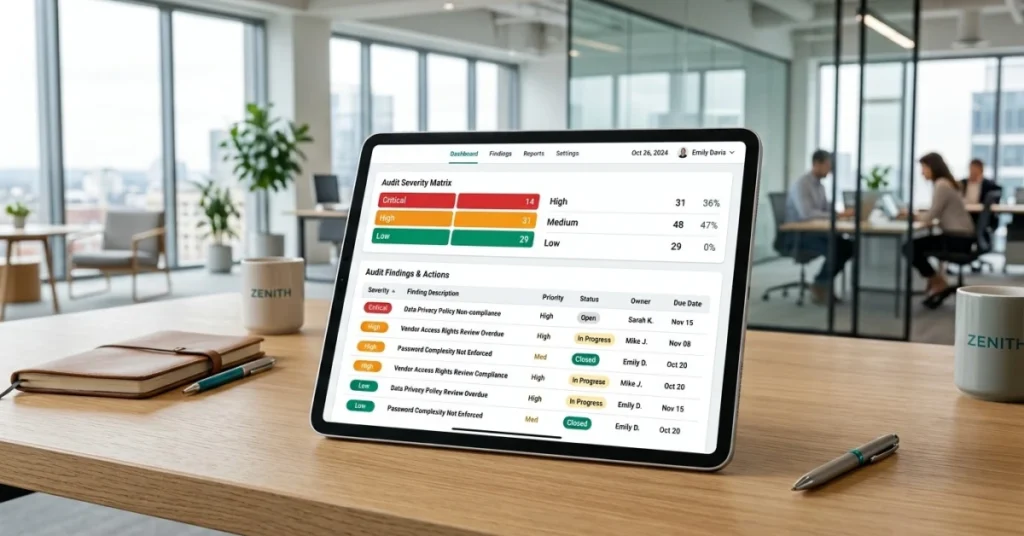
A mystery shopping program without assigned follow-up tasks is just an expensive observation exercise. Every finding must generate a named owner, a deadline, and a re-shop trigger.
The Moz content framework for operational feedback shows that accountability loops with specific deadlines improve task completion rates by 40% compared to open-ended feedback. Assign the action before the debrief meeting ends — not after.
📊 By the Numbers
Programs with structured re-shop cadences resolve compliance gaps 30% faster than single-visit audit models.
The organizations that extract real ROI from their secret shopper programs aren’t the ones running the most visits — they’re the ones who’ve made the post-visit action cycle non-negotiable.
Conclusion
The action cycle — debrief, coaching, re-shop — is where a retail mystery shopping program either earns its budget or wastes it. Shops without structured follow-through are just expensive data collection exercises.
Retailers who close the loop consistently see measurable gains: customer experience evaluation programs with formal coaching cadences improve service scores by up to 30% (Intouchinsight). That number only materializes when findings drive behavior change, not when they sit in a report.
Most teams struggle not with running shops, but with acting on what shoppers find — which is exactly why mystery shopping report workflows matter. FieldPie captures shop findings in real time via customizable forms and photo-based reporting, so managers move from data to coaching conversation without delay.
According to Greenbook, organizations that act on mystery shopping findings within 48 hours see 2x higher compliance rates on re-shops. Every visit becomes a measurable performance improvement when that window is used well.