


A 30-60-90 day sales plan is a structured approach that outlines specific goals, strategies, and actions for a sales professional over their first 30, 60, and 90 days in a new role, territory, or project. It serves as a personal strategic document, demonstrating initiative, planning capabilities, and a clear vision for achieving sales targets.
The Strategic Framework
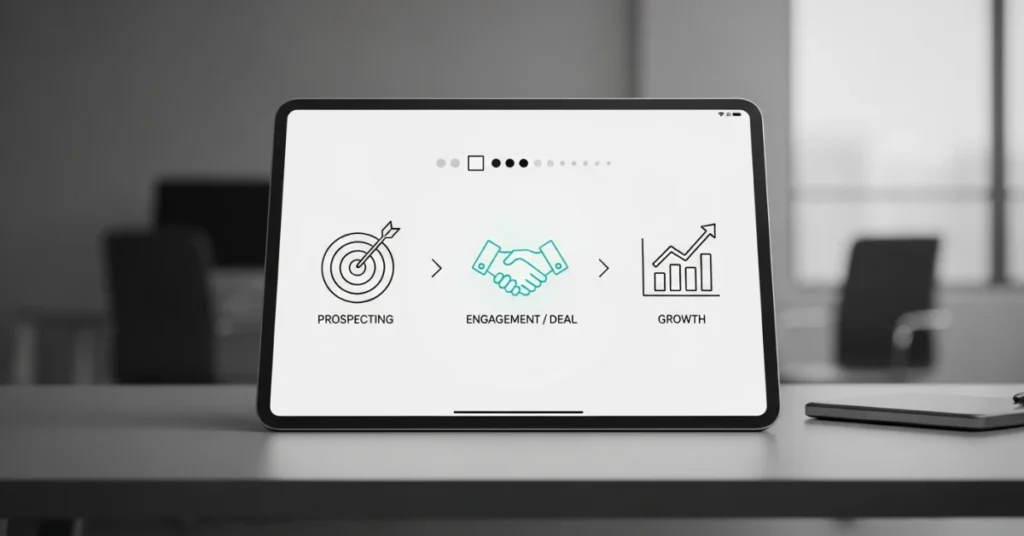
At its core, the plan breaks large, overarching goals into manageable short-term objectives. Each segment focuses on different priorities, progressing from foundational learning to active contribution and sustained growth. This methodical progression ensures that sales professionals are not just busy, but strategically productive.
The Core Purpose
- Learning: The initial phase prioritizes understanding the company, products, market, and sales processes.
- Contributing: The second phase shifts focus to applying learned knowledge, engaging with prospects, and initiating sales activities.
- Driving Results: The final phase centers on consistently achieving sales targets, optimizing strategies, and establishing long-term value.
Phase 1: Learn, Listen, and Immerse (Days 1–30)
The foundation of any effective sales plan is immersion and understanding. This phase is about absorbing as much as possible before making your first move.
Goals
- Understand company products, services, and value propositions
- Familiarize yourself with internal processes, CRM, and sales tools
- Learn about the target market, ideal customer profiles, and competitor landscape
- Build relationships with key internal stakeholders
Key Activities
- Research & Documentation: Dive into company history, mission, and product knowledge bases. Review all sales enablement materials.
- Internal Networking: Meet key stakeholders across marketing, customer success, product development, and operations.
- Training & Shadowing: Attend all mandatory training sessions and shadow experienced reps on calls, demos, and client visits.
- Tool Setup: Configure your workstation and gain proficiency in essential sales software and CRM systems.
- Market Analysis: Begin researching target industries, customer pain points, and key competitors.
Phase 2: Engage, Execute, and Build Momentum (Days 31–60)
Building on the foundation of the first 30 days, this phase transitions into active engagement and pipeline development.
Goals
- Begin active prospecting and lead generation
- Conduct initial discovery calls and qualify prospects
- Start building a robust sales pipeline
- Gather initial customer feedback on product offerings
Key Activities
- Prospecting: Identify and qualify potential leads using established criteria and data-driven insights.
- Outreach: Begin calls, emails, and LinkedIn outreach. Personalize communication based on each prospect’s context.
- Product Demos: Conduct or co-conduct demonstrations, refining your pitch and learning to handle objections confidently.
- Feedback & Refinement: Actively seek input from managers and peers and adapt your approach based on what you learn.
- Process Observations: Note any friction in current sales workflows and prepare constructive improvement suggestions.
Phase 3: Optimize, Own, and Accelerate Growth (Days 61–90)
The final phase is about consolidating your role, sharpening your strategy, and delivering consistent results independently.
Goals
- Consistently meet or exceed sales targets
- Develop and own independent sales strategies
- Become a trusted resource for clients and internal colleagues
- Identify sustainable growth opportunities
Key Activities
- Independent Selling: Take full ownership of the sales cycle from prospecting through to close.
- Performance Analysis: Review your sales metrics regularly. Identify what works and where you can sharpen your approach.
- Relationship Deepening: Invest in key client relationships and explore upselling or expansion opportunities.
- Strategic Planning: Think proactively about your territory or product line. Propose new initiatives to management.
- Mentorship: Share your early insights with newer team members, reinforcing your own expertise in the process.
Phase Summary
| Phase | Focus | Key Outcomes | Performance Metrics |
| Days 1–30 | Learning & Onboarding | Product knowledge, internal network, tool setup | Training completion, CRM proficiency, peer feedback |
| Days 31–60 | Engagement & Contribution | Qualified leads, initial demos, pipeline value | Call volume, demo count, pipeline growth |
| Days 61–90 | Optimization & Growth | Closed deals, refined strategy, client retention | Conversion rate, revenue generated, customer satisfaction |
Practical Examples by Role
Example 1: New Sales Representative
This plan is designed for a sales representative entering a new role, focused on building foundational skills while ramping up to independent performance.
Days 1–30: Foundational Learning
- Complete product certification, focusing on core features and primary use cases
- Shadow at least five sales calls with senior reps; take detailed notes on discovery questions and objection handling
- Review case studies relevant to your target verticals to understand recurring customer pain points
Days 31–60: Active Prospecting & Initial Engagements
- Build a target list of 100+ qualified prospects in your designated verticals
- Conduct 20–25 outbound discovery calls per week, qualifying leads based on their current challenges
- Schedule and conduct 5–7 initial product demos using established scripts and presentation materials
Days 61–90: Closing Deals & Optimization
- Aim to close 2–3 initial deals, demonstrating command of the full sales cycle
- Analyze your demo-to-close conversion rate and pinpoint specific areas for improvement
- Propose one new lead generation approach or market segment based on early field observations

Example 2: New Sales Manager
For sales leaders, the focus shifts from individual quota attainment to team performance, strategic alignment, and coaching.
Days 1–30: Team Assessment & Strategy Review
- Conduct 1:1 meetings with each team member to understand their goals, challenges, and working style
- Analyze the current pipeline, forecast accuracy, and historical team performance data
- Review existing sales processes to identify inefficiencies and structural bottlenecks
Days 31–60: Implementing Changes & Coaching
- Introduce weekly coaching sessions focused on specific skill areas such as discovery, negotiation, or closing
- Roll out one new sales methodology or best practice to improve team consistency
- Set clear, data-driven KPIs that align individual performance with broader business objectives
Days 61–90: Driving Performance & Strategic Growth
- Lead the team toward monthly revenue targets, providing active mentorship on complex deals
- Report on the measurable impact of implemented changes on team efficiency and output
- Develop a 6-month strategic growth plan addressing talent development and market expansion

Example 3: New Sales Territory
Entering a new market requires a data-driven approach to ensure effective penetration and early traction.
Days 1–30: Market Research & Territory Analysis
- Conduct comprehensive market research to identify key industries and high-potential accounts in the territory
- Analyze competitor presence, pricing strategies, and estimated market share in the region
- Identify local networking groups, industry associations, and potential strategic partners
Days 31–60: Initial Outreach & Relationship Building
- Build a targeted prospect list of 150+ contacts based on research and ideal customer profiles
- Launch personalized multi-channel outreach via email, LinkedIn, and direct calling
- Attend at least two local industry events to network and generate initial market awareness
Days 61–90: Territory Penetration & Growth
- Secure 5–10 meetings with key decision-makers, focused on deep discovery and tailored presentations
- Establish initial strategic partnerships with complementary local providers or integrators
- Define first-quarter revenue targets for the territory and outline a concrete plan to achieve them
Conclusion
A well-executed 30-60-90 day sales plan is more than a document — it is a living strategy that guides performance, builds confidence, and drives measurable results for individuals and organizations alike.
By systematically approaching learning, engagement, and optimization, sales professionals can quickly become high-value contributors. The key to making this framework effective is tailoring it honestly to your specific role, industry, and strengths. A plan that reflects genuine goals and realistic timelines will always outperform a generic template. Revisit and revise it regularly as you learn more about your environment and where your greatest opportunities lie.