


Food and Beverage Auditing is the systematic, independent evaluation of a food or beverage operation’s processes, facilities, and documentation to verify compliance with food safety standards, regulatory requirements, and quality benchmarks — covering everything from raw material sourcing to final product distribution.
What Is Food and Beverage Auditing and Why Does It Matter?
In today’s regulatory environment, a single contamination incident can trigger product recalls costing millions of dollars, destroy brand equity overnight, and expose executives to criminal liability. The U.S. Food Safety Modernization Act (FSMA) — the most sweeping overhaul of U.S. food law since 1938 — shifted the industry’s focus from reactive response to proactive prevention. Compliance is no longer optional; it is operationally mandatory.
Organizations like NSF International conduct over 40,000 food safety audits annually, spanning manufacturers, distributors, hotels, and restaurants across the globe. That scale underscores how deeply embedded auditing has become in the beverage industry supply chain.
Beyond regulatory pressure, auditing delivers measurable business value:
- Risk reduction: Identifies hazards before they become recalls or enforcement actions.
- Supplier accountability: Verifies that third-party suppliers meet your predefined quality parameters.
- Consumer trust: Certification against recognized standards signals credibility at retail.
- Operational efficiency: Audit findings reveal process gaps that, when corrected, reduce waste and rework.
If you’re building or refining your compliance program, understanding how food safety management systems are structured is the essential first step.
What Are the Main Types of Food and Beverage Audits?
Not all audits serve the same purpose. The beverage industry relies on several distinct audit types, each targeting a different layer of the operation.
| Audit Type | Primary Focus | Common Standards Applied |
|---|---|---|
| Food Safety Audit | HACCP controls, contamination prevention, CCP monitoring | HACCP, FSMA, ISO 22000 |
| Quality Management Audit | Product consistency, specification adherence, defect rates | ISO 9001, SQF |
| Supplier / Second-Party Audit | Vendor compliance with buyer-defined requirements | BRCGS, IFS, custom scorecards |
| Third-Party Certification Audit | Independent verification for market access | BRCGS, FSSC 22000, SQF, IFS |
| Internal Audit | Self-assessment for continuous improvement | Any applicable standard |
| Regulatory Inspection | Government-mandated compliance check | FDA, USDA, EFSA |
| Storage & Distribution Audit | Cold chain integrity, warehouse conditions, logistics | GDP, FSMA Preventive Controls |
How Does a Third-Party Certification Audit Differ from an Internal Audit?
A third-party certification audit is conducted by an accredited, independent body — such as SGS, DNV, or NSF — with no commercial relationship to the audited facility. The result is a certification credential that carries weight with retailers, regulators, and trading partners. As SGS outlines in its food audit and certification services, these audits assess facilities against globally recognized standards including BRCGS, FSSC 22000, SQF, IFS, ISO, HACCP, and GMP.
An internal audit, by contrast, is conducted by your own team or a contracted consultant. It carries no certification value but is indispensable for identifying gaps before an external body arrives on site.
What Role Does a Safety Audit Play in Regulatory Compliance?
A safety audit maps your current practices against the specific requirements of FSMA, the FDA Food Code, or equivalent international regulations. Each safety audit generates documented evidence — critical for demonstrating due diligence during an FDA inspection. Under FSMA’s Preventive Controls rule, facilities must conduct a hazard analysis and implement risk-based preventive controls, making the safety audit a legal prerequisite, not merely best practice.

What Global Standards Govern Food and Beverage Auditing?
Standards provide the measurable criteria against which audits are scored. Choosing the right standard depends on your market, customer requirements, and operational complexity.
BRCGS (Brand Reputation through Compliance Global Standards) The dominant standard for UK and European retail supply chains. BRCGS grades facilities from AA to D, with AA representing the highest level of compliance. Many major retailers — including Walmart and Tesco — mandate BRCGS certification for listed suppliers.
FSSC 22000 Built on ISO 22000 plus sector-specific prerequisite programs (PRPs), FSSC 22000 is recognized by the Global Food Safety Initiative (GFSI) and widely required by multinational food manufacturers. It integrates food safety management with broader ISO management system principles.
SQF (Safe Quality Food) Administered by the Food Marketing Institute (FMI), SQF is the most widely adopted GFSI-recognized standard in North America. It operates across three levels: food safety fundamentals, food safety plan, and food safety and quality.
IFS Food Predominantly required by German and French retail chains, IFS Food uses a percentage-scoring system that enables direct benchmarking between suppliers.
HACCP Hazard Analysis and Critical Control Points remains the foundational science-based framework for identifying, evaluating, and controlling food safety hazards. All major certification standards incorporate HACCP principles at their core.
DNV’s food safety audit and inspection services confirm that these standards are applied across the complete supply chain — from primary production through storage and distribution — reflecting the comprehensive scope that modern food and beverage auditing demands.
How Is a Food and Beverage Audit Conducted? A Step-by-Step Process
Understanding the audit lifecycle helps operations managers prepare effectively and avoid common non-conformance pitfalls.
Step 1: Scope Definition and Pre-Audit Planning
Define the audit scope: which site, which processes, which standard, and which time period. Select the audit type (internal, second-party, or third-party). Assign an audit team with relevant technical competence in the beverage industry sector being assessed.
Step 2: Document Review
The auditor reviews your food safety management system documentation — HACCP plans, prerequisite program (PRP) records, supplier approval registers, label compliance files, corrective action logs, and training records. Gaps identified here often predict on-site findings.
Step 3: Opening Meeting
The lead auditor presents the audit plan, confirms scope, and establishes communication protocols. This is the opportunity to flag any access restrictions or operational constraints.
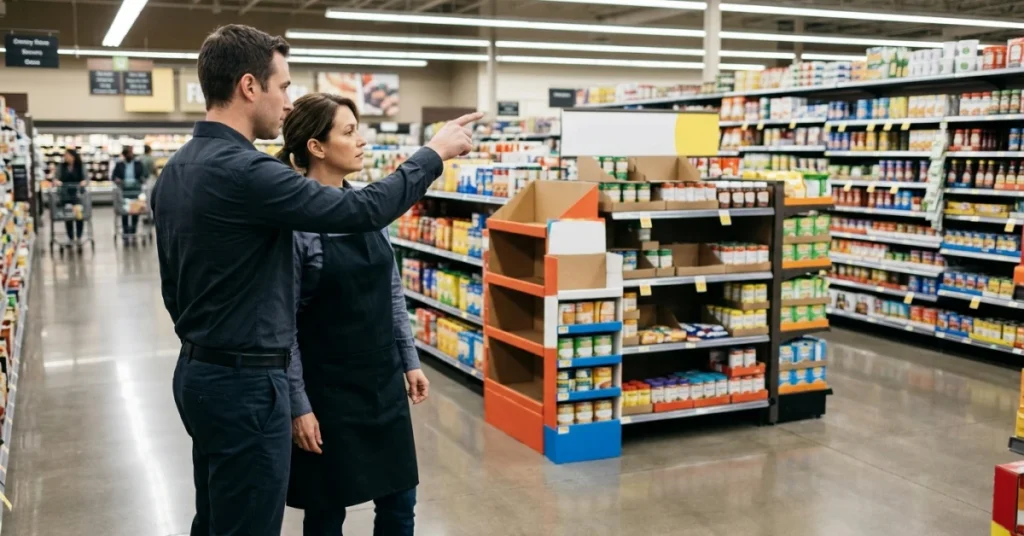
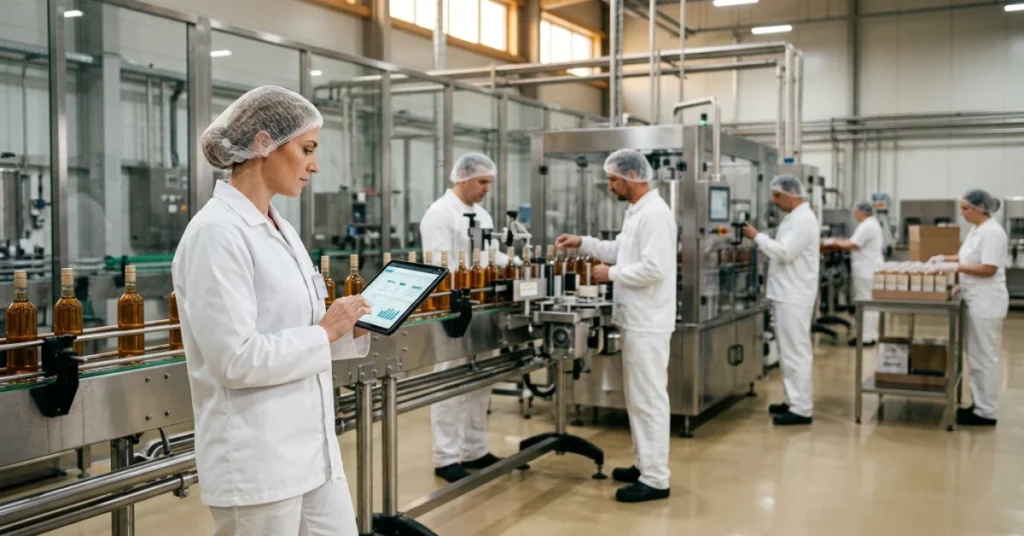
Step 4: On-Site Inspection
This is the core of any safety audit. Auditors physically inspect:
- Receiving docks and raw material storage areas
- Production lines and processing equipment
- Temperature-controlled storage and cold chain controls
- Sanitation and pest control programs
- Personal hygiene and employee practices
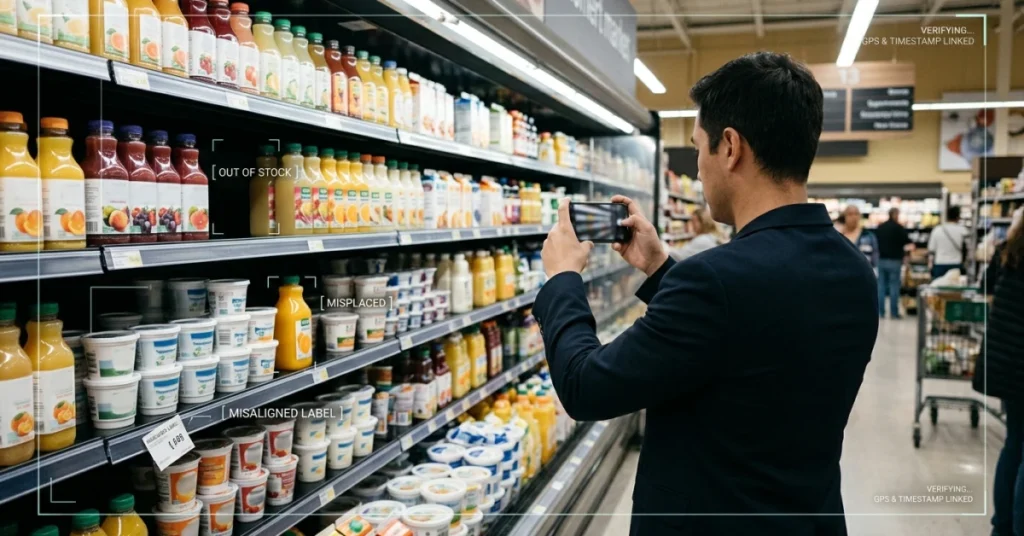
- Label accuracy and allergen controls
- Waste management and environmental controls
Step 5: Employee Interviews
Auditors interview line workers, supervisors, and quality managers to verify that documented procedures are understood and practiced consistently. A procedure that exists only on paper is a major non-conformance.
Step 6: Findings Documentation and Closing Meeting
The auditor presents preliminary findings — categorized as critical non-conformances, major non-conformances, minor observations, and opportunities for improvement. The closing meeting confirms findings and timelines for corrective action.
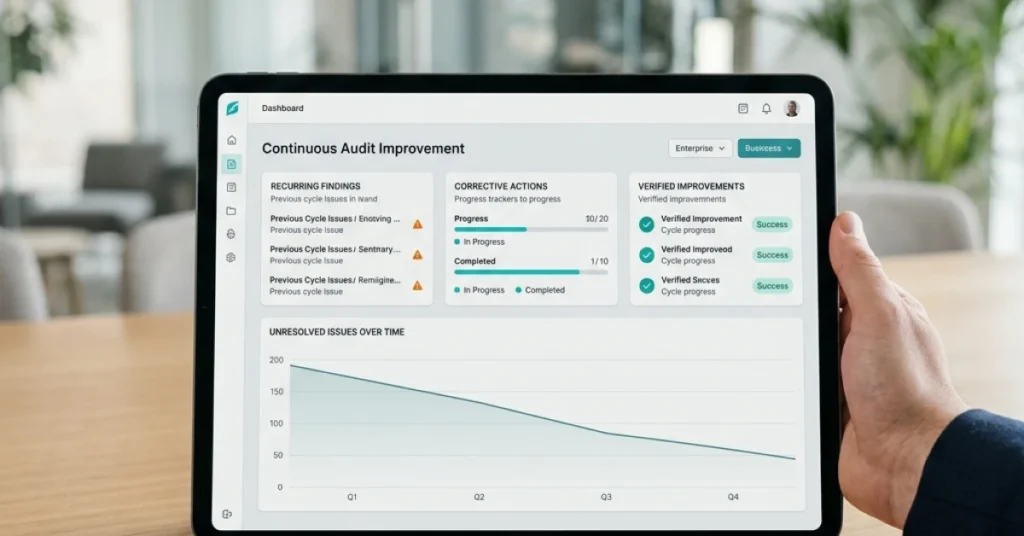
Step 7: Corrective Action and Follow-Up
For each non-conformance, the facility must submit a root cause analysis and corrective action plan within a defined timeframe (typically 28 days for major findings). Certification bodies verify closure before issuing or renewing a certificate.
What Are the Most Common Non-Conformances Found During Food and Beverage Audits?
Based on patterns across the beverage industry, the following non-conformances appear most frequently:
- Incomplete CCP monitoring records — Gaps in temperature logs or metal detector checks are among the top critical findings.
- Allergen cross-contact risks — Inadequate segregation in storage or on production lines, or label errors that fail to declare allergens present.
- Supplier approval gaps — Approved supplier lists that are outdated or lack supporting documentation such as CoAs or third-party audit reports.
- Calibration overdue — Thermometers, scales, and metal detectors with expired calibration certificates.
- Pest control deficiencies — Unresolved pest activity, missing bait station inspection records, or inadequate exclusion measures.
- Training records missing — Employees performing food safety-critical tasks without documented training or competency verification.
- Traceability failures — Inability to complete a mock recall within the required timeframe, often due to poor lot coding practices.
How Should You Select a Food and Beverage Auditing Service Provider?
Not all auditing services deliver equal value. When evaluating providers, apply these criteria:
Accreditation: Confirm the body is accredited by ANAB (ANSI National Accreditation Board) or UKAS for the specific standard you require. Accreditation is non-negotiable for certification audits.
Sector expertise: An auditor with deep experience in, say, dairy processing may lack the technical depth needed for a craft brewery or a USDA-regulated meat facility. Verify auditor competence in your specific segment of the beverage industry.
Geographic reach: If you operate multiple sites across multiple countries, choose a provider with a global auditor network. NSF International, SGS, and DNV all operate extensive global networks capable of conducting audits across diverse jurisdictions.
Turnaround time: How quickly are reports delivered after the audit? Best-in-class providers deliver draft reports within 5 business days.
Technology integration: Does the provider’s platform integrate with your ERP or quality management system? Seamless data exchange reduces administrative burden.
Cost transparency: Understand the full cost structure — including travel expenses, corrective action verification visits, and re-audit fees — before signing a contract.
As audit-now.com notes in its food and beverage checklist guidance, selecting the right audit platform and service structure is as strategically important as the audit content itself, particularly for multi-site operations managing dozens of simultaneous compliance programs.

What Are the Costs of Food and Beverage Auditing?
Audit costs vary significantly based on standard, facility size, complexity, and provider. The following ranges reflect typical U.S. market rates for 2025–2026:
| Audit Type | Estimated Cost Range | Duration |
|---|---|---|
| BRCGS Food Safety Certification | $3,000 – $8,000 | 1–3 days on site |
| FSSC 22000 Initial Certification | $4,000 – $10,000 | 2–4 days on site |
| SQF Level 2 Certification | $2,500 – $7,000 | 1–2 days on site |
| Internal Audit (consultant-led) | $1,500 – $4,000 per day | 0.5–2 days |
| FDA FSMA Readiness Audit | $2,000 – $6,000 | 1–2 days |
| Supplier Second-Party Audit | $1,000 – $3,500 | 0.5–1.5 days |
These figures exclude travel expenses, which can add 20–40% for remote sites. Annual surveillance audits are typically 30–50% less expensive than initial certification audits.
Conclusion
Food and beverage auditing is no longer just a compliance requirement — it is a critical part of maintaining food safety, protecting brand reputation, and improving operational performance. From HACCP and FSMA compliance to global standards like BRCGS, SQF, and FSSC 22000, audits help businesses identify risks early, strengthen supplier accountability, and ensure consistent quality across the supply chain.
As regulations tighten and consumer expectations continue to rise, organizations that invest in proactive auditing processes will be better equipped to reduce risk, improve transparency, and build long-term trust in the market.