


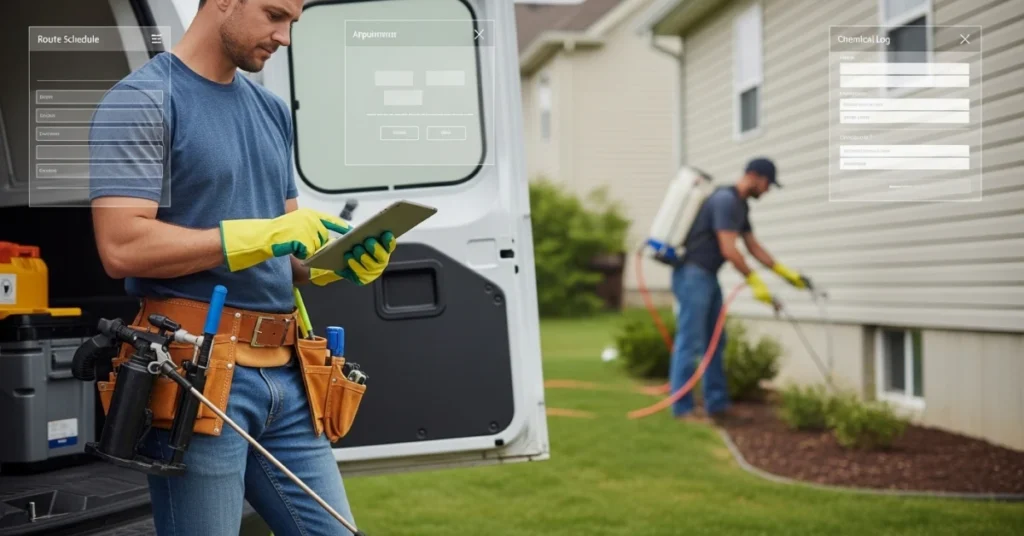
The pest control industry is rapidly moving toward digital operations. Valued at around USD 280 million in 2023, the pest control software market is expected to reach approximately USD 570 million by 2032, driven by growing demand for automation, regulatory compliance, and more efficient field operations.
Despite this shift, many pest control businesses still rely on spreadsheets, manual dispatching, and disconnected tools to manage schedules, routes, and reporting. This article explores why modern pest control software has become essential and reviews some of the leading solutions built for today’s field service operations.
Why Your Pest Control Business Needs Software
Pest control operations increasingly rely on software to stay efficient, compliant and scalable. Here’s why investing in pest control software makes sense:
- Manual tools cause scheduling issues and missed treatments. Without software, businesses juggle phone calls, texts and spreadsheets, leading to double‑booked appointments, missed follow‑up treatments and stressed technicians. Manual admin work consumes nearly 30 % of owners’ time, reducing productivity and profits.
- Centralised software brings visibility, control and scalability. Unified platforms combine job scheduling, routing, on‑site service logging, reporting and payments, keeping operations compliant without slowing them down. Automating core tasks can save up to ten hours per week and increase team productivity by 15–20 %.
- Route optimisation reduces fuel costs and increases job completion. Intelligent route planning considers traffic, appointment windows and technician skills; effective routing can cut drive time by up to 30 % and increase daily job completion rates by 25 %. Optimised routes also improve customer experience by providing accurate arrival windows and reducing missed appointments.
- Real‑time tools reduce errors and missed jobs. Mobile‑first apps allow technicians to receive schedule updates, navigation and service protocols on their devices while recording job details and photos on site. Automatic notifications and e‑signatures improve communication and ensure compliance documentation.
- Software improves compliance and reporting. Regulatory pressures require detailed records of chemicals used, technician training and service intervals. Modern platforms integrate chemical tracking, treatment documentation and customizable compliance reports, helping companies meet local and international standards.
What These Pest Control Software Solutions Have in Common
Pest control platforms vary in features and focus, yet the tools in this list share a common goal: enabling consistent, compliant service delivery as businesses scale. They typically:
- Replace manual tools such as spreadsheets, paper schedules and text‑based coordination.
- Centralise scheduling and execution by managing appointments, technician routing, treatment logging and job completion in one platform.
- Connect office teams and field technicians through real‑time updates, mobile apps and automated customer notifications.
- Support estimating, invoicing and payments, including instant invoicing when a job is completed and integration with accounting platforms.
- Improve operational visibility via dashboards and reporting tools that track service history, compliance status and technician performance.
Together, these capabilities replace fragmented tools with a single operational system. This unified foundation helps pest control businesses handle more appointments, manage larger teams and scale operations without added complexity.
Top Pest Control Software Solutions
This list highlights leading pest control software solutions built for modern field operations. The platforms below support pest control contractors and small businesses by combining scheduling, routing, treatment execution, chemical tracking, reporting and customer relationship management to help teams manage technicians and scale efficiently.
Each solution supports different business sizes, from one‑person operations to complex, multi‑technician fleets.
1. FieldPie
The Best Pest Control Software for Field Operations of Any Size

FieldPie is a modern field execution platform built specifically to handle the real demands of pest control operations. It supports both small crews and large, multi-team companies—without forcing businesses to choose between simplicity and advanced capability.
Instead of juggling multiple tools, FieldPie brings scheduling, field execution, forms, reporting, customer data, GPS tracking, chemical logging, and service history into one unified system. Teams get up and running fast; managers get real-time control as operations grow. FieldPie works as a standalone platform or integrates with your existing tools—fitting both straightforward setups and more mature operations.
Core capabilities include:
- End-to-end field execution — schedule jobs, manage visits, and handle work orders in one continuous flow, purpose-built for recurring pest control service models
- Smart scheduling & routing — mobile-first workflows that keep crews moving efficiently between treatment stops
- Offline-ready operations — capture data, photos, chemical usage, signatures, and inspection forms without signal; syncs automatically when back online
- Custom forms & inspections — fully configurable for pest control-specific workflows, including initial assessments, treatment records, and follow-up visits
- Real-time visibility — live job progress, locations, and field performance at a glance across all active crews
- Flexible roles & permissions — tailored access for technicians, supervisors, and operations managers
- Scalable reporting — clear operational insights without enterprise-level complexity
Where FieldPie stands out: FieldPie is built as a long-term platform, not a stopgap tool. It scales naturally with your business—whether you run a two-person crew or a large distributed team—without constant tool changes or hidden complexity. The platform is designed around how pest control work actually flows: recurring visits, compliance documentation, and real-time field coordination all live in one place, so nothing falls through the cracks between jobs.
Things to consider: FieldPie prioritizes deep operational execution over niche add-ons, which often eliminates the need for multiple separate systems. Businesses looking for built-in marketing campaign tools may want to evaluate whether FieldPie’s integrations meet those needs alongside their core operations.
2. GorillaDesk
GorillaDesk is a field service management platform built for pest control, lawn care, and pool service businesses. It is designed to bring daily scheduling, billing, and customer management into one system for service operators.
Core capabilities include:
- Job scheduling, route optimization, and technician dispatching
- Invoicing, batch billing, and integrated payment processing
- Customer CRM with service history, notes, and communication logs
- Chemical usage tracking and application records
- Device tracking with barcode scanning for trap and station management
- Customer portal with online payment and document access
- Mobile app for iOS and Android
Where GorillaDesk stands out: GorillaDesk covers the core daily workflow of a pest control business—from scheduling through invoicing—within a single platform that is generally considered accessible to set up and use.
Things to consider: Businesses with more complex operational requirements, such as multi-branch management or advanced reporting needs, may want to evaluate how well the platform’s depth aligns with their scale before committing.
3. FieldRoutes
FieldRoutes (formerly PestRoutes) is a cloud-based field service management platform built for pest control and lawn care companies, now part of the ServiceTitan family. It covers scheduling, routing, billing, customer communication, and marketing automation within a single system.
Core capabilities include:
- Automated scheduling, dispatching, and route optimization
- CRM with full customer lifecycle tracking
- Integrated payment processing and automated billing workflows
- Marketing automation including email campaigns, direct mail, and reputation management
- E-commerce tools for online service purchasing and lead capture
- Mobile app for field technicians covering job management, contracts, and payments
- Compliance and audit-ready reporting for commercial pest control
Where FieldRoutes stands out: FieldRoutes combines operational management with integrated marketing and customer acquisition tools, covering a broad range of business functions within one platform.
Things to consider: The range of features included in the platform comes with a corresponding setup process. Pricing is custom-quoted rather than publicly listed, which is worth factoring in when comparing options early in the evaluation process.
4. PestPac
PestPac, developed by WorkWave, is an established field service management platform for pest control businesses. It offers tools for field operations and back-office management, serving residential and commercial operators across different company sizes.
Core capabilities include:
- Scheduling, dispatching, and route optimization with a Visual Route Manager
- Customer CRM with service histories, communication logs, and account management
- Invoicing, billing automation, and integrated payment processing
- Chemical tracking, inventory management, and compliance documentation
- IoT sensor integration for connected pest monitoring devices
- Marketing automation and reputation management tools
- Analytics and performance reporting dashboards
Where PestPac stands out: PestPac covers a broad range of operational and compliance-related workflows, with features that address both recurring residential service and more regulated commercial pest control requirements.
Things to consider: The platform’s feature breadth means there is a learning curve during initial adoption. Teams evaluating PestPac should factor in onboarding time and assess whether the interface and mobile experience align with how their field staff works day-to-day.
5. ServiceTitan
ServiceTitan is a field service management platform used across multiple service industries, including pest control. It covers scheduling, dispatching, invoicing, reporting, and marketing within a single system, and is positioned toward established service businesses managing operations at scale.
Core capabilities include:
- Job scheduling and technician dispatch
- Invoicing, payment processing, and accounting integrations
- Customer communication tools and automated service notifications
- Mobile app for field technicians
- Reporting and business performance dashboards
- Marketing Pro suite for targeted email and direct mail campaigns
Where ServiceTitan stands out: ServiceTitan brings together field operations and back-office functions—including marketing and business intelligence tools—into a single platform, which can reduce the need for separate systems across different parts of the business.
Things to consider: The platform is built for larger operations, and the implementation process, pricing, and overall scope of the system are factors that smaller or mid-sized pest control businesses typically weigh carefully before committing.
Not sure yet?
See how FieldPie works in real field scenarios. Schedule a demo to explore workflows, reporting and field execution.
Your Strategic Roadmap: How to Choose the Right Pest Control Software
Choosing the right pest control software starts with understanding your operations, growth goals and daily field needs. As businesses scale, visibility into customer data, service history, appointment scheduling, route optimisation and regulatory compliance becomes just as important as core operations.
Must‑Have Features for Pest Control Software
Industry data shows that automation can save 10 hours per week and increase productivity by 15–20 %, underscoring the importance of core capabilities. A robust pest control platform should include:
- Smart scheduling and dispatch. Automatically assign jobs based on technician availability, skills and proximity; ensure recurring services adhere to treatment intervals.
- Route optimisation. Consider traffic conditions, appointment windows and technician certifications to create efficient daily schedules.
- Mobile apps for technicians. Allow on‑site logging of treatment details, photos, signatures and chemical usage with offline support.
- Invoicing and payments. Generate invoices immediately after service and accept digital payments.
- Reporting and analytics. Offer dashboards and exportable reports to monitor technician performance, service quality and compliance.
How to Choose the Right Pest Control Software
Selecting the right platform requires a strategic approach focused on long‑term fit rather than just features:
- Define core needs. Identify your service types (residential, commercial, industrial or agricultural), number of technicians, coverage area and regulatory requirements.
- Prioritise ease of use. A simple, intuitive interface ensures quick adoption by office staff and field technicians.
- Ensure scalability and integration. Software should support more customers, technicians and service plans as you grow; look for cloud‑based models and open APIs for CRM, ERP and marketing tools.
- Assess compliance support. Ensure the platform provides chemical tracking, documentation and customizable compliance reports.
- Evaluate customer experience features. Customer portals, automated notifications and e‑signatures build trust and reduce administrative overhead.
- Test with trials and demos. Always test the software in real operational scenarios before committing; evaluate scheduling efficiency, route optimisation and reporting.
Conclusion: Choosing Software for Your Pest Control Business
As pest control businesses grow, managing schedules, technician routes, compliance records, and customer communication manually becomes increasingly difficult. Modern pest control software centralizes these processes, helping companies operate more efficiently and deliver more consistent service.
With digital transformation accelerating across the industry, adopting the right software is no longer just a productivity upgrade—it’s becoming a strategic necessity for companies that want to scale and stay competitive.