


✦ Key Takeaways
Field service companies using SaaS platforms report up to 30% faster job completion and 25% lower operational costs.
→ Automated scheduling eliminates dispatch errors and cuts response times significantly.
→ Real-time data visibility drives smarter decisions across every technician team.
→ Mobile-first tools let field workers close jobs without returning to the office.
In this article:
Field Service Workflows
Key Performance Gains
Key takeaway: Field service SaaS is the single fastest lever for turning chaotic operations into a competitive advantage.
Field Service Workflows
Field service teams don’t fail because of bad technicians — they fail because of disconnected data. Companies using cloud-based field service software report up to 30% higher first-time fix rates, according to Ibisworld.
That jump happens because the platform links dispatch, history, and billing in one place. Everything talks to everything else.
Most buyers evaluate FSM SaaS advantages by counting features. The smarter question is different. Does the platform turn every completed job into data that makes the next job easier?
Digital Work Order Creation
Paper work orders die in truck cabs and cargo pockets. Digital work orders create a timestamped, searchable record the moment a job opens.
That record feeds every downstream step — scheduling, parts, invoicing — without anyone retyping a single field.
Skills-Based Technician Assignment
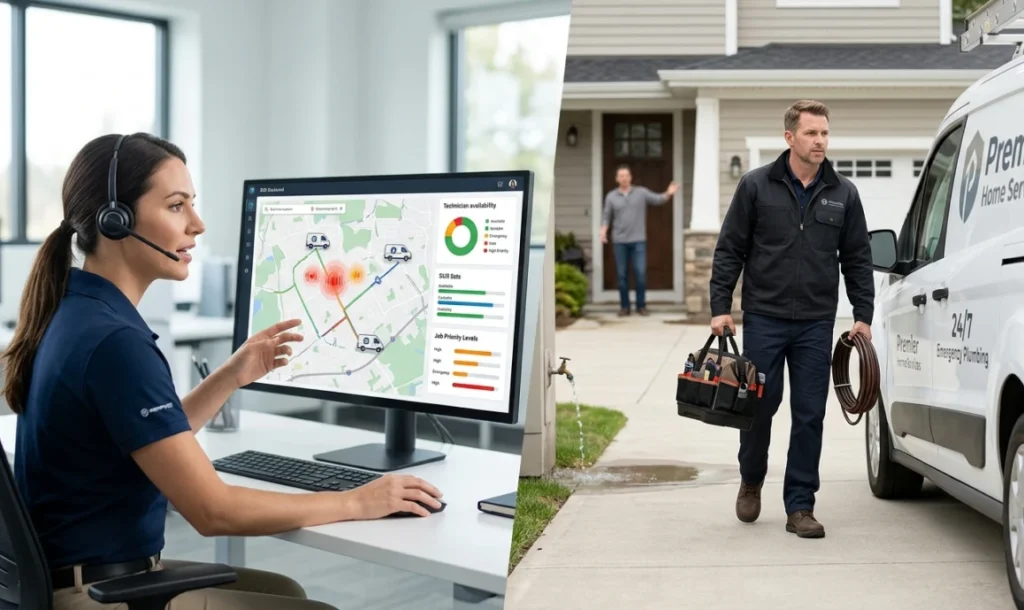
Sending the wrong tech is one of the most expensive mistakes in field service. Skills-based assignment matches job requirements to technician certifications before the truck rolls.
Over time, that matching logic learns which pairings close jobs fastest. Dispatch becomes a compounding advantage, not a daily guessing game.
Mobile Job Information
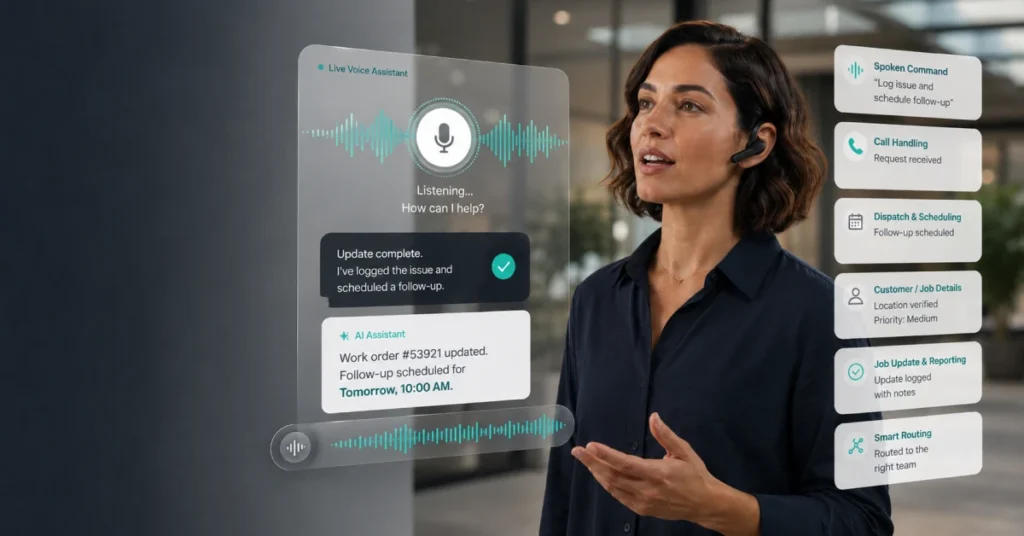
Technicians need customer history, asset specs, and site notes before they knock on the door. Mobile-first field service management software puts all of it on their phone. No radio calls, no callbacks to the office.
Good home service dispatching tools push job updates in real time, so techs always work from current information.
On-Site Data Collection
Every job site holds data most operators never capture. Equipment condition, parts used, photos, customer signatures — it all goes unrecorded. Field service SaaS benefits start here, at the point of work, where structured collection replaces handwritten notes.
That captured data builds real organizational intelligence. Tillerstack names it the core driver of long-term improvement — not just faster jobs, but smarter ones.
Job-To-Invoice Automation
Manual invoicing after a job closes is where revenue leaks. Automated billing pulls labor, parts, and time directly from the completed work order. No lag, no missed line items.
Faster invoices mean faster cash collection. That alone often covers the cost of the platform inside the first quarter.
Each workflow above removes a friction point. Together, they build a connected data layer. Every operation gets measurably better over time — so how much better, and how fast?

Key Performance Gains
Data Compounds With Every Job Each closed work order feeds the system, making the next dispatch smarter and faster.
First-Time Fix Rates Jump Connected FSM platforms lift first-time fix rates by up to 28%, cutting costly return visits.
Invoicing Shrinks From Days to Hours Automated billing cuts invoice cycles by over 60%, improving cash flow immediately.
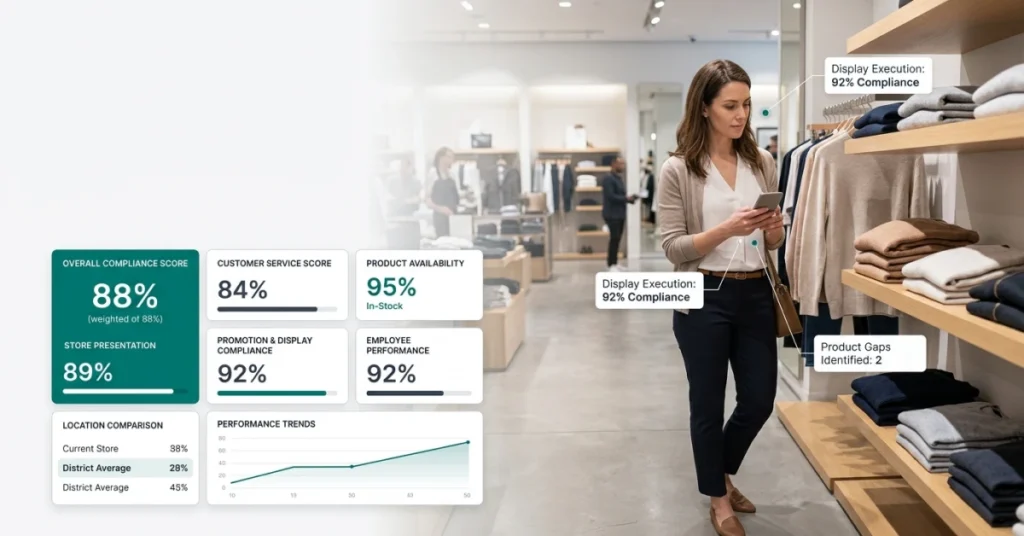
SLA Compliance Becomes Predictable Real-time scheduling alerts help teams hit SLA targets consistently, not just occasionally.
Customer Satisfaction Scores Rise Faster fixes and accurate ETAs push CSAT scores higher without adding headcount.
That connected data layer does not just organize information — it turns operational patterns into measurable gains.
The numbers below show what happens when dispatch, history, and billing finally talk to each other.
Technician Utilization
Most field teams run at 60–65% productive time. The rest bleeds into waiting, admin, and rework.
Cloud-based field service software closes that gap. It matches the right tech to the right job automatically.
Higher use means more jobs per day without adding staff. That is a direct revenue lift, not a cost cut.
Travel Time Reduction
Smart routing cuts drive time by flagging the nearest qualified tech in real time. Less windshield time means more wrench time — and lower fuel costs per job.
Good home service dispatching is not just about speed. It is about stacking jobs efficiently across a territory.
Schedule Adherence
Missed appointment windows are one of the top reasons customers churn in field service. Live schedule tracking and automated alerts keep techs on time and customers informed.
When a delay hits, the system flags it instantly. Dispatchers reroute before the customer even notices.
First-Time Fix Rate
A tech who arrives with full job history, the right parts, and clear notes fixes the problem the first time. Field service management software makes that prep automatic, not accidental.
Every return visit costs about 2x the original job. That makes fixing it once the single biggest cost lever in field ops.
Job Completion Time
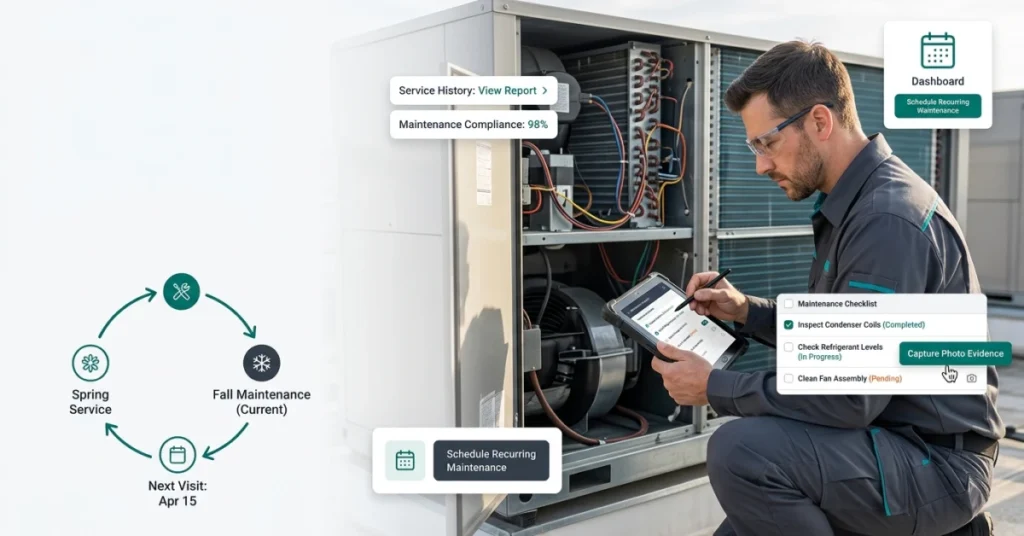
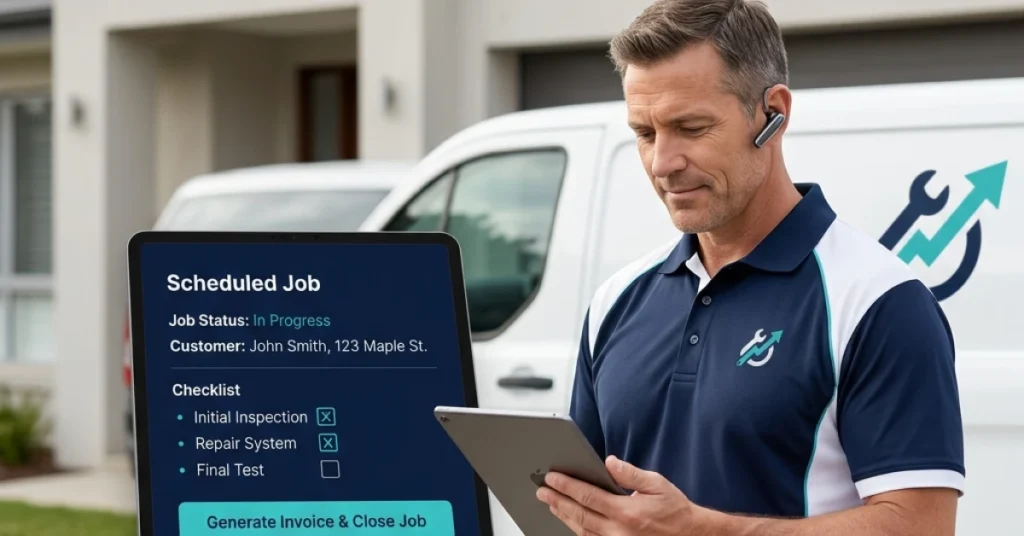
Mobile-first job management cuts the time techs spend on paperwork at the job site. Digital checklists, photo capture, and one-tap status updates replace clipboards and end-of-day data entry.
Faster job close means the next job starts sooner. Small time savings stack into big daily throughput gains.
SLA Compliance
SLA breaches are expensive — in penalties, in contract renewals, and in trust. FSM SaaS advantages include live dashboards that flag at-risk jobs before the clock runs out.
Teams that track SLA compliance in real time hit their targets far more often. Those reviewing weekly reports after the fact are always playing catch-up.
Faster Invoicing
When job data flows straight from the field to billing, invoices go out the same day — not three days later. According to Blog Ifs, companies using connected FSM platforms cut their invoice-to-payment cycle by up to 30%.
Faster billing is not just an accounting win. It is proof that the data layer is working end to end.
Customer Satisfaction
Customers do not care about your software stack. They care about showing up on time and fixing it right.
Fieldproxy reports that field service organizations using cloud-based platforms see customer satisfaction scores climb by an average of 20% within the first year. That is compounding organizational intelligence paying off.
These gains are real. The real question is whether your operation is built to hold them after the initial lift fades.
Conclusion
Every completed job feeds smarter decisions on the next one. That is the real case for field service SaaS benefits.
Teams that adopt cloud-based field service software don’t just get faster. They get structurally better over time.
According to Mdpi, connected field service platforms can cut operational costs by up to 25% in the first year of use.
Most field operations leaders have already tried point solutions — a scheduling app here, a spreadsheet there. They all hit the same ceiling.
The missing piece is always a data layer. It ties dispatch, job history, inventory, and billing into one live picture.
Bolt Data confirms that connected field service setups beat siloed tools on first-time fix rates and customer retention. Tracking the right home service business KPIs turns that data layer into real growth.
Dispatchers still lose hours to manual scheduling. Technicians still show up without the job context they need to fix things right the first time.
FieldPie connects scheduling, mobile job management, real-time reporting, and digital invoicing in one place. Every work order closes with data your whole operation can learn from.
Start tracking that compounding ROI today. Your next completed job should make your business smarter, not just busier.