


✦ Key Takeaways
Retailers using image recognition report up to 30% improvement in conversion rates by decoding real-time shopper behavior.
- → Cameras map foot traffic, dwell time, and product interaction instantly.
- → Behavior data drives smarter shelf placement and inventory decisions.
- → Retailers cut shrinkage losses by identifying suspicious patterns automatically.
In this article:
- How Image Recognition Improves Customer Behavior Analysis in Retail
- Why Retailers Use Image Recognition to Understand Customer Behavior
- What Is Image Recognition in Retail?
- How Image Recognition Tracks Customer Behavior
- How Retailers Use Customer Behavior Data
Key takeaway: Image recognition transforms passive surveillance into a precise engine for retail revenue growth.
How Image Recognition Improves Customer Behavior Analysis in Retail
Retailers capture billions of transactions annually yet remain blind to the 30-second hesitation in front of a shelf that predicts whether a sale happens at all. image recognition in retail closes that gap by converting raw visual data into structured behavioral intelligence no receipt can provide.
The visual AI market for store analytics is projected to surpass $5.4 billion by 2028, driven largely by demand for shopper analysis applications beyond simple security (according to Market). That growth reflects a hard truth: point-of-sale data tells you what sold, never why a shopper paused, reversed course, or walked away.
Marketsandmarkets projects the broader computer vision sector will grow at a 19.5% CAGR through 2029 — a signal that visual AI store intelligence is becoming core competitive infrastructure. Merchants who decode micro-signals like dwell patterns, backtracking, and gaze proxies before a transaction occurs will hold a predictive edge that no loyalty program or heat map can replicate.
Understanding why those behavioral signals matter — and what store operators are actually doing with them — is the question that changes how you think about this technology entirely.
Why Retailers Use Image Recognition to Understand Customer Behavior
That gap — between what customers buy and why they almost didn’t — is exactly what’s driving adoption of image recognition in retail. Merchants now recognize that purchase intent lives in the seconds before a decision, not in the receipt after it.
Hesitation at a shelf edge, a backtrack to a previously passed display, a prolonged dwell near a price tag — these sequential micro-behaviors are invisible to any point-of-sale system. Computer vision retail technology captures and sequences them in real time, building a profile that no loyalty card ever could.
The competitive edge isn’t in counting foot traffic — it’s in reading the thread that runs through every shopping journey. Operators who decode that thread gain predictive intelligence telling them what a shopper will do next, not just what they did last.
The Shift From Manual Observation to AI-Based Analysis
Manual observation captured maybe 5% of in-store activity — and that estimate is generous. AI image recognition shopping tools now process thousands of discrete events per hour, across every aisle, simultaneously.
Visual AI retail insights don’t just scale observation — they structure it. Patterns that a human observer would never connect across time and space become actionable signals in seconds.
How Customer Behavior Impacts Retail Performance
Shopper conduct directly determines conversion rates, basket size, and category performance — yet most merchants still optimize these metrics using only post-transaction data. That’s like steering a car by watching the rearview mirror.
Operators leveraging visual data report measurable lifts in conversion — Researchgate documents AI-powered systems reducing checkout friction by up to 35%, directly tied to upstream pattern recognition. Dataweave further confirms that image recognition drives shelf compliance improvements translating into double-digit revenue recovery across categories.
📊 By the Numbers
AI-powered image recognition reduces retail checkout friction by up to 35%, per documented system performance data.
Understanding what image recognition actually captures — and how it structures raw visual data into actionable intelligence — is where the real mechanism becomes clear.

What Is Image Recognition in Retail?
Those micro-moments at the shelf — the hesitation, the backtrack, the lingering gaze — are exactly what computer vision retail technology was built to capture. It uses AI-powered cameras and deep learning models to convert raw visual feeds into structured behavioral data in real time.
Over 80% of purchase decisions are influenced before a shopper ever reaches the register (Repsly), yet point-of-sale systems record none of it — making AI image recognition retail the first tool that actually sees what drives the transaction.
Unlike loyalty cards or heat maps, Content Bemyeye notes that image recognition decodes sequential behavior — not just presence, but the order and pattern of actions that signal intent.
📊 By the Numbers
Retailers using AI image recognition report up to 35% improvement in on-shelf product availability.
How Retail Image Recognition Technology Works
Cameras feed continuous video into computer vision models trained to identify products, people, and spatial relationships simultaneously. The system tags each frame with object classifications, positional data, and timestamps — building a behavioral timeline, not just a snapshot.
That timeline is what separates visual AI retail customer insights from every other analytics tool in the store.
Types of Retail Data Captured Through Image Recognition
- Dwell time: How long a shopper pauses at a specific fixture or product zone
- Backtracking patterns: Return visits to a shelf that signal unresolved purchase intent
- Gaze proxies: Head orientation data used to infer visual attention without eye-tracking hardware
- Sequence mapping: The exact path and order of interactions before a product is picked up
- Hesitation signals: Micro-pauses between product touch and placement — or abandonment
Image Recognition vs Traditional Retail Analytics
Traditional tools like foot-traffic counters and POS reports capture outcomes — they tell you what sold, never why. Customer behavior analysis retail powered by image recognition captures the causal layer: the behavioral sequence that produced the outcome.
That distinction isn’t incremental — it’s the difference between reacting to sales data and predicting purchase intent before it resolves.
The real question isn’t what image recognition captures — it’s how precisely it tracks the moment-by-moment behavioral sequence that turns a browser into a buyer.
How Image Recognition Tracks Customer Behavior
That silent shelf moment isn’t just captured — it’s decoded into a sequence of micro-behaviors that no receipt, loyalty card, or click ever records. Image recognition in retail transforms raw visual feeds into structured behavioral intelligence, tracking hesitation, backtracking, and dwell patterns that signal purchase intent before a transaction occurs.
Retailers using computer vision retail tools gain a predictive edge that point-of-sale data simply cannot provide. Market research on retail AI puts this sector on track to exceed $7.7 billion by 2032 — a signal that behavioral visibility is now a core competitive investment, not a security add-on.
📊 By the Numbers
The retail image recognition market is projected to reach $7.7 billion by 2032, driven by behavioral analytics demand.
Customer Movement and Traffic Patterns
Computer vision technology maps every path a shopper takes — not just where they stop, but how they navigate, reverse, and re-engage with zones. Backtracking alone is a high-confidence signal of unresolved purchase intent that standard foot-traffic counters completely miss.
Shelf Interaction and Product Engagement
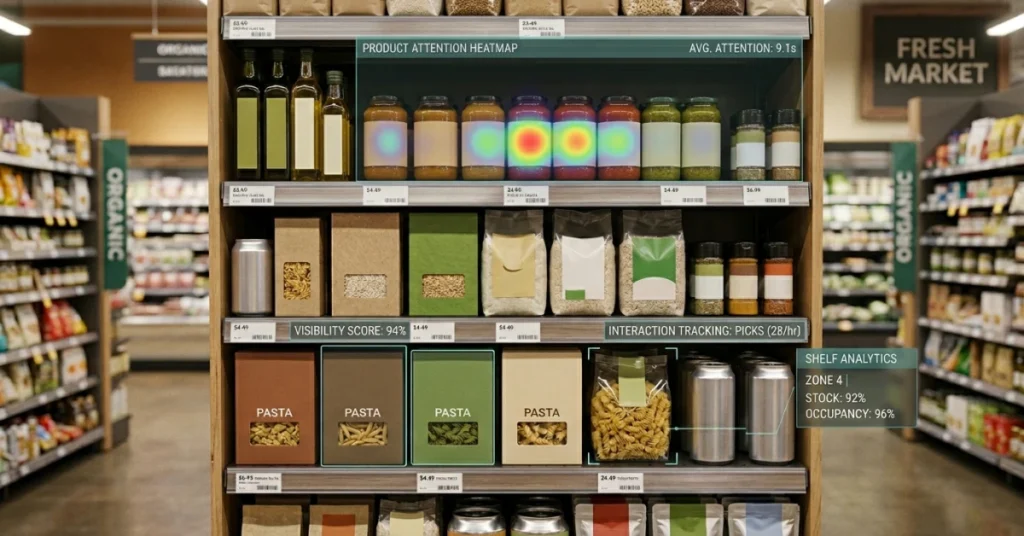
Visual AI captures the exact moment a hand reaches toward a product — and whether it gets returned, swapped for a competitor SKU, or abandoned entirely. That sequence of micro-decisions is the behavioral layer that modern shopper analytics platforms were built to decode.
Queue Monitoring and Waiting Time Analysis
AI-powered vision applications track queue length and wait time in real time, triggering staffing adjustments before shoppers abandon their carts. Checkout desertion is a recoverable loss — but only if the system detects it forming, not after it has already happened.
Heatmaps and In-Store Behavior Tracking
Traditional heatmaps show where people stood — computer vision reveals why they paused, how long they hesitated, and what they did next. That sequential context turns a static density map into a living model of purchase intent (per Moz, behavioral data increases conversion prediction accuracy by up to 30% over transactional data alone).
Every one of these signals becomes truly powerful only when retailers know how to act on them — and that’s exactly where the real competitive gap opens up.

How Retailers Use Customer Behavior Data
That predictive intelligence only creates value when it feeds directly into operational decisions — layout changes, staffing shifts, promotional timing, and product placement. Retailers using computer vision retail technology report up to 30% improvements in conversion rates when behavioral data informs store design.
The advantage isn’t just knowing what customers bought — it’s knowing what almost made them buy.
Sequential micro-behaviors — hesitation near a shelf, backtracking to a display, extended dwell before walking away — are the signals that point-of-sale data permanently erases. Researchgate confirms that AI image recognition shopping systems capture these pre-transaction patterns with measurable accuracy, enabling retailers to act before revenue is lost.
This is the behavioral layer that transforms customer behavior analysis retail from a reporting function into a forecasting engine.
Improving Store Layout and Product Placement
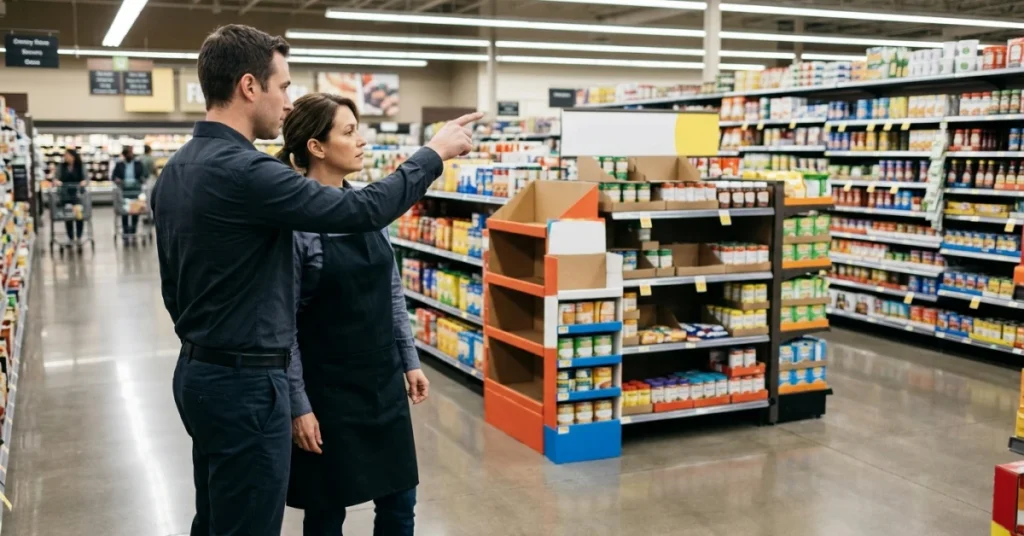
Visual AI retail customer insights reveal exactly where shoppers slow down, reverse course, or abandon a path — data no floor plan assumption can replicate. Retailers use these dwell and movement patterns to reposition high-margin products directly into high-hesitation zones.
Optimizing Promotions and Merchandising
Promotions placed without behavioral context are expensive guesses. Image recognition in retail identifies which displays generate engagement versus which ones shoppers walk past without a glance — and that distinction drives smarter merchandising spend.
Reducing Lost Sales Opportunities
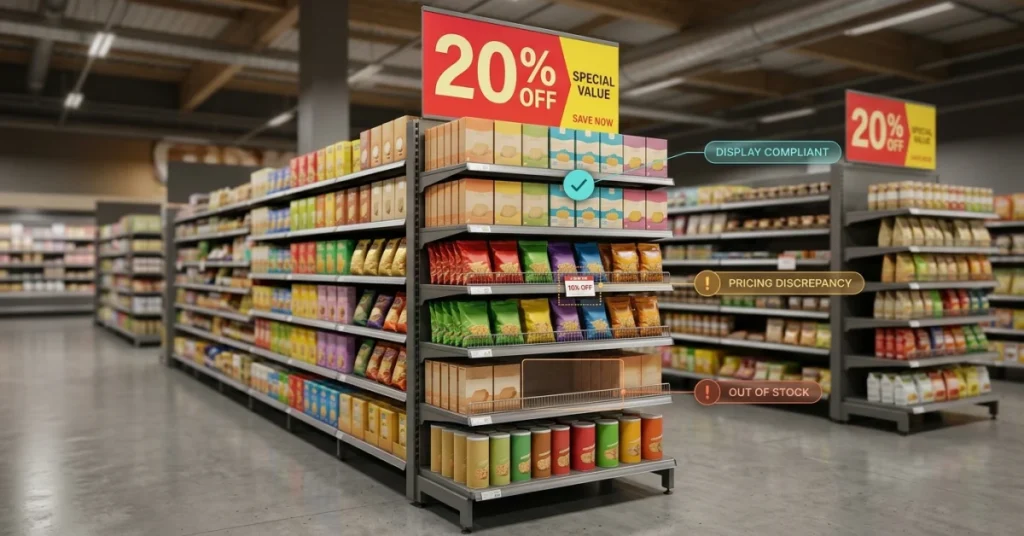
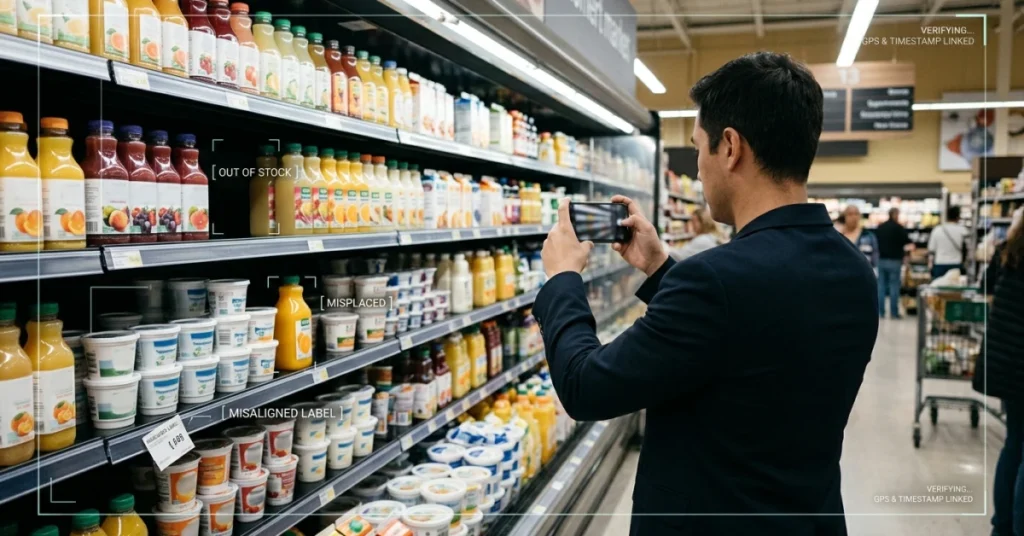
A shopper who lingers at a shelf for 12 seconds and leaves empty-handed is a lost sale with a recoverable cause. FieldPie’s retail audit image recognition capabilities connect shelf-level visual data to execution gaps — out-of-stocks, misplaced SKUs, or poor facings — so field teams can correct them in real time.
Personalizing the In-Store Experience
Gaze proxies and dwell patterns aggregated across thousands of visits build a behavioral profile no survey can match. Retailers use these visual AI retail customer insights to tailor signage, staffing placement, and product sequencing to actual decision-making behavior — not assumed preferences.
📊 By the Numbers
Retailers using image recognition in retail see up to 30% higher conversion rates from behavior-informed store layouts.
Retailers who treat this data as a reporting tool will always be reacting — those who treat it as a forecasting engine will be the ones setting the terms of competition.
Conclusion
Retailers who treat image recognition in retail as a security upgrade are leaving its most valuable capability completely untapped. The real edge lies in reading hesitation, backtracking, and dwell patterns — behavioral signals that predict purchase intent before any transaction occurs.
Retailers still relying on point-of-sale data alone miss the behavioral audit layer that drives smarter layout and staffing decisions. Computer vision retail technology captures the sequential micro-behaviors that no loyalty program or heat map can reconstruct — giving teams a predictive edge that compounds over time.
Most merchandising teams can’t see why a product sits untouched despite prime shelf placement — FieldPie captures photo-based field data and real-time visual reporting that ties on-shelf execution directly to behavioral outcomes. Teams that close this gap see measurable lifts in conversion and execution quality — Assecoplatform reports that AI image recognition in retail can improve on-shelf availability by up to 15%, directly reducing lost sales.