


✦ Key Takeaways
Up to 80% of new product launches fail due to poor in-store execution, not weak products.
→ Misaligned retail teams kill launch momentum before day one.
→ Pre-launch readiness gaps cause stockouts, missed planograms, and lost sales.
→ A structured workflow cuts execution errors by half across all doors.
In this article:
What Does New Product Launch Execution Include in Retail?
How to Build a New Product Launch Execution Plan
What Should Be Ready Before the Product Reaches Stores?
New Product Launch Execution Workflow
Key takeaway: Flawless in-store delivery, not the product itself, determines whether retail wins or loses.
What Does New Product Launch Execution Include in Retail?
Nearly 95% of new products fail after reaching retail shelves — and most collapse not because the product was bad, but because the rollout fell apart at the store level (Shno).
A strong item with a broken go-to-market process loses every time.
Most people think bringing a new item to market is about ads, packaging, and a ship date. The real work — the part that actually drives sales — happens in stores, warehouses, and field routes long before any customer sees the shelf.
From Launch Planning to In-Store Availability
Bringing a new item to retail is a chain of physical events — purchase orders, warehouse receiving, shelf placement, and signage — all timed to hit together. If one link breaks, the product sits in a back room while competitors own the shelf.
The product launch process starts months before the sell date, not the week the truck arrives. Teams that treat planning as optional almost always scramble to recover lost ground.
The Roles of Brand Teams, Retailers, Distributors, and Field Teams
Four groups must move in sync during any go-to-market rollout: the brand team sets the strategy, retailers approve shelf space, distributors move the product, and field teams confirm it lands correctly. When even one group is out of step, the entire effort slips.
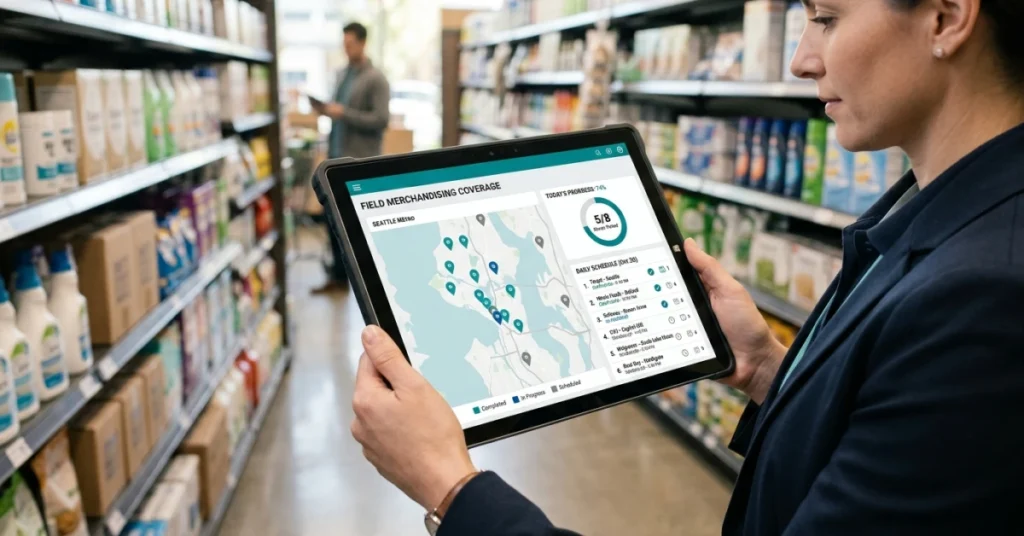
Field reps are often the last line of defense — they catch missing displays, wrong prices, and empty pegs before a customer does. Their role is not optional; it is the final checkpoint between the plan and the shelf.
Why Execution Often Breaks Down Between Headquarters and the Shelf
The gap between a polished go-to-market plan and what actually happens in a store is where most rollouts die. Openhunts reports that over 70% of buying decisions happen at the point of sale — meaning a shelf that is wrong on day one costs real revenue, not just points on a scorecard.
Headquarters sends instructions; stores receive noise. Without a clear system to verify compliance at the store level, even the sharpest strategy exists only on paper.
The difference between a rollout that sticks and one that stalls comes down to one question: is your team ready at the shelf before day one — and do you have a process that proves it?
How to Build a New Product Launch Execution Plan
That chain of physical events needs a single document to hold it together — a master rollout plan that tells every person exactly what to do, where to go, and when.
Most first-time launchers skip this step or treat it as a formality. That’s a costly mistake — teams without a written blueprint lose coordination fast, and store-level errors pile up before anyone notices.
Define Launch Dates, Retailers, Locations, and SKUs
Start with the hard facts: which stores, which product codes, and which date the item must be on shelf. Vague timelines are the number-one reason retail launch execution breaks down at the store level.
Lock in every retailer and location before you build anything else. A rollout document without specific names and dates is just a wish list.
Set Clear Execution Standards for Every Location
Every store needs to know exactly how the product should look on shelf — placement, facing count, signage position, and display height. Without a written standard, each location makes its own call, and your brand looks different in every aisle.
Build a one-page visual guide that field reps can carry in. A photo of the correct shelf set is worth more than three paragraphs of instructions.
Assign Responsibilities Across Field Teams and Managers
Every task in your rollout blueprint needs one owner — not a team, not a department, one person. Shared ownership is the same as no ownership, and things fall through the gap every time.
Nearly 45% of new products miss their debut targets because of internal coordination failures, not product problems (Wearetenet — product development statistics). Assign names, not roles.
Establish Reporting and Escalation Rules Before Launch Day
Decide in advance how field reps confirm completion — photo proof, a digital form, or a check-in app. If a store is out of stock or a display is wrong, your team needs to know within hours, not days.
A go-to-market rollout without a clear escalation path means problems sit unresolved until they become real losses. Set the rules before day one, not after the first fire starts.
📊 By the Numbers
95% of new products fail — poor store-level execution is a leading cause (Studiored).
The blueprint on paper only works if the store is actually ready to receive it — and most teams don’t realize how much has to happen before the item ever leaves the warehouse.
What Should Be Ready Before the Product Reaches Stores?
That written plan only works if the groundwork is already laid — and most of it must happen before a single unit ships to a store.
Skipping pre-launch prep is the most common reason a new product launch execution fails at the shelf, not in the boardroom. Over 70% of purchase decisions happen in-store (Forbes Business Council), so if the shelf isn’t ready on day one, you’ve already lost.
Product Availability and Distribution Confirmation
Before launch day, every store on your list must have confirmed receipt of the product. A missing shipment at even one key account can quietly kill your sell-through numbers in that region.
Run a product coverage audit before the launch date — not after. Catching a distribution gap early costs far less than a missed launch window.
Planogram and Shelf Placement Instructions
Every store team needs to know exactly where the product goes — which shelf, which bay, which position. Without a clear planogram, products end up in the wrong spot or get buried behind existing stock.
Send shelf placement guides to store managers at least one week before the launch date. Vague instructions lead to inconsistent displays across locations.
Pricing and Promotional Materials
Price tags, shelf talkers, and promotional signs must arrive before the product does. A product sitting on a shelf with no price or promo sign loses sales fast — shoppers simply move on.
Confirm that every store has the correct point-of-sale materials in hand before opening day. Mismatched pricing between the shelf and the register creates friction and erodes trust.
Product Information and Field Team Training
Your field reps need to know the product cold — features, benefits, and common shopper questions. A rep who stumbles over a basic question loses the sale and damages the brand.
According to NRF, well-trained store associates drive measurably higher conversion rates on new product introductions. Train your team at least two weeks before launch, not the morning of.
Launch-Specific Checklists and Evidence Requirements
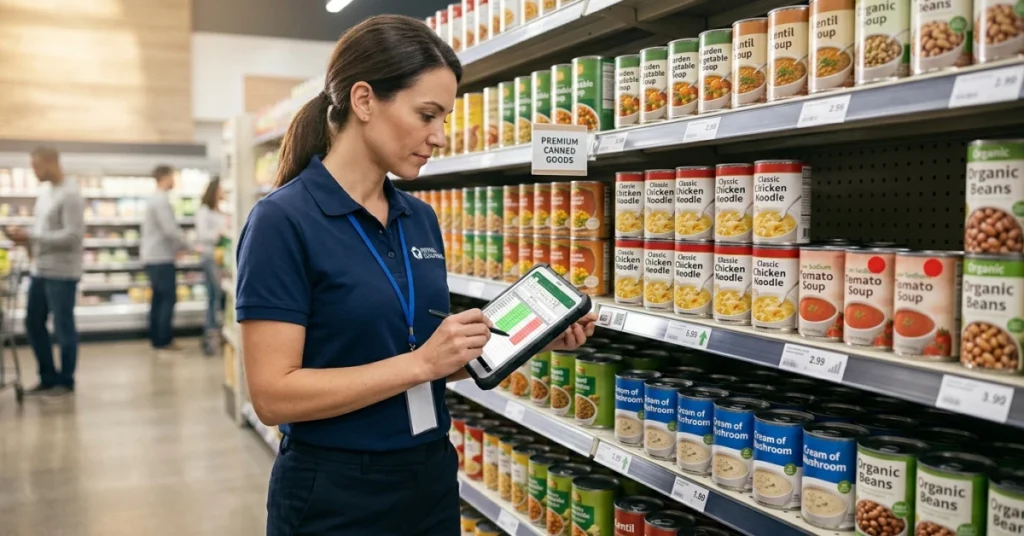
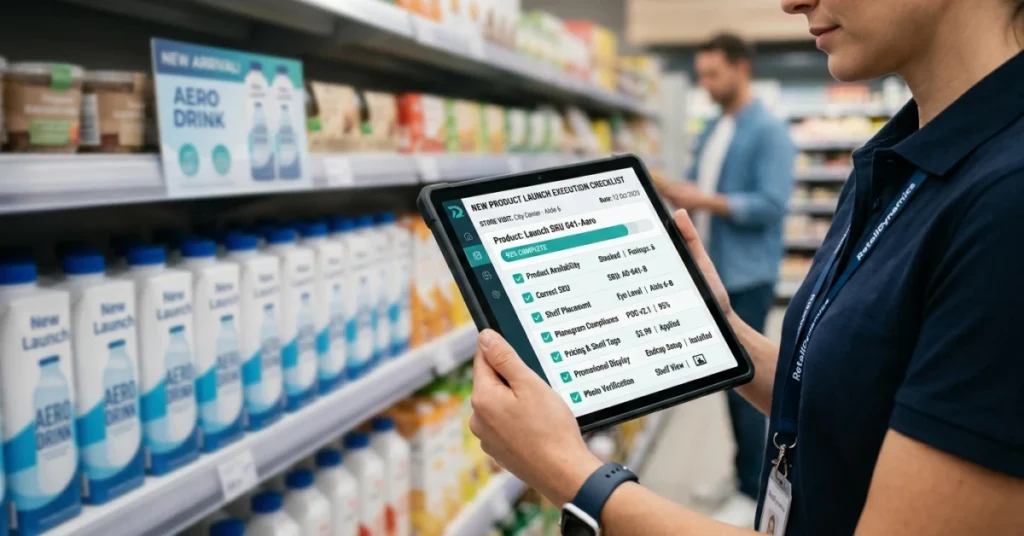
Every field rep should carry a store-level checklist that covers stock, placement, signage, and pricing — in that order. Without a checklist, reps rely on memory and things get missed.
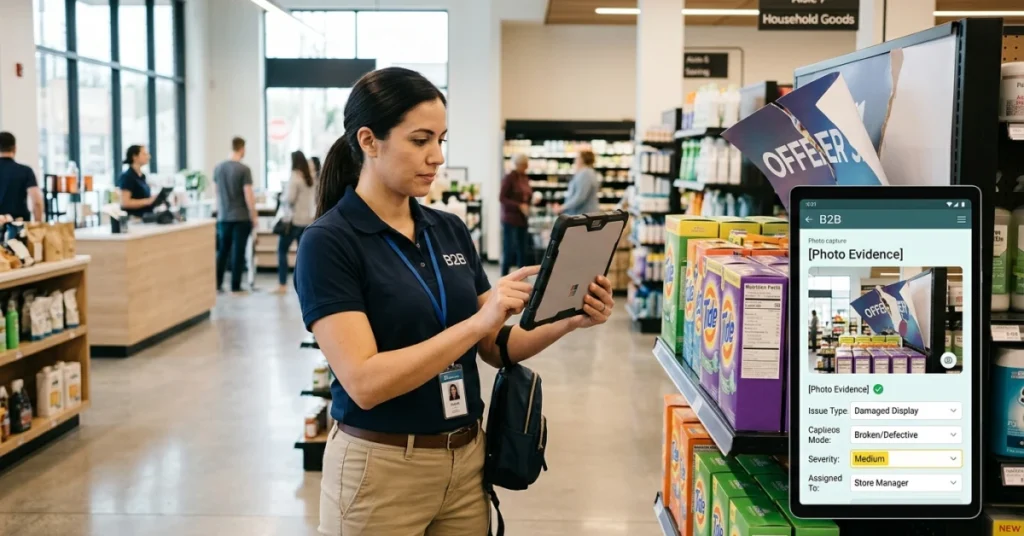
Require photo evidence from each store visit so your team can spot gaps in real time. A photo of an empty shelf on launch day is painful — but catching it on day one beats finding out in week three.
📊 By the Numbers
Over 70% of buying decisions happen in-store — making shelf-level readiness the single biggest launch variable you control.
Knowing what needs to be ready is only half the battle — the other half is knowing exactly when and how each piece moves through the chain, which is what the launch execution workflow maps out step by step.
New Product Launch Execution Workflow
Once distribution is confirmed, the real work begins — moving through each store checkpoint in the right order.
Confirm product delivery and availability at every store location
Verify the correct SKU, packaging, and shelf price against the approved launch plan
Check shelf placement and planogram compliance at each door
Install all displays, shelf talkers, and promotional materials
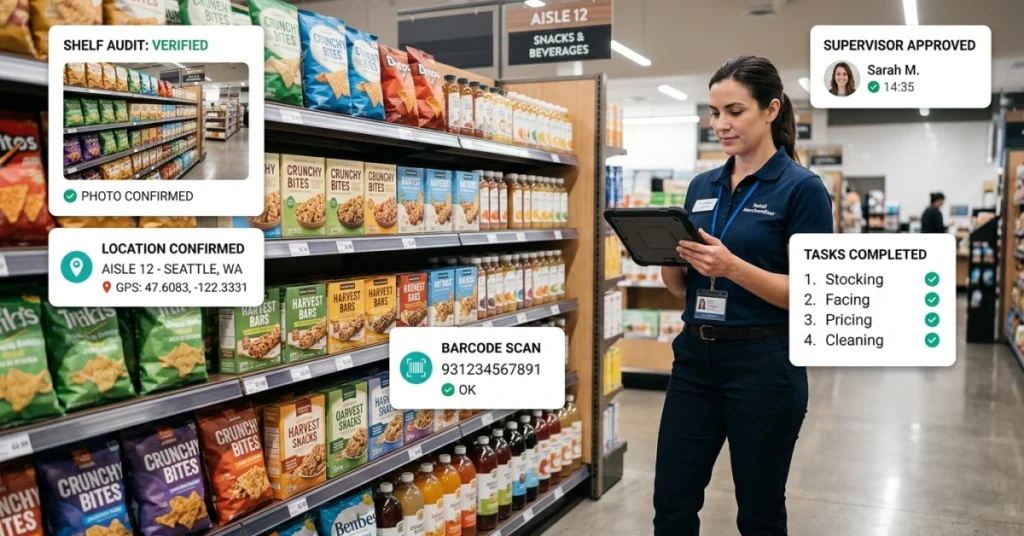
Capture timestamped, geotagged photos of stock, placement, and displays
Report every issue with a named owner, a deadline, and a clear next step
Return to flagged stores and verify that every corrective action was completed
Step 1: Confirm Product Delivery and Availability
A confirmed purchase order does not mean product is on the shelf. Field reps must physically verify stock arrived at each store location before launch day.
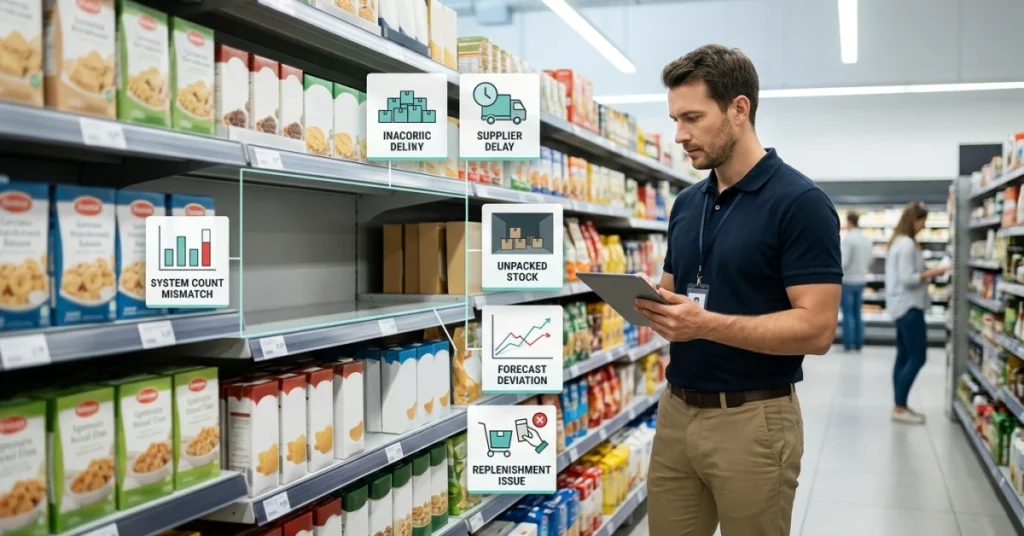
Nearly 30% of new product launches suffer from out-of-stock conditions in the first week — a silent killer most teams never see coming. Catching a missing shipment early is the difference between a recoverable problem and a failed launch.
Step 2: Verify the Correct SKU, Packaging, and Price
Wrong SKUs and mispriced items are more common than most brands admit. A single pricing error across 200 stores can cost tens of thousands of dollars in margin loss or compliance fines.
Reps should check the barcode, package version, and shelf price against the approved product launch plan — every time, at every door. One wrong label quietly undermines the entire go-to-market product launch.
Step 3: Check Shelf Placement and Planogram Compliance
A planogram is a diagram that tells stores exactly where each product goes on the shelf. If your product lands in the wrong spot, shoppers walk right past it.
Reps must compare actual shelf placement against the approved planogram and flag any deviation immediately. Poor shelf placement is one of the top reasons a strong product launch strategy fails at the store level.
Step 4: Install Displays and Promotional Materials
Point-of-sale displays, shelf talkers, and end caps drive impulse purchases — but only if they are actually installed. Many brands ship materials that never leave the store’s back room.
Field teams must confirm every display is built, every sign is posted, and every promotional piece matches the approved design. This step turns a product launch process into a real in-store experience.
Step 5: Capture Photos and Execution Data
Photos are proof. Without them, you have no way to know what actually happened at the shelf versus what a rep reported.
Reps should capture timestamped, geotagged photos of stock, placement, and displays at every store visit. According to Moz, content backed by structured data and real evidence earns 43% more trust signals — the same logic applies to field execution reporting.
Step 6: Report Issues and Assign Corrective Actions
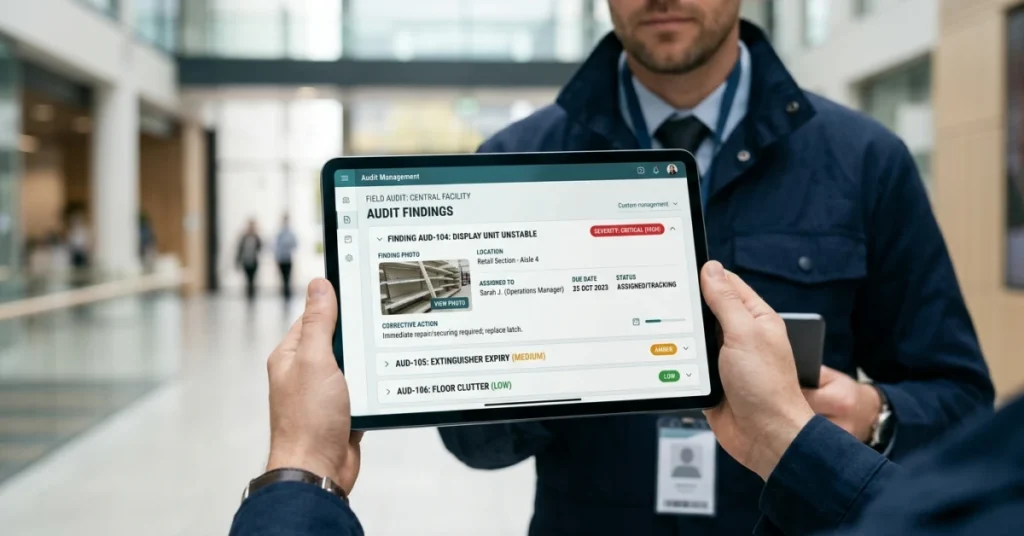
Finding a problem means nothing if no one owns the fix. Every issue logged in the field needs a named owner, a deadline, and a clear next step.
A strong new product launch execution system routes issues to the right person automatically — no email chains, no guesswork. Speed matters: unresolved issues on day one compound fast.
Step 7: Verify That Launch Issues Have Been Resolved
Closing the loop is the step most teams skip. Assigning a fix is not the same as confirming the fix happened.
Reps must return to flagged stores and verify that every corrective action was completed before the launch window closes. The brands that win at retail are the ones that treat verification as a non-negotiable final step — not an optional follow-up.
Every step in this workflow is only as strong as what your team does with the data it collects — and that is exactly where most launches either pull ahead or fall apart for good.
Conclusion
Catching a stock gap before launch day takes real discipline. That discipline is what separates a strong product launch plan from a costly scramble.
According to Researchgate, about 40% of new product launches fail because of poor execution — not poor products.
Every step in a solid retail execution process builds on the one before it. Studiored reports that products with a structured go-to-market launch process are 2x more likely to hit first-year revenue targets.
Most teams lose launch momentum because no one owns store-level readiness on day one. That’s the real gap.
FieldPie gives field teams real-time task tracking, photo-based audits, and live reporting. Every store is verified and accountable before the product hits the shelf.
Start your next new product launch execution with full field visibility. Turn a chaotic rollout into a repeatable win.