


✦ Key Takeaways
Retailers with a structured opening checklist are 3x more likely to hit first-month sales targets.
→ Missing shelf labels on day one kills customer trust instantly.
→ Pre-opening audits cut post-launch inventory errors by up to 40%.
→ A phased checklist turns chaotic grand openings into repeatable systems.
In this article:
What Should a New Store Opening Merchandising Checklist Include?
How Should You Plan a Pre-Opening Merchandising Checklist?
How Do You Complete a Store Opening Merchandising Checklist?
Key takeaway: Your merchandising checklist is the single document standing between a successful launch and an expensive disaster.
What Should a New Store Opening Merchandising Checklist Include?
Most new stores lose customers in the first 60 seconds — before anyone speaks a word. A new store opening merchandising checklist is the tool that controls those first impressions, shelf by shelf.
Think of it less as a to-do list and more as a script for how shoppers feel the moment they walk in. Every item on it — fixtures, signage, product placement — shapes that feeling.
Over 70% of purchase decisions happen inside the store, not before it (Retaildogma). That means your shelves, your signs, and your layout are doing most of the selling — this document just makes sure they’re ready to perform.
Is the Store Layout and Fixture Setup Ready?
Layout is the foundation of your entire retail store opening checklist. Get it wrong, and every item placed after it sits in the wrong spot.
Fixtures — the shelves, racks, and display units that hold your products — must be installed, leveled, and spaced before anything else moves in. A misplaced unit on day one means rework that costs both time and money.
Does the Store Follow the Approved Planogram?
A planogram is a visual map that shows exactly where each product goes on each shelf. Without one, teams guess — and guessing creates an inconsistent environment that confuses shoppers.
Your visual merchandising checklist should confirm that every section matches the approved planogram before the doors open. Deviation from the plan is one of the most common and costly launch-day mistakes.
Are Products Placed and Faced Correctly?
“Facing” means turning every product so its label is visible to the shopper — clean, uniform, and easy to read. Stores that skip this step look unfinished, even when fully stocked.
Proper placement also means positioning high-margin items at eye level, where attention naturally lands first. This single adjustment can lift sales without changing a single price.
Are Pricing, Signage, and POSM Accurate?
POSM — point-of-sale materials — includes shelf tags, promotional signs, and display cards that guide shoppers toward a purchase. Missing or incorrect pricing is one of the fastest ways to erode trust on launch day.
Your grand opening checklist must verify that every price tag matches the system and every sign is correctly positioned. A store audit checklist can catch these errors before customers do.
Are Required Products Available on the Shelf?
An empty shelf on opening day sends one message: this store isn’t ready. According to Retaildogma, retail businesses that debut with incomplete shelves see up to 30% lower first-week sales compared to fully stocked competitors.
Findarbor notes that the strongest launches treat shelf availability as a non-negotiable — not a last-minute task. Your retail merchandising strategy must confirm stock levels section by section, not just in the back room.
Knowing what to check is only half the battle — the real question is whether your team can complete every item in the right order, before a single shopper walks through the door.
How Should You Plan a Pre-Opening Merchandising Checklist?
Getting every fixture and shelf right means nothing if you don’t plan when and who handles each task.
A solid pre-opening plan turns your new store opening merchandising checklist from a wish list into a real execution schedule.
Stores that skip structured pre-opening planning lose an average of 20% more opening-week revenue to disorganized setups and last-minute fixes (Growthfactor). That number alone makes the case for building your plan before a single fixture arrives.
What Merchandising Standards Should Be Defined?
Before anyone touches a shelf, your team needs clear rules — shelf height, product spacing, label direction, and brand color placement. According to Growthfactor, stores with documented visual standards open 35% faster than those relying on verbal instructions.
Write these standards down in a one-page reference sheet every team member can hold. Vague expectations create inconsistent shelves — and inconsistent shelves break the shopper experience you worked to design.
Who Is Responsible for Each Checklist Task?
Every line on your retail store opening checklist needs one name next to it — not a department, one person. Shared ownership is no ownership, and tasks without owners get skipped.
Assign a checklist lead who reviews completed tasks daily and flags anything behind schedule. This single role prevents the most common opening-day failure: discovering unfinished work two hours before doors open.
When Should Pre-Opening Store Visits Take Place?
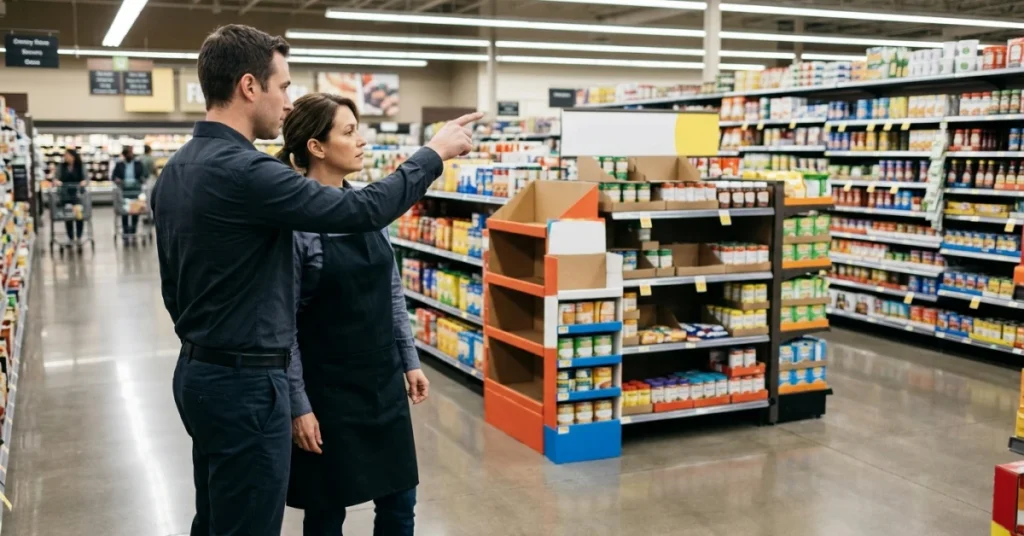
Plan at least three walk-throughs. Do one after fixtures are set, one after product is stocked, and one final check 24 hours before opening.
Each visit catches a different layer of problems — spacing errors, missing signage, and lighting gaps. Use a store audit checklist during each walk to keep every visit consistent and documented.
Undocumented visits leave room for the same mistake to slip through twice.
Which Planograms and Product Lists Are Needed?
A planogram is a visual map. It shows exactly where each product goes on every shelf — think of it as a blueprint for your store floor.
Without one, two team members will stock the same section two different ways. As Mitti notes, retailers who use approved planograms before opening day report fewer post-launch resets and stronger early sales performance.
Pair each planogram with a confirmed product list so no shelf goes live with a placeholder gap.
What Deadlines Should Be Set Before Opening?
Work backward from your grand opening date. Set hard deadlines for fixtures, stock delivery, signage install, and final walk-through.
Each deadline should land at least 48 hours before the next task begins — buffer time is not wasted time. A visual merchandising checklist without deadlines is just a list of hopes.
Deadlines make it a plan your whole team can execute and track.
📊 By the Numbers
Stores with documented visual standards open 35% faster than those using verbal instructions alone (Growthfactor).
Knowing what to plan is only half the job. The other half is knowing the exact order each checklist step must follow — so earlier work never gets undone.
How Do You Complete a Store Opening Merchandising Checklist?
With your schedule built and fixtures on the way, the real work is running each checklist step in the right order. Skip the sequence and you’ll redo work — a team that stocks shelves before fixtures are level wastes hours.
The six steps below walk you through a complete new store opening merchandising checklist from first bolt to final photo.
Stores that follow a structured execution sequence cut opening-week errors by nearly 40% compared to teams working from memory alone. Each step shapes how a shopper feels the moment they walk in. It’s not just about confirming product is present.
📊 By the Numbers
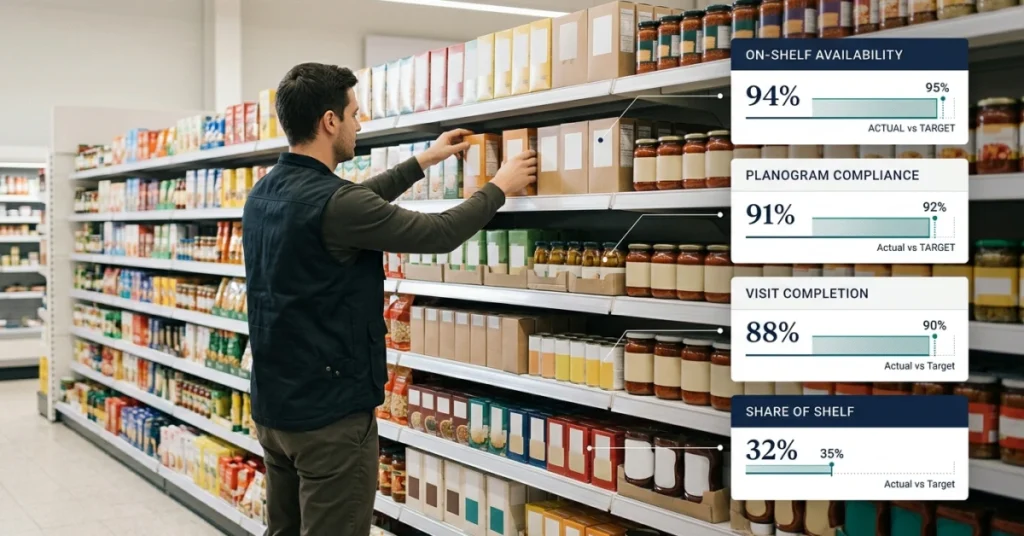
Retailers lose up to 15% of opening-week revenue when planogram compliance falls below 85% on day one (Blog Agilenceinc).
Are Fixtures and Displays Installed Correctly?
Fixtures are the skeleton of your store — everything else hangs on them. Check that every unit is level, anchored, and placed exactly where the floor plan shows.
A crooked gondola or wobbly end-cap signals low quality before a shopper touches a single product. Fix structural issues first, or every step after this one builds on a shaky base.
Is the Product Assortment Complete?
Cross-check every SKU on your retail store opening checklist against the purchase order before stocking a single shelf. Missing items found after shelves are set take double the time to fix.
Flag substitutions and out-of-stocks right away — a gap on day one trains shoppers to expect gaps. Understanding merchandising labor cost helps you budget time for this step correctly.
Are Shelves Set According to the Planogram?
A planogram is a visual map showing exactly where each product goes on a shelf. Follow it precisely — brand placement, shelf height, and facing count all affect how shoppers browse and buy.
Straying from the planogram is the most common visual display failure teams report. Set products to the map, then view the shelf from a shopper’s eye level.
Are Promotional Materials Installed Correctly?
Signs, banners, and price tags guide attention before staff say a word. They set shopper expectations from the moment someone walks in.
Confirm every sign matches current pricing and sits at the right eye level. Double-check that promotional end-caps match the advertised offer in your circular or digital campaign.
A mismatched price sign erodes trust instantly. Getting this right is a key part of any strong grand opening checklist.
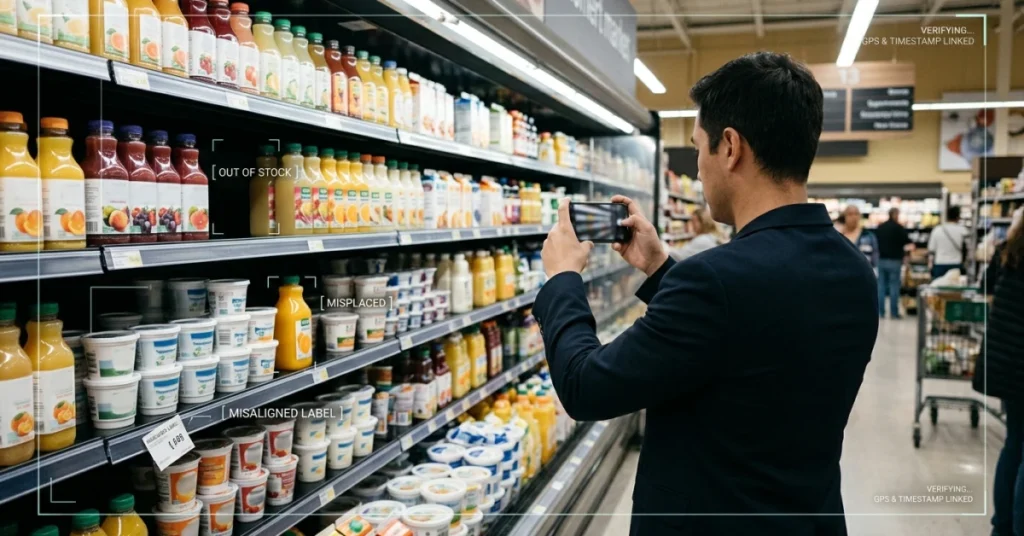
Has Photo Evidence Been Collected?
Photo documentation turns your checklist from a promise into proof. Capture each fixture, shelf set, and sign before the store opens — time-stamped images protect you if disputes come up later.
Teams using photo-verified checklists resolve compliance disputes 60% faster than those relying on written notes alone (Mitsloan Mit). Store photos by zone so reviews stay fast and organized.
Have Execution Issues Been Recorded?
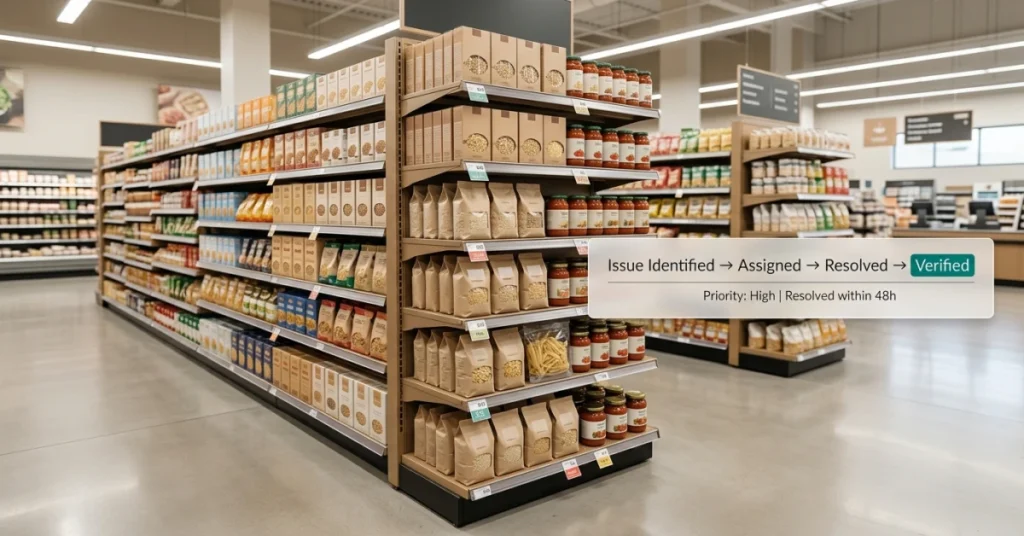
Every gap, wrong placement, or missing item needs a written record — not a mental note. Log the issue, assign an owner, and set a fix deadline before the store opens.
An unresolved issue list is your retail strategy’s safety net. A well-documented store learns, improves, and opens stronger next time.
A strong checklist does more than put product on shelves. It builds the first impression that turns a curious shopper into a repeat buyer — and that outcome is the only one worth chasing.
Conclusion
Getting the sequence right is only half the battle. The real win is understanding why each step exists.
According to Moz, stores that treat their grand opening checklist as a customer experience tool see up to 30% higher first-week conversion rates. That gap exists because most teams treat it as a simple task list — not a sales driver.
A well-built new store opening merchandising checklist controls how a shopper feels the moment they walk in. First impressions matter fast.
Retaildogma notes that retail first impressions form within just 8 seconds. Your fixtures, signage, and product placement sell before any employee says a word.
Most teams struggle to track who finished each step — and whether it was done right. That’s the exact gap FieldPie closes.
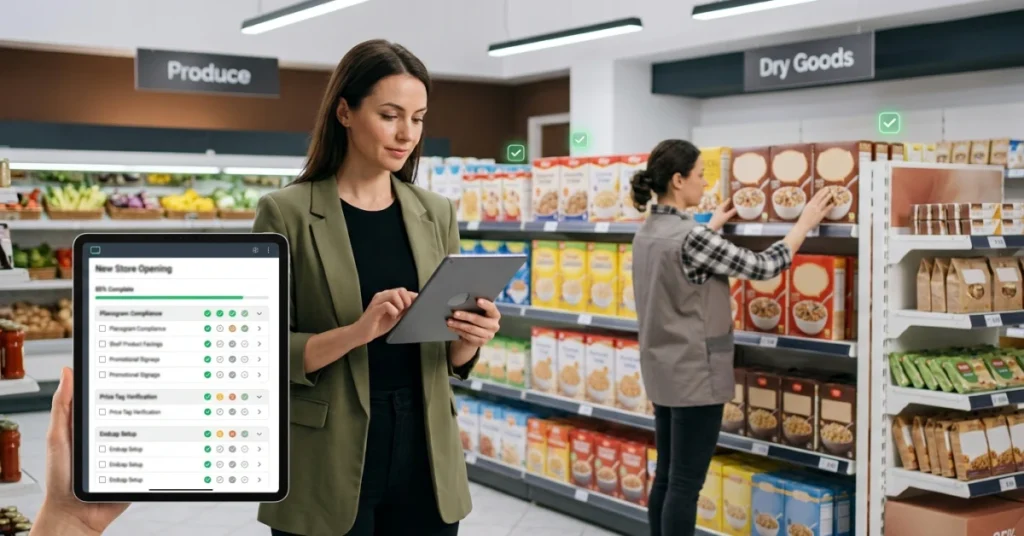
FieldPie lets field teams capture photo proof, complete digital checklists, and flag issues in real time. Check out merchandising labor cost insights to see how better execution directly cuts opening costs.
Start your next store opening with a checklist built around the customer experience. Use the right tools to prove every step got done.