


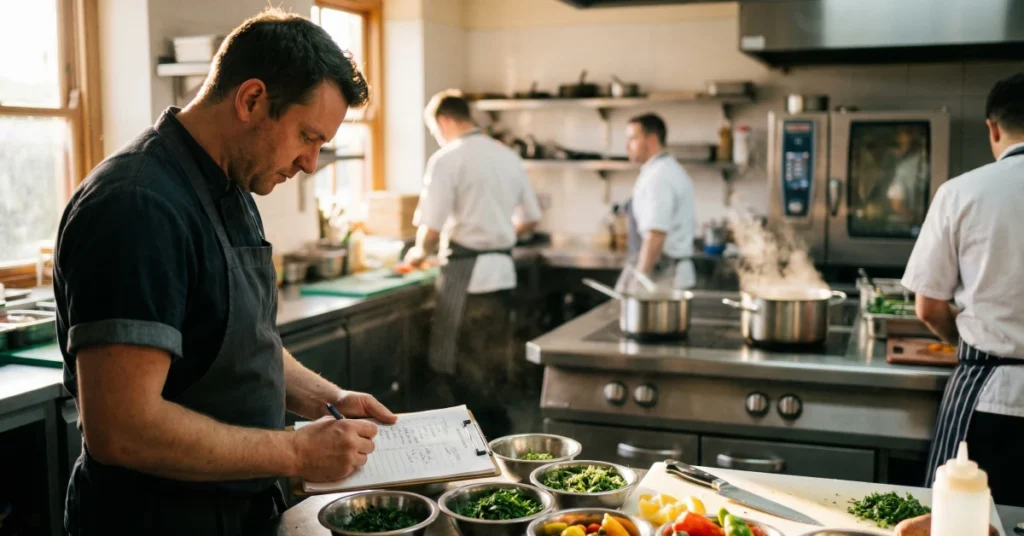
Learning restaurant SOP checklist doesn’t have to be complicated. Restaurant standards are the comprehensive framework of policies, procedures, and quality benchmarks that define how your establishment operates day-to-day. These aren’t just suggestions—they’re the backbone of successful restaurant operations that directly impact everything from food safety compliance to customer satisfaction scores.
Think of restaurant standards as your operational blueprint. They encompass food preparation protocols, service delivery expectations, cleanliness requirements, staff behavior guidelines, and safety procedures. A well-crafted restaurant SOP checklist transforms these standards from abstract concepts into actionable daily practices that every team member can follow consistently.
The landscape of restaurant standards continues evolving rapidly. Recent industry analysis shows that establishments with clearly defined operational standards see 23% higher customer retention rates compared to those operating without structured guidelines.
But here’s what separates winning restaurants from the rest: their standards aren’t static documents gathering dust in an office drawer—they’re living, breathing systems that adapt to changing regulations, customer expectations, and market demands while maintaining core quality principles.
Understanding why these standards matter so much for your restaurant’s success requires examining their real-world impact on operations, profitability, and guest experience.
Why Restaurant Standards Matter
Restaurant standards serve as the backbone of operational excellence, directly impacting everything from food safety to customer satisfaction. Without clear guidelines, even experienced teams struggle with consistency, leading to quality fluctuations that damage brand reputation and profitability.
The financial implications are substantial. Restaurants with standardized operations typically see 20-30% better profit margins compared to those operating without formal procedures. This improvement stems from reduced waste, consistent portion control, and streamlined training processes that minimize costly mistakes.
Standards create accountability at every level, from a comprehensive SOP for restaurant kitchen operations to front-of-house service protocols. When everyone understands expectations and procedures, teams work more efficiently and deliver predictable results that build customer trust and loyalty.
Core Restaurant Standards Every Restaurant Must Follow
Every successful restaurant operates on a foundation of essential standards that ensure consistent quality, safety, and customer satisfaction. These core requirements form the backbone of what is restaurant SOP (Standard Operating Procedures) – the documented processes that guide daily operations and maintain excellence across all service areas.
Food safety protocols represent the most critical standard, encompassing proper temperature control, cross-contamination prevention, and employee hygiene practices. These aren’t optional guidelines but mandatory requirements that protect both customers and your business reputation.
Service consistency standards ensure every guest receives the same high-quality experience, regardless of which staff member serves them. This includes greeting procedures, order accuracy protocols, and response time benchmarks that create predictable excellence. Cleanliness and sanitation standards extend beyond the kitchen to encompass dining areas, restrooms, and front-of-house operations. Recent industry analysis shows that maintaining visible cleanliness standards directly correlates with customer retention rates and positive reviews.
However, standards mean nothing without proper implementation and monitoring systems. The most effective restaurants combine clear documentation with regular training and accountability measures to ensure these core standards become ingrained habits rather than occasional practices.
Understanding these fundamental requirements sets the stage for implementing more specific operational protocols, particularly the detailed food safety and storage standards that form the cornerstone of restaurant excellence.
Food Safety and Storage Standards
Food safety standards form the critical foundation that protects both customers and business operations from potentially devastating consequences. These standards encompass temperature control protocols, proper storage procedures, and contamination prevention measures that must be consistently maintained throughout daily operations.
Temperature monitoring represents the most crucial element, with cold foods requiring storage below 40°F and hot foods maintained above 140°F to prevent bacterial growth. The FDA’s 2026 priority deliverables emphasize enhanced oversight of temperature control systems as a primary focus area for restaurant compliance.
Storage standards extend beyond temperature to include proper labeling systems, first-in-first-out rotation procedures, designated storage zones that prevent cross-contamination between raw, and prepared foods. These protocols align with the 5 P’s of restaurant service framework, where proper preparation and presentation depend fundamentally on safe food handling practices. Successful implementation requires daily monitoring logs, regular staff training on safe handling procedures, and immediate corrective actions when standards are compromised. These food safety foundations naturally connect to broader hygiene practices that ensure comprehensive protection throughout the restaurant environment.
Hygiene and Sanitation Standards
Hygiene and sanitation standards create the invisible foundation that guests never notice when done right—but always remember when done wrong. These good restaurant rules extend far beyond basic cleanliness to encompass comprehensive protocols that protect public health and brand reputation.
Hand hygiene protocols require staff to wash hands for a minimum of 20 seconds using approved soap and hot water, particularly after handling raw ingredients, using restrooms, or touching surfaces. Digital hand-washing timers and strategically placed sinks ensure compliance without disrupting workflow efficiency.
Surface sanitization demands regular cleaning schedules with EPA-approved disinfectants, focusing on high-touch areas like door handles, POS systems, and table surfaces. A typical restaurant should sanitize dining surfaces after each guest turnover and food contact surfaces every four hours during service. Equipment maintenance standards include daily deep-cleaning of ice machines, coffee equipment, and beverage dispensers—areas where bacterial growth thrives undetected. Modern compliance tracking systems help restaurants document these efforts systematically. The integration of technology-driven sanitation monitoring creates accountability while streamlining documentation processes. This systematic approach to hygiene naturally supports comprehensive customer service delivery standards.
Customer Service Standards
Customer service standards transform routine transactions into memorable experiences that drive loyalty and repeat business. While operational excellence keeps restaurants running, service standards create the emotional connection that determines whether guests return or recommend your establishment to others.
The foundation of exceptional service lies in consistency—every interaction should reflect your restaurant’s values and expected restaurant standards regardless of staff changes or busy periods. This means establishing clear protocols for greeting guests, handling complaints, and managing wait times that all team members can execute reliably.
Training programs should focus on empathy and problem-solving skills rather than rigid scripts. Staff need the confidence to make decisions that benefit both the guest and the business, whether that’s accommodating a special dietary request or resolving a billing issue. Restaurant Trends 2026 emphasizes that personalized service increasingly differentiates successful establishments.
Measuring service quality requires both quantitative metrics—like average response times and complaint resolution rates—and qualitative feedback through guest surveys and online reviews. However, the most telling indicator often comes from observing repeat customer behavior and referral patterns, which ultimately determine long-term profitability and reputation.
Equipment and Operational Safety
Equipment and operational safety standards form the backbone of reliable restaurant operations, directly impacting both staff welfare and customer experience. Properly maintained equipment doesn’t just prevent accidents—it helps ensure food quality restaurant operations can deliver consistently excellent results day after day.
Modern kitchen equipment requires systematic maintenance protocols that address everything from calibrating thermometers to cleaning ventilation systems. Quick service restaurant best practices emphasize that regular equipment inspections prevent costly breakdowns during peak service periods. However, safety extends beyond mechanical maintenance to include proper staff training on equipment operation and emergency procedures.
Temperature control equipment deserves special attention, as even minor malfunctions can compromise food safety standards established in earlier operational protocols. A practical approach involves creating daily equipment checklists that verify proper functioning before service begins. What typically happens when equipment safety becomes routine is that staff develop intuitive awareness of potential problems before they escalate.
These operational safety standards naturally connect with broader regulatory frameworks that govern restaurant operations.
Restaurant Regulations and Compliance
Restaurant regulations and compliance form the foundation of operational legitimacy, protecting both establishments and customers while ensuring sustainable business practices. The regulatory landscape continues evolving, with new requirements emerging across food safety, labor standards, and environmental protocols.
Federal and local health departments enforce food safety standards through regular inspections, requiring establishments to maintain HACCP protocols, proper temperature logs, and allergen management systems. The Human Foods Program 2026 Priority Deliverables emphasizes enhanced traceability requirements and modernized food safety frameworks that restaurants must integrate into daily operations.
Compliance extends beyond food safety to encompass labor regulations, accessibility requirements, and environmental standards. However, the complexity of multi-jurisdictional requirements often creates confusion for operators navigating federal, state, and municipal codes simultaneously.
Successful compliance strategies involve proactive monitoring rather than reactive responses. Establishing clear documentation systems, training protocols, and regular audit schedules transforms compliance from a burden into a competitive advantage that builds customer trust and operational efficiency.
How to Improve and Maintain Restaurant Standards
Continuous improvement requires systematic approaches that track performance across all operational areas. Establishing clear performance metrics enables restaurants to identify trends, address weaknesses, and celebrate successes before they impact customer satisfaction.
Regular auditing processes help grade restaurant performance objectively through standardized checklists covering food safety, service quality, and cleanliness standards. What’s Hot in 2026? Comfort, health, and value emphasizes that successful restaurants prioritize consistency through structured evaluation systems.
Technology integration streamlines monitoring efforts by automating temperature logs, inventory tracking, and customer feedback collection. Digital dashboards provide real-time visibility into key performance indicators, allowing managers to make immediate corrections when standards slip.
Creating feedback loops between staff, management, and customers ensures continuous refinement of procedures. However, improvement efforts must balance innovation with proven practices to avoid disrupting effective systems already in place.
The foundation for lasting standards improvement lies in building a culture where every team member understands their role in maintaining excellence—which makes comprehensive staff training absolutely essential.
Train Staff Regularly
Regular training programs form the backbone of successful restaurant operations, ensuring every team member understands their role in maintaining excellence. Effective training goes beyond initial onboarding to include ongoing skill development, safety protocols, and customer service standards. Focus training sessions on critical areas including food safety procedures, proper sanitation techniques, and compliance with food standards. Bar & Restaurant emphasizes that establishments positioning for success in 2026 must prioritize comprehensive staff education programs that address evolving industry requirements. Schedule monthly refresher courses to reinforce key concepts and introduce new procedures. Cross-training staff across multiple positions creates operational flexibility while ensuring consistent service quality during busy periods or staff shortages.
However, training effectiveness depends on clear documentation and assessment methods. Create standardized checklists for each position and regularly evaluate staff performance to identify knowledge gaps that require additional attention.
Monitor Performance and Correct Issues
Effective performance monitoring creates a systematic approach to maintaining excellence across all restaurant operations. When you evaluate a restaurant, consistent measurement becomes the foundation for identifying areas that need attention before they impact customer experience.
Establishing key performance indicators helps track everything from food quality scores to service timing metrics. Regular assessment reveals patterns that might otherwise go unnoticed – like declining customer satisfaction during specific shifts or recurring food safety issues in particular areas.
Quick corrective action prevents small problems from becoming major operational challenges. Top Things Restaurant Managers Should Watch in 2026 emphasizes the importance of real-time monitoring systems that alert managers to deviations immediately rather than discovering issues weeks later through customer complaints.
However, monitoring without follow-through accomplishes little. The most successful restaurants create feedback loops where identified issues trigger immediate corrective protocols, ensuring standards remain consistently high while positioning operations for seamless integration with modern technology solutions.
Use Technology for Consistency
Technology serves as the backbone of modern strategies for restaurant management, providing tools that eliminate guesswork and ensure uniform execution across all operations. Digital systems create accountability by tracking everything from food temperatures to cleaning schedules, making it impossible for critical tasks to slip through the cracks.
Point-of-sale systems with built-in compliance features automatically prompt staff through proper procedures, while kitchen display systems ensure orders are prepared consistently every time. Temperature monitoring devices send real-time alerts when storage conditions deviate from standards, protecting both food safety and quality.
What makes technology particularly powerful is its ability to collect data that reveals patterns in performance. When systems track how long it takes to complete tasks or identify which procedures cause the most errors, managers can make informed decisions about where to focus improvement efforts.
The key lies in choosing solutions that integrate seamlessly with existing workflows rather than creating additional complexity for staff to navigate.
Conclusion: Turning Standards Into Consistent Performance
Winning restaurant standards transform from paper policies into profit-driving performance when executed with systematic precision. The restaurants that thrive consistently are those that view standards not as rigid rules, but as flexible frameworks that adapt to changing customer expectations while maintaining operational excellence.
The convergence of technology, staff empowerment, and performance monitoring creates a self-reinforcing cycle of improvement. When team members understand the “why” behind each standard and possess the tools to execute consistently, operational excellence becomes sustainable rather than sporadic.
However, standards without accountability remain aspirational. The most successful establishments recognize that monitoring performance and making data-driven adjustments separates industry leaders from followers. This systematic approach ensures that quality improvements compound over time rather than plateau.
Your next step: Begin with one critical standard that directly impacts customer satisfaction, implement the monitoring framework outlined above, and expand systematically. The restaurants positioning themselves for long-term success understand that exceptional standards executed consistently will always outperform perfect standards applied inconsistently.
Restaurant standards only work when they’re followed consistently.
See how FieldPie helps teams turn SOPs, inspections, and checklists into daily operational control across every location.