


✦ Key Takeaways
76% of purchase decisions are made in-store, making shopper marketing the highest-leverage strategy brands can deploy.
→ Shopper insight reveals the gap between attitude and actual behavior.
→ The path to purchase now spans digital and physical touchpoints simultaneously.
→ Strategic shelf placement and signage lift conversion rates by up to 30%.
In this article:
Shopper Insight
Shopper Journey
In-Store Strategies
Key takeaway: Winning at the shelf requires understanding the shopper’s mindset before they ever enter the store.
Shopper Insight
Most shopper marketing strategies fail before a single display gets built. Brands skip real behavioral research. They build campaigns around personas that look accurate on paper but miss how shoppers think in the aisle.
The result is a costly insight gap. Well-funded campaigns underperform at the shelf because they were built on assumptions, not evidence.
Over 70% of purchase decisions still happen in-store (Themartechsummit). Hollow insight costs you most at the exact moment that matters.
Start by learning what shoppers actually do — not what your retail persona says they should do. Behavioral shopper research methods give brands the raw truth that demographic data never will.
Identify Shopper Missions
Shoppers don’t enter a store with one mindset — they enter with a mission. A quick fill-in trip drives completely different choices than a planned weekly haul.
Match your retail marketing strategy to the right mission type. Miss the mission, and even perfect shelf placement won’t convert.
Map Purchase Barriers
Every shopper who walks away without buying hit a barrier — price confusion, poor signage, or a crowded shelf. Most brands never ask why the walk-away happened.
Mapping those friction points is core to any serious path to purchase analysis. Remove one real barrier and conversion lifts faster than any promotional mechanic will.
Analyze Retailer Data
Retailer loyalty data shows what shoppers buy — but it rarely shows why. Pair it with observational research and you start to see the full picture.
According to GWI, brands that add behavioral context to transactional data build tactics that beat standard demographic targeting. Numbers tell you what happened. Behavior tells you what to do next.
Segment By Shopping Behavior
Demographic segments group people by who they are. Behavioral segments group them by what they actually do — and that difference changes everything.
A 35-year-old parent and a 35-year-old single professional may share a zip code. They shop with completely different triggers and habits. Build your shopper marketing strategies around behavior, and your messaging finally earns its place in the aisle.
This insight work only pays off when it maps onto the shopper’s full journey. That journey is far more fractured than most brands realize.
Shopper Journey
See how shoppers move from awareness to purchase. It exposes every weak point in your current approach.
Pre-trip digital research: Most shoppers decide 60–70% of their purchase before they enter a store.
In-aisle micro-moments: A distracted shopper switches brands in under 5 seconds at the shelf.
Emotional triggers: Habit and mood drive more decisions than price or brand loyalty combined.
Path to purchase fragmentation: Shoppers jump between apps, ads, and aisles. Brands that ignore this lose continuity.
Point of purchase marketing: Signage and placement only work when they match the shopper’s mindset at that exact moment.
Insight gap cost: Hollow personas built on demographics — not behavior — are why campaigns underperform.
Map Key Touchpoints
The shopper journey isn’t a straight line. It’s a web of small decisions across many moments.
Brands that map each touchpoint find the exact spots where shoppers hesitate or switch.
Over 70% of brand switches come down to timing. A competing message reached the shopper first — not a better product (Snipp).
Mapping those moments is the first real step in any serious retail marketing strategy.
Connect Online And In-Store
Treating digital and physical as separate channels is one of the costliest mistakes in shopper marketing. A shopper sees your ad online, then finds a different message in-store. Trust disappears fast.
Grounded shows that a consistent message from screen to shelf turns browsers into buyers far more reliably. Connected strategies beat fragmented ones every time.
Continuity isn’t a nice-to-have. It’s what closes the sale.
Match Content To Intent
A shopper browsing recipes Sunday night needs different content than one standing in the cereal aisle Tuesday morning. Intent shifts fast. Your message has to shift with it.
Generic brand messaging fails. It speaks to an average shopper who doesn’t exist. The strongest shopper marketing strategies match the right message to the right moment on the path to purchase.
Remove Purchase Friction
Every extra step between intent and action costs you a sale. Confusing shelf layouts, slow checkout, and unclear offers push shoppers toward the easier choice. That’s usually a competitor.
Point of purchase marketing works best when it removes doubt — not just promotes a deal. Know exactly where shoppers stall and why. That’s what separates a tactic from a real strategy.
“Brands that engineer the path to purchase around real behavior — not assumed preferences — don’t just win at the shelf. They make the competition irrelevant before the shopper even arrives.”
Your journey map may be accurate. The real question is whether your in-store execution delivers on what it promises.

In-Store Strategies
Winning at the shelf starts long before a shopper picks up a product. Yet the physical store is still where over 70% of final purchase decisions get made (Thetrustagency).
Brands that understand this stop treating in-store tactics as an afterthought. They build every touchpoint around real shopper behavior.
Most campaigns fail not because the creative is weak, but because the physical store contradicts the digital promise. Cliffedgemarketing notes that consistent path-to-purchase messaging matters — from app to aisle. That consistency is what separates brands that convert from brands that just create awareness.
The fix isn’t a bigger budget. It’s closing the gap between what you assume shoppers want and what their actual behavior shows.
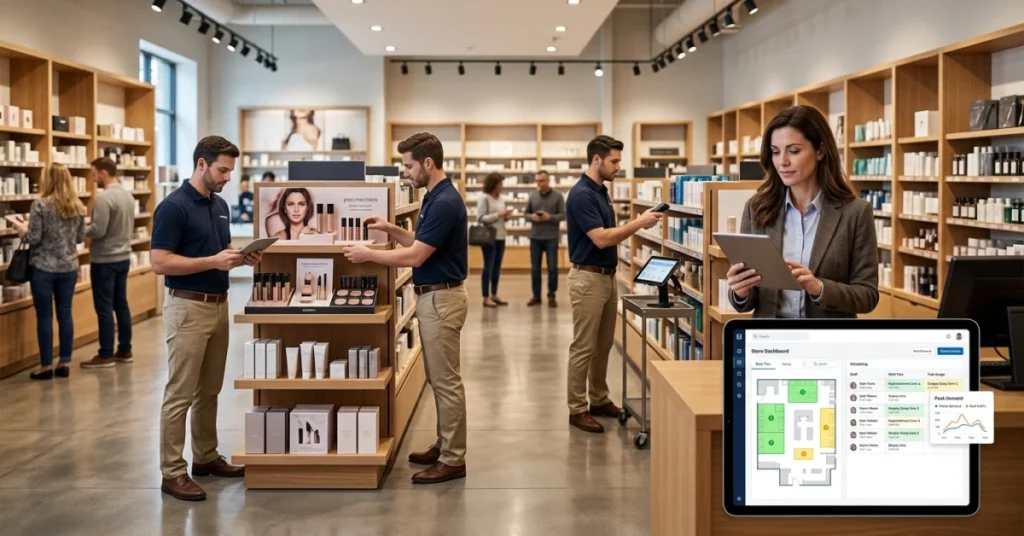
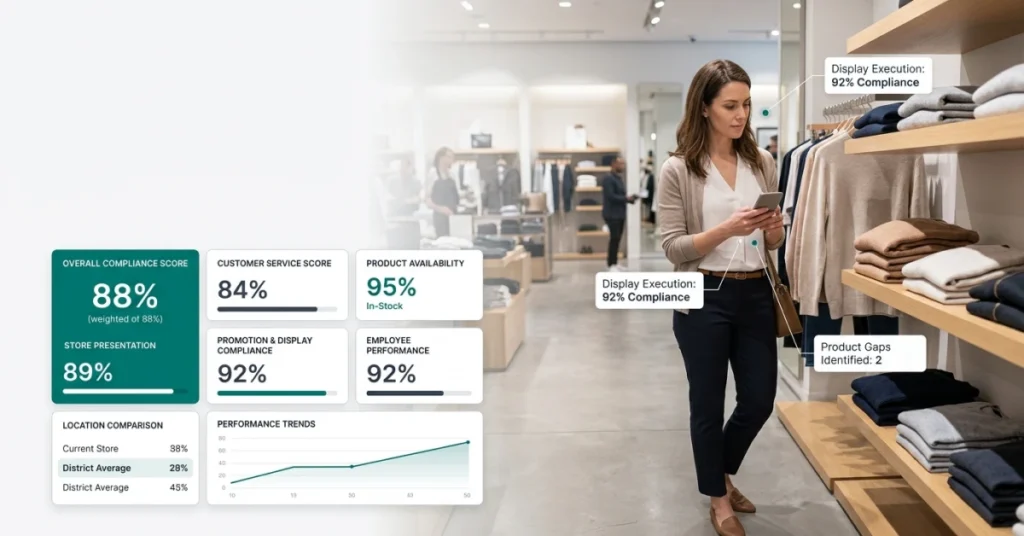
That gap is why in-store display compliance matters just as much as the strategy behind it.
📊 By the Numbers
Over 70% of purchase decisions happen in-store — yet most shopper marketing strategies are built on pre-trip assumptions.
Optimize Shelf Placement
Eye-level is buy-level. Shoppers spend less than 3 seconds scanning a shelf before moving on. Place your highest-margin SKUs at eye height. Anchor them with clear, simple signage.
Don’t rely on default planograms from the retailer. Push for placement data tied to your shopper’s height, basket behavior, and category entry point.
Improve Product Visibility
Cluttered shelves kill sales faster than a bad price point. Use strong color contrast, bold pack design, and consistent brand blocking to stand out in a crowded aisle.
Visibility isn’t just about design. It’s about position, lighting, and facing count. Audit these three factors before you touch your creative assets.
Design Effective POSM
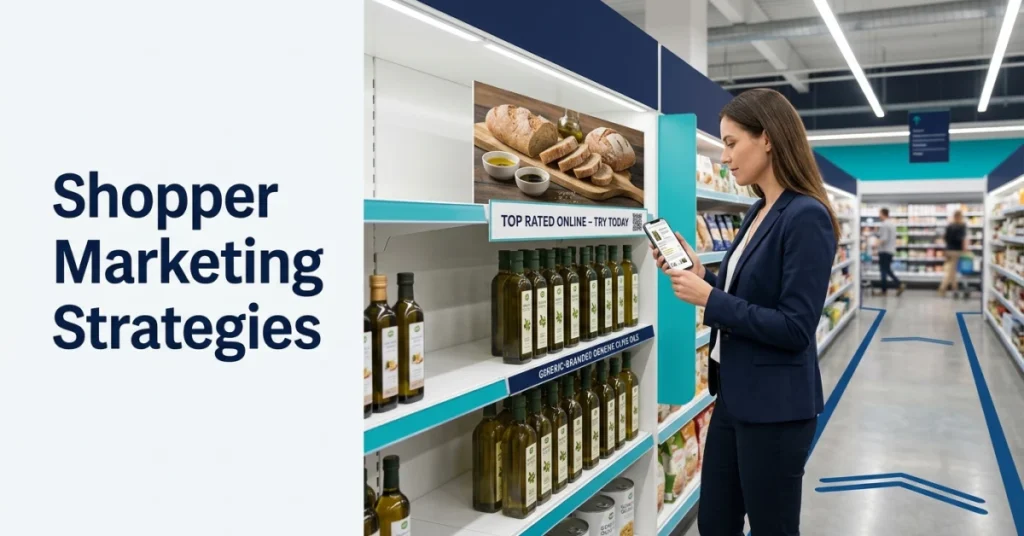
Point-of-purchase materials only work when they match the shopper’s mindset in that moment. A shelf talker for a rushed shopper needs five words — not fifty.
Test your POSM in-store, not in a focus group. Real aisles and real foot traffic expose problems a boardroom never will.
Use Cross-Merchandising
Pairing related products in one display grows basket size without extra ad spend. Think chips next to salsa, or batteries next to seasonal toys — context sells.
Cross-merchandising works best when it reflects real usage occasions. Build displays around how shoppers actually live, not how retailers organize stock.
Prevent Out-Of-Stocks
An empty shelf is the most costly mistake in retail marketing. It hands the sale straight to a competitor. Brands lose about 4% of annual sales to out-of-stock events alone.
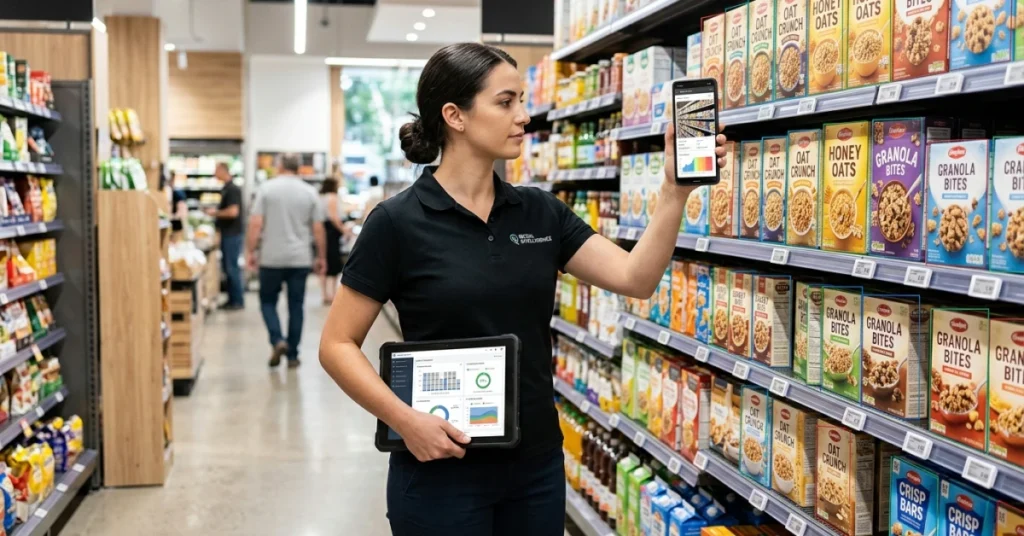
Build a field team routine that catches gaps before shoppers do. Real-time store audits and rep check-ins cut stock-outs faster than any forecasting model.
Every tactic above only holds if your team runs it consistently — across every store, every week. That discipline is what separates brands that grow from brands that plateau.
Conclusion
Consistent digital-to-aisle messaging is only half the battle. The brands that win know exactly who is standing at the shelf — not just who they think their shopper is.
According to Insightplatforms, fewer than 30% of brands run behavioral shopper research before building their retail marketing strategy. That means most campaigns are built on assumptions, not evidence.
The path to purchase framework only works when tactics connect to real, observed behavior. Every step — from point of purchase marketing to pre-trip digital ads — must be grounded in what shoppers actually do.
As Themartechsummit notes, brands that align shopper marketing tactics with live behavioral data see up to 20% higher in-store conversion rates than those relying on static personas.
Most field teams still lack real-time visibility into whether their shopper marketing strategies are running as planned at the shelf. FieldPie captures photo-based audit data and field reports at the point of execution, so gaps surface in hours — not weeks.
Start your next campaign audit with live field data. Close the gap between strategy and shelf reality.