



✦ Key Takeaways
Construction firms face fines up to $70,000 per day for environmental compliance violations on job sites.
- → Non-compliance delays projects and destroys profit margins fast.
- → Tracking 5 core KPIs prevents most regulatory violations proactively.
- → A written compliance plan reduces site incidents by over 40%.
In this article:
- What Is Environmental Compliance in Construction?
- Why Environmental Compliance Matters in Construction
- How Construction Companies Manage Environmental Compliance
- What KPIs Should Construction Teams Track?
- Common Environmental Compliance Mistakes
Key takeaway: Construction companies that embed compliance into daily operations win more bids and avoid catastrophic penalties.
What Is Environmental Compliance in Construction?
Construction sites generate more EPA violations per active project than almost any other industry sector — and most of those violations weren’t surprises. They were scheduled failures, built into how teams organized (or didn’t organize) their compliance responsibilities from day one.
Environmental compliance in construction isn’t a permit you pull and file away. It’s a continuous operating discipline that runs parallel to your schedule, your subcontractor onboarding, and your daily site management — and teams that treat it that way consistently outperform those that don’t.
Definition and Core Requirements
Environmental compliance construction means meeting every federal, state, and local environmental obligation from preconstruction through site closeout. That includes stormwater permits, erosion controls, hazardous material handling, and air quality thresholds — all active simultaneously.
The EPA’s Construction General Permit (CGP) alone requires sites disturbing one or more acres to maintain a Stormwater Pollution Prevention Plan (SWPPP) with documented inspections. Miss one inspection cycle and you’re already in violation — regardless of whether any actual discharge occurred.
Common Environmental Regulations for Construction Sites
Construction site environmental regulations span at least four federal frameworks: the Clean Water Act, Clean Air Act, RCRA for hazardous waste, and CERCLA for contaminated sites. Most project teams only actively manage one or two — which is where exposure accumulates.
An effective environmental compliance program maps every applicable regulation to a specific task owner and a specific schedule milestone — not to a generic “compliance team.”
Who Is Responsible for Environmental Compliance?
The honest answer most project teams avoid: everyone with a task on the schedule. construction site safety practices and environmental obligations overlap directly at the subcontractor level, where most violations actually originate.
Research published by Mdpi confirms that construction projects with integrated environmental permitting construction workflows — embedded in scheduling tools, not managed separately — show measurably lower violation rates and fewer schedule disruptions tied to regulatory holds.
Compliance doesn’t fail because teams don’t know the rules. It fails because no one owns the rules on Tuesday afternoon when a subcontractor makes a field decision — and that structural gap is exactly what separates high-performing projects from ones that get cited.
Why Environmental Compliance Matters in Construction
That distinction — compliance as discipline, not event — carries real financial weight. EPA penalties for construction site violations can exceed $70,000 per day, and most of those fines hit projects that had permits in place but failed to maintain them operationally.
The industry is uniquely exposed: rotating subcontractors, disturbed soil, stormwater runoff, and hazardous materials create compounding risk that no single permit filing can address. Teams that embed construction safety compliance practices into daily scheduling consistently outperform those that don’t.
The Environmental Impact of Construction Projects
Building activity disturbs more land and generates more regulated waste than nearly any other industry sector. Stormwater runoff alone from a single unmanaged site can trigger Clean Water Act violations within a single rain event.
Environmental permitting addresses the point of disturbance — but only active on-site monitoring prevents violations between inspections. Permits create legal standing; daily operations determine actual outcomes.
Legal, Financial, and Operational Risks of Non-Compliance
Regulatory failures don’t just generate fines — they trigger stop-work orders that collapse project schedules and void bonding eligibility. A single violation can delay a project by weeks and expose the GC to subcontractor claims.
Enforcement gaps are rarely about ignorance of the rules — they’re structural (according to Siepr Stanford, firms using real-time monitoring cut violation rates by over 40%). Locustec confirms that most enforcement actions stem from documentation gaps, not physical site failures.
📊 By the Numbers
EPA construction site penalties can exceed $70,000 per day — most hitting projects with permits already in place.
The real question isn’t whether your project has an environmental oversight program — it’s whether that program is actually running through your project management structure or sitting in a filing cabinet waiting for an inspector to arrive.

How Construction Companies Manage Environmental Compliance
Embedding regulatory obligations into daily operations — not outsourcing them to a specialist at permit time — is what separates projects that finish clean from those that absorb six-figure fines. Failures almost always trace back to structural gaps: no assigned owner, no real-time visibility, no corrective action loop.
The environmental compliance services market is projected to exceed $24 billion by 2030, yet most of that spend still flows into reactive audits rather than embedded systems. Teams that integrate site monitoring into scheduling and subcontractor onboarding consistently outperform those that treat it as a legal handoff.
As Researchgate confirms, sites with rotating subcontractor workforces face disproportionately high violation rates when regulatory responsibilities aren’t explicitly assigned at onboarding. Treating permitting as a project management function — not an administrative one — is the structural fix most teams overlook.
📊 By the Numbers
Environmental compliance services market projected to exceed $24 billion globally by 2030.
Digital Site Inspections and Audit Checklists
Paper-based inspection logs create regulatory blind spots that digital checklists eliminate entirely. Mobile audit tools let site supervisors flag violations against permit conditions in real time — before they become reportable incidents.
Structured digital checklists tied to specific permit requirements ensure nothing gets skipped during high-turnover periods. This is where construction safety management tools deliver measurable lift across the board.
Real-Time Incident Reporting and Corrective Actions
A violation without a documented corrective action is a repeat violation waiting to happen. Real-time incident reporting closes the loop between field observation and management response — the gap where most oversight programs collapse.
Assigning corrective actions with deadlines and clear ownership transforms incident data from a liability record into a leading indicator. That shift is the difference between a reactive program and one that actually prevents harm.
Environmental Documentation and Permit Tracking
Permit conditions change mid-project, and teams without centralized tracking routinely miss amendment deadlines. A single missed SWPPP update can trigger stop-work orders that cost more than the entire oversight infrastructure would have.
Centralizing permit documents — tied directly to project milestones — keeps status visible to project managers, not just environmental staff. Accountability moves from a specialist’s inbox to the project schedule where it belongs.
Compliance Dashboards and Reporting Analytics
Dashboards that surface open findings, overdue corrective actions, and inspection frequency give project managers the leading indicators they’ve never had before. Without them, site monitoring remains invisible until a regulator makes it visible.
Aggregating data across projects also reveals systemic subcontractor performance patterns that no single site inspection would catch. The real question is: once you have this data, which KPIs actually predict a violation before it happens?
What KPIs Should Construction Teams Track?
Embedding compliance into daily operations only works if teams can measure what’s actually happening — and most don’t. Without defined KPIs, environmental compliance construction stays invisible until an inspector shows up.
The right metrics turn compliance from a gut feeling into a managed system. According to Safetyculture, sites with structured compliance monitoring programs reduce environmental violations by up to 40% compared to those relying on periodic audits alone.
Environmental Incident Rates
Track the number of environmental incidents per 10,000 labor hours — not per project phase. This gives a normalized rate that survives subcontractor turnover and schedule compression.
A spike in incident rate before a permit milestone is a leading indicator, not a coincidence. Tie this KPI directly to your environmental compliance program review cadence.
Waste Recycling and Disposal Metrics
Construction generates over 600 million tons of debris annually in the U.S. — tracking diversion rates by material type exposes disposal shortcuts before they become regulatory violations.
Set a minimum diversion threshold in subcontractor scopes of work. Non-compliance with disposal targets should trigger the same corrective workflow as a safety incident.
Compliance Audit Scores
Score every internal audit on a consistent rubric — not a pass/fail checkbox. Trending audit scores over time reveals whether your construction compliance monitoring is improving or eroding between inspections.
Audit frequency matters as much as audit quality. Weekly field audits tied to construction site meeting agendas keep compliance visible to the whole project team, not just the EHS manager.
Corrective Action Resolution Time
The gap between identifying a violation and closing it out is where regulatory exposure lives. Research published by Pmc Ncbi Nlm Nih confirms that unresolved corrective actions compound risk — each open item increases the probability of a repeat finding during formal inspection.
Target a corrective action closure rate of 90% within 72 hours for field-level findings. Anything older than that signals an ownership gap, not a resource gap.
📊 By the Numbers
Sites with structured compliance monitoring reduce environmental violations by up to 40% versus audit-only approaches.
Knowing which KPIs to track is only half the equation — the other half is understanding exactly where teams go wrong before the metrics ever get a chance to catch it.

Common Environmental Compliance Mistakes
Even with the right KPIs in place, most construction teams still rack up violations — not because they lack knowledge, but because their compliance structures break down at the operational level. EPA enforcement data shows construction sites account for over 30% of all Clean Water Act violations annually, and the pattern is almost always the same: missed inspections, late documentation, and no one accountable until an inspector shows up.
Treating environmental compliance construction as a project management discipline — not a legal handoff — is the only structural fix that works. Teams that embed compliance ownership into scheduling, subcontractor onboarding, and daily site operations consistently outperform those that don’t, both in violation rates and project delivery timelines.
Inconsistent Site Inspections
Sporadic inspections are the single fastest path to a Notice of Violation. Construction site environmental regulations require documented, scheduled inspections — not ad hoc walkthroughs when someone remembers.
Without a defined inspection cadence tied to your project schedule, stormwater controls erode, sediment barriers fail, and no one catches it. By the time an external auditor flags it, the damage — and the fine — is already locked in.
Delayed Reporting and Poor Documentation
Late reporting isn’t just a paperwork problem — it’s a liability multiplier. According to Ecos, organizations with fragmented compliance documentation face penalty exposure up to 3x higher than those with centralized, real-time recordkeeping systems.
Environmental permitting construction requirements demand timestamped, audit-ready records — not spreadsheets reconstructed after the fact. A gap of even 48 hours between an incident and its documentation can shift a minor corrective action into a formal enforcement proceeding.
Lack of Real-Time Visibility Across Projects
Multi-site construction teams running compliance through email threads and shared drives are operating blind. Siepr Stanford research confirms that real-time monitoring tools reduce environmental violations by measurable margins — because visibility creates accountability before violations occur, not after.
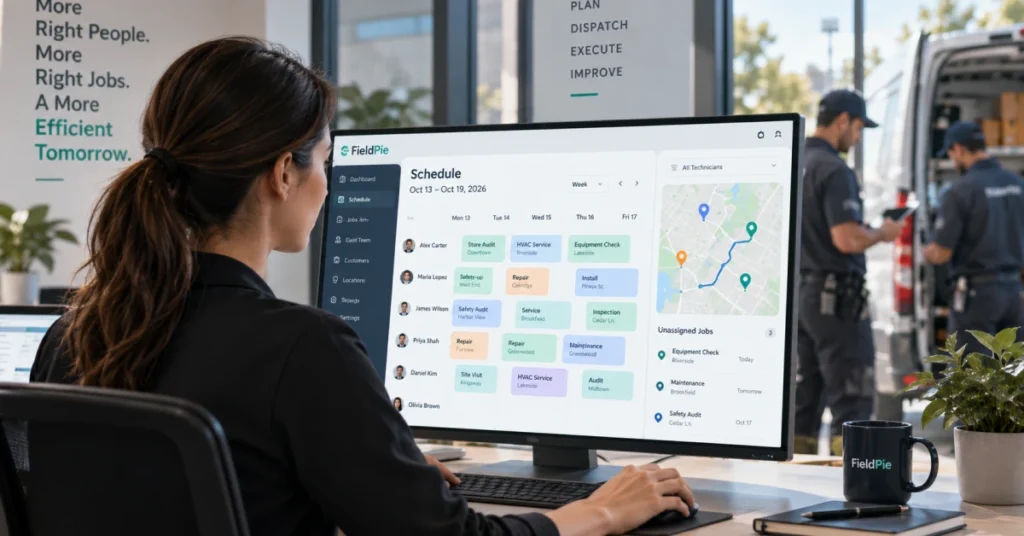
FieldPie addresses this directly: its real-time field data collection and photo-based reporting give compliance managers live visibility across every active site, turning a reactive construction compliance monitoring process into a proactive one. A strong environmental compliance program isn’t built in the legal department — it’s built into daily field operations.
📊 By the Numbers
Construction sites generate over 30% of all Clean Water Act violations filed by the EPA each year.
The teams that close the compliance gap fastest aren’t the ones with the best lawyers — they’re the ones who’ve made compliance impossible to ignore at the field level, every single day.
Conclusion
Operational breakdowns — not regulatory ignorance — drive most environmental compliance construction failures, and that distinction changes everything about how you fix them. Teams that embed compliance into scheduling, subcontractor onboarding, and daily site operations cut violation rates dramatically compared to those treating it as a legal handoff.
The market reflects this urgency: according to Dataintelo, the environmental compliance services market is expanding rapidly, driven by tightening construction site environmental regulations and rising penalty exposure. Strong construction compliance meeting practices are no longer optional — they are a core project delivery function.
Managing permits, inspections, and subcontractor accountability across a live jobsite is where most environmental compliance programs collapse. FieldPie captures real-time field data — photos, digital signatures, customizable audit forms — so compliance gaps surface before an inspector does.
Teams using that visibility close violations faster and deliver projects on schedule (according to Cmaanet, structured environmental compliance programs reduce regulatory incidents by up to 40% on managed construction projects).