


Visual merchandising strategies are the deliberate, data-driven methods retailers use to arrange products, displays, lighting, signage, and store layout to influence shopper behavior and drive purchases. Executed correctly, they transform passive browsers into active buyers — both in-store and online.
What Is Visual Merchandising — and Why Does It Matter in 2026?
Visual merchandising is both an art and a science. It encompasses every sensory touchpoint a customer encounters from the moment they approach a storefront to the moment they reach the checkout. That includes window displays, floor layout, shelf arrangements, lighting, signage, color palettes, and digital screens.
The stakes are high. According to an ultimate guide on visual merchandising, 41% of consumers rely on visual elements when making purchase decisions in-store. For retailers, that single statistic justifies every dollar invested in display design and store layout management.
Visual merchandising also bridges the gap between brand identity and the customer experience. When done right, it tells a story — and that story converts.
How Do Visual Merchandising Strategies Differ Between Physical and Digital Retail?
The core principles are the same: put the right product in the right place, at the right time, with the right message. But the execution diverges sharply between brick-and-mortar and online environments.
| Dimension | In-Store | Online / Digital |
|---|---|---|
| Primary tool | Floor layout, fixtures, signage | Product page design, AI-driven sorting |
| Customer journey trigger | Window display, endcap | Homepage banner, search results |
| Personalization method | Store clustering, planograms | Cookies, behavioral data, AI recommendations |
| Performance measurement | Foot traffic, dwell time | Click-through rate, conversion rate |
| Signage type | Physical POP signage | Digital banners, dynamic product badges |
| Management complexity | Field team execution | Platform algorithm management |
This distinction matters because many retailers still treat online visual merchandising as an afterthought. The data says otherwise: online sales on Black Friday 2023 grew 9% year-over-year to reach $16.4 billion in the U.S. alone, while in-store sales increased just 1.1%, according to Smart Merchandiser’s ROI guide. The digital channel now demands the same strategic rigor as the physical one.

What Are the 4 Core Pillars of Visual Merchandising?

Before diving into specific techniques, it helps to understand the structural foundation. Every effective approach rests on four pillars:
- Product Presentation — How items are displayed, grouped, and positioned relative to eye level and traffic flow.
- Store Layout & Design — The physical or digital architecture that guides a customer’s journey from entry to checkout.
- Signage & Communication — The messaging layer that informs, directs, and persuades shoppers at key decision points.
- Atmosphere & Sensory Design — Lighting, color, scent, and sound that establish emotional context and brand tone.
Each pillar requires dedicated management and regular performance audits. Neglecting even one creates friction in the shopper experience.
8 Proven Visual Merchandising Strategies That Actually Work
1. Master the Store Layout First
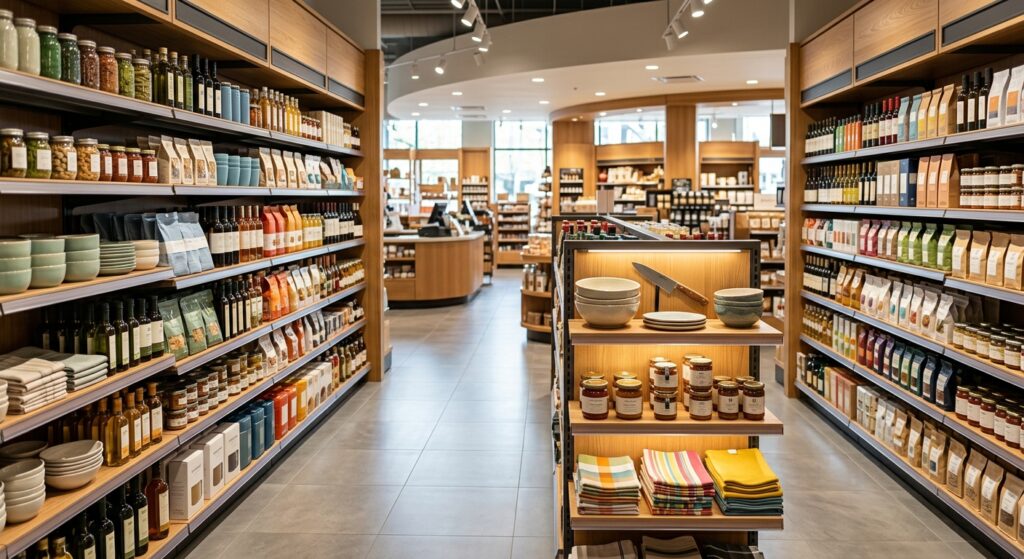
Layout is the foundation of every other strategy. The three most effective layout formats for retailers are:
- Grid layout — Best for grocery and pharmacy. Maximizes product density and supports efficient shopping.
- Loop (racetrack) layout — Guides shoppers along a predetermined path past high-margin product zones.
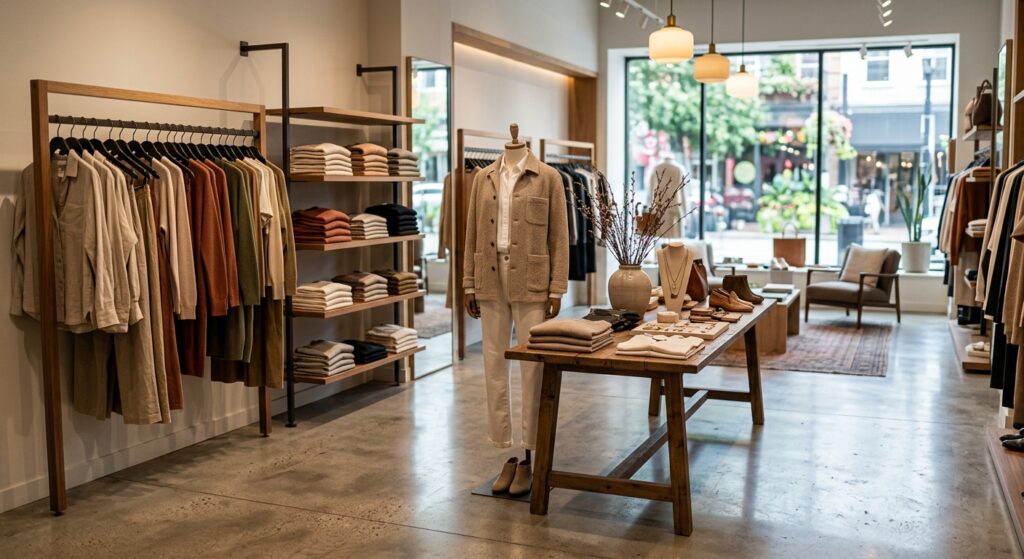
- Free-flow layout — Used in specialty and apparel retail to encourage exploration and impulse purchases.
The right layout depends on your category, average basket size, and shopper dwell-time goals. A grid layout in a fashion boutique will kill conversion; a free-flow layout in a grocery store will create chaos.
For teams managing multiple locations, a centralized retail execution platform ensures that layout standards are applied consistently across every store.
2. Apply the “6 Rights” Framework to Product Placement
Channelplay’s merchandising framework — adapted widely across FMCG and consumer goods — defines effective placement as getting the right product, in the right place, at the right time, in the right quantity, at the right price, with the right communication. This framework is a practical management tool that prevents the most common display failures.
Practically, this means:
- Eye-level placement for high-margin SKUs (eye level is buy level).
- Impulse items positioned near the checkout zone.
- Cross-merchandising complementary products within the same display zone.
- Seasonal best sellers rotated to endcaps and gondola ends.
3. Use Signage to Communicate, Not Just Decorate
Signage is one of the most underutilized tools in retail. Effective signage does three jobs simultaneously: it informs (product details, pricing), directs (wayfinding, category labels), and persuades (promotional messaging, social proof).
Best practices for in-store signage:
- Keep copy to seven words or fewer for high-traffic zones.
- Use hierarchy: primary message at eye level, secondary detail below.
- Replace static signage with digital displays in high-velocity sections — digital signage can be updated in real time to reflect inventory changes or promotional shifts.
- Ensure signage is legible from a minimum of 10 feet for floor-standing units.
The move to digital signage is accelerating. Retailers who invest in digital display management gain the ability to synchronize online promotions with in-store messaging — a critical advantage in an omnichannel environment.
4. Design Window Displays That Stop Traffic
The window display is your highest-visibility real estate. It has approximately three seconds to capture attention and communicate a brand message. Research from CAAD Retail Design confirms that window displays are one of the primary drivers of unplanned store visits — meaning they directly boost foot traffic without paid media spend.
Principles for high-converting window design:
- Lead with a single, clear focal point — not a crowded product assortment.
- Rotate displays every two to four weeks to maintain novelty for repeat passersby.
- Align the display theme with current promotions and seasonal moments.
- Use lighting to create depth and direct the eye toward the hero product.
5. Leverage Color Psychology and Lighting Design
Color and lighting are not aesthetic choices — they are behavioral triggers. Warm lighting (2,700–3,000K) slows shoppers down and encourages browsing, making it ideal for lifestyle and luxury categories. Cool, bright lighting (4,000K+) communicates efficiency and cleanliness, which suits grocery and pharmacy environments.
Color psychology in retail follows well-documented patterns:
- Red creates urgency — best for clearance and promotional signage.
- Blue builds trust — effective for technology and financial services retail.
- Green signals health and sustainability — strong in organic and wellness categories.
- Yellow attracts attention — use sparingly as an accent in display design.
These techniques are not decorative. They are execution-level decisions that directly affect dwell time and conversion rate.
6. Build an Online Visual Merchandising Strategy Around AI and Data
Digital visual merchandising strategies require a fundamentally different toolkit. Online shoppers cannot touch or feel products, so the visual experience must do more work. The three most impactful techniques for digital execution are:
- AI-powered product sorting — Algorithms surface the right products to the right shopper based on cookies, browsing history, and purchase behavior. Retailers using AI-driven sorting report measurable lifts in average order value.
- High-quality imagery and 360° visualization — Online shoppers cite ease of checkout (81%), variety of products (80%), and number of shopping options (73%) as their top three considerations, per Smart Merchandiser’s data. Rich product imagery directly addresses the variety and confidence signals that drive those decisions.
- Dynamic digital badging — Labels like “Best Seller,” “Low Stock,” or “New Arrival” applied to product tiles boost click-through rates without requiring a design overhaul.
7. Use Planograms as a Management and Compliance Tool
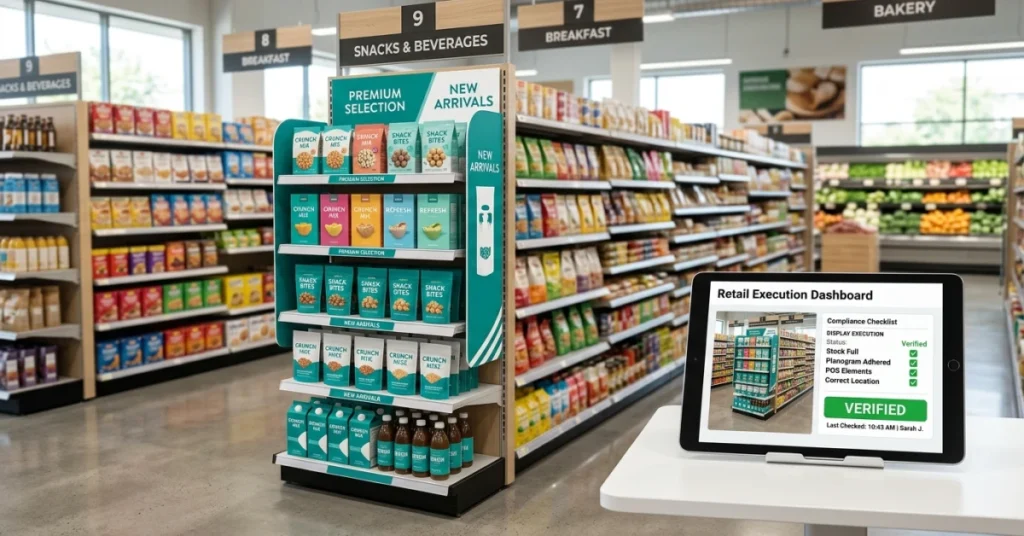
A planogram is a schematic diagram that specifies exactly where each product should be placed on a shelf or fixture. For retailers operating more than five locations, planograms are non-negotiable. Without them, execution drifts — and inconsistent execution directly erodes sales performance.
Effective planogram management includes:
- Generating planograms based on sales velocity data, not just supplier agreements.
- Conducting regular field audits to verify compliance.
- Using photo-based reporting tools so field teams can document shelf conditions in real time.
- Updating planograms quarterly — or more frequently in fast-moving categories.
The gap between planogram design and store-level execution is where most retail visual merchandising programs fail. Closing that gap requires both the right process and the right technology.
8. Integrate Online and In-Store Experiences for Omnichannel Consistency
Shoppers do not think in channels — they think in brands. A customer who sees a product featured in your online store expects to find it prominently displayed in the physical location. Misalignment between digital and physical merchandising creates friction and erodes brand trust.
Omnichannel consistency requires:
- Synchronized promotional calendars across digital and physical channels.
- Consistent product imagery between online listings and in-store signage.
- Real-time inventory visibility so online promotions reflect actual stock availability.
- Shared performance data between digital and field teams.
For consumer goods brands managing both retail partners and direct channels, a unified field sales and merchandising platform eliminates the data silos that undermine omnichannel execution.
Visual Merchandising Strategy Checklist: 20 Steps to Audit Your Current Program
Use this checklist to evaluate your existing program against best-practice standards. It applies to both in-store and online environments.
Store Layout & Design
- Layout type matches category and shopper behavior (grid, loop, or free-flow)
- High-margin SKUs are positioned at eye level
- Checkout zone features impulse-purchase items
- Traffic flow is unobstructed and logical
- Cross-merchandising opportunities are actively exploited
Signage & Communication
- All signage is current, accurate, and damage-free
- Promotional signage aligns with active campaigns
- Digital signage is synced with online promotions
- Wayfinding signage is clear and visible from 10+ feet
- Signage copy is concise (seven words or fewer in high-traffic zones)
Display & Product Presentation
- Window display has been refreshed within the last four weeks
- Endcaps and gondola ends feature seasonal best sellers
- Planograms are current and compliance has been verified
- Displays use a clear focal point, not visual clutter
- Lighting is appropriate for the category and brand positioning
Digital & Online Execution
- Product sorting uses AI or sales-velocity data, not manual default
- Product imagery meets resolution and consistency standards
- Dynamic badges (Best Seller, New, Low Stock) are deployed on key SKUs
- Online promotions are synchronized with in-store campaigns
- Cookies and behavioral data are used to personalize the digital experience
Common Visual Merchandising Mistakes That Kill Conversion
Even experienced retailers make these execution errors consistently:
- Overcrowding displays — More products do not mean more sales. Visual clutter overwhelms shoppers and reduces conversion. Best practice: fewer SKUs, more breathing room.
- Ignoring the decompression zone — The first 5–15 feet inside a store entrance is where shoppers mentally transition from outside to inside. Placing key promotions here wastes them. Shoppers are not ready to engage.
- Failing to update digital product sorting — Online retailers who leave default alphabetical or date-added sorting active are leaving significant revenue on the table. AI-driven or sales-velocity-based sorting consistently outperforms manual defaults.
- Inconsistent signage management — Outdated promotional signage after a campaign ends actively damages brand credibility. A formal signage management process with defined review cycles prevents this.
- No measurement framework — Visual merchandising without KPIs is decoration. Best-in-class retailers track display compliance rates, sell-through velocity by placement zone, and conversion lift from specific display interventions.

How Should Retailers Measure the ROI of Visual Merchandising?
Measurement is where most visual merchandising programs fall short. The right KPIs depend on channel, but the following metrics apply across both in-store and online environments:
- Sell-through rate by placement zone — Compares sales velocity for products in featured positions versus standard shelf placement.
- Display compliance rate — Percentage of stores or digital touchpoints where the planogram or display standard is correctly executed.
- Conversion lift — Incremental sales attributable to a specific display or merchandising intervention.
- Average transaction value — Tracks whether cross-merchandising and upselling display techniques are working.
- Digital engagement metrics — Click-through rate, add-to-cart rate, and session duration for online visual merchandising changes.
Conclusion
Effective visual merchandising strategies are not a single tactic — they are an integrated management system that spans store layout, product placement, signage, digital execution, AI-powered personalization, and field compliance. In 2026, the retailers who win are those who treat visual merchandising as a measurable business discipline, not a creative exercise.
The checklist in this guide gives you a structured starting point. The eight strategies give you the execution framework. The technology — from AI-driven online sorting to field compliance platforms — gives you the infrastructure to scale.
The gap between strategy and execution is where revenue is lost. Close that gap, and visual merchandising becomes one of the highest-return investments in your retail toolkit.