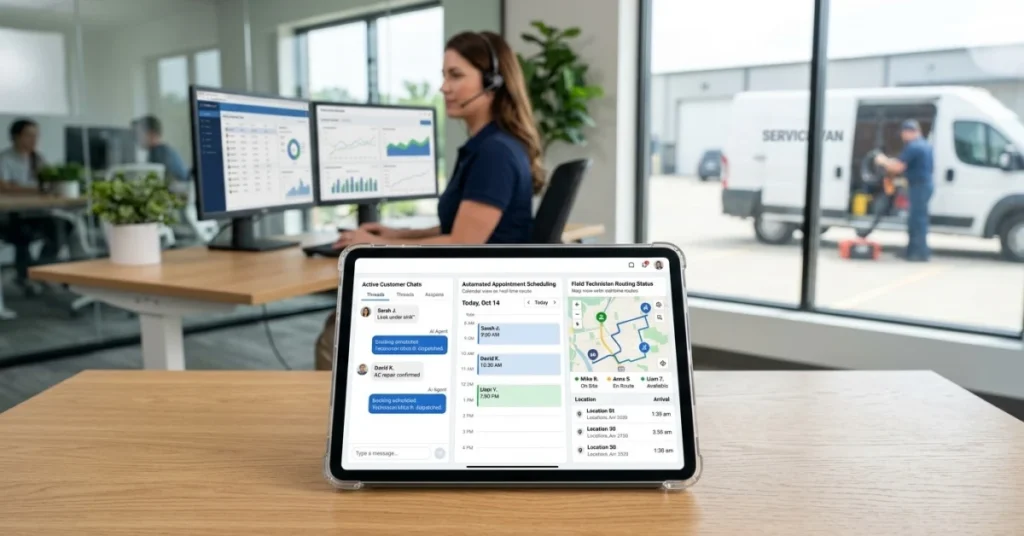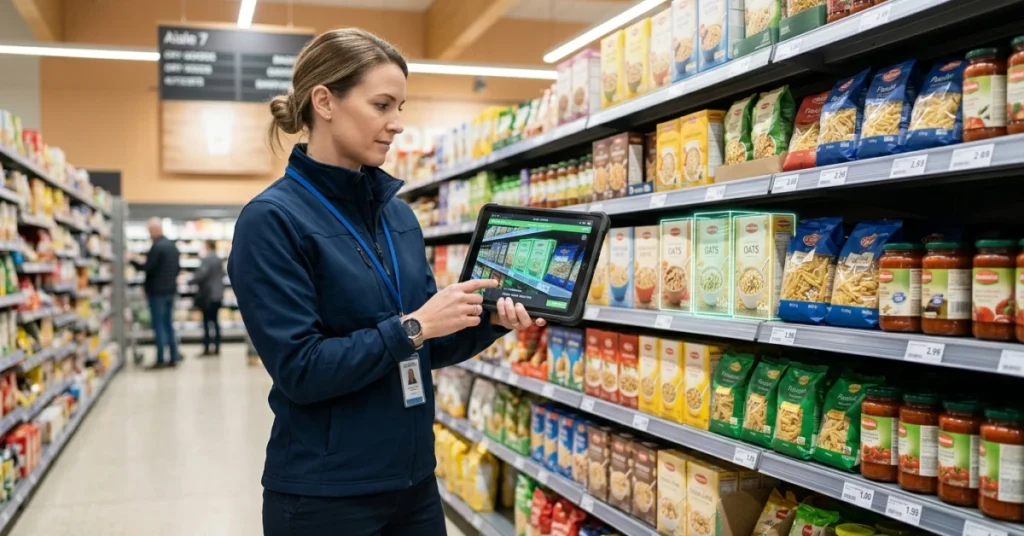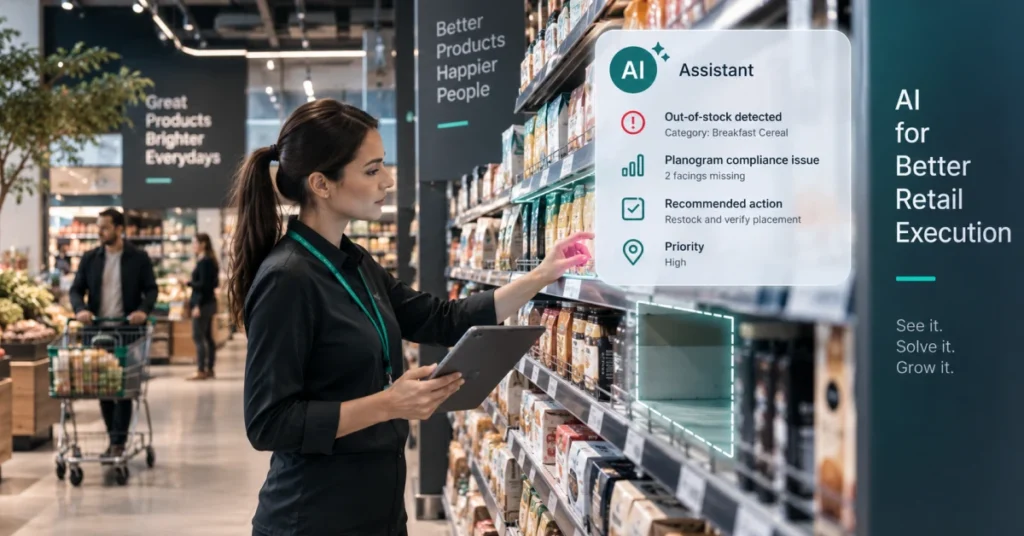



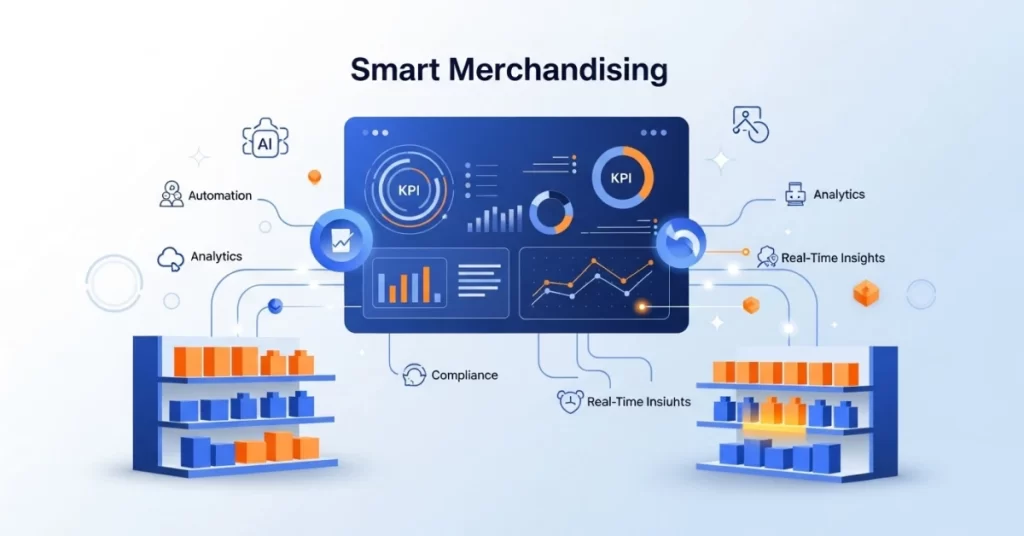
Smart merchandising is the data-driven practice of presenting the right products to the right customers at the right time — across both physical and digital retail environments. It combines AI, behavioral analytics, and strategic product placement to increase discoverability, improve the shopping experience, and maximize sales conversion rates.
What Is Smart Merchandising and Why Does It Matter in 2026?
The retail landscape has shifted fundamentally. Customers today navigate massive product catalogs, expect personalized experiences, and abandon a store — physical or digital — within seconds if they can’t find what they need.
Traditional merchandising relied on intuition and seasonal planograms. Smart merchandising replaces guesswork with real-time data. It uses machine learning algorithms, inventory signals, and customer behavior patterns to dynamically arrange and prioritize products — whether on a store shelf or an ecommerce category page.
The stakes are high. According to Commerce-UI’s analysis of ecommerce merchandising tactics, poor product discoverability and irrelevant search results are among the top drivers of lost revenue for online retailers. When shoppers can’t find what they’re looking for, they leave — and they rarely come back.
This guide covers every dimension of smart merchandising: core principles, proven tactics, the tools that power it, and a practical checklist your team can implement today.
What Are the Core Pillars of a Smart Merchandising Strategy
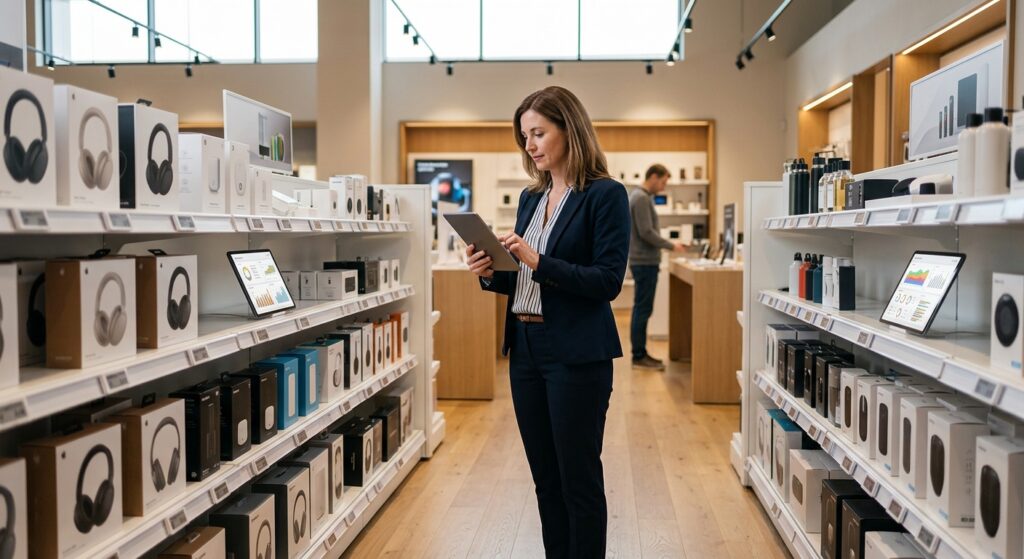
A robust strategy rests on five pillars. Each one addresses a distinct failure point in conventional retail and ecommerce operations.
Pillar 1: Product Discoverability
Customers must be able to find products through multiple pathways: category navigation, site search, filters, and personalized recommendations. If any pathway is broken, sales suffer.
Pillar 2: Inventory-Aware Presentation
Showing out-of-stock items destroys the shopping experience. Smart systems integrate directly with inventory management platforms to suppress unavailable items and promote well-stocked alternatives in real time.
Pillar 3: Personalization at Scale
One-size-fits-all product pages are obsolete. Effective merchandising adapts the product assortment, order, and recommendations shown to each visitor based on browsing history, purchase patterns, and demographic signals.
Pillar 4: Visual Merchandising Integrity
How items are displayed — image quality, product sequencing, color blocking — directly influences conversion. Smart Merchandiser’s visual ecommerce platform demonstrates that visual arrangement tools can dramatically reduce the time merchandising teams spend manually reordering category pages.
Pillar 5: Performance Measurement
Every merchandising decision must be measurable. Teams track metrics including click-through rate (CTR) by category, conversion rate per product placement, average order value (AOV), and revenue per visitor (RPV).

Smart Merchandising vs. Traditional Merchandising: What’s the Difference?
| Dimension | Traditional Merchandising | Smart Merchandising |
|---|---|---|
| Data Source | Seasonal trends, buyer intuition | Real-time behavioral data, AI models |
| Product Ranking | Manual, static planograms | Dynamic, algorithm-driven |
| Personalization | Segment-level (broad) | Individual-level (1:1) |
| Inventory Sync | Periodic, manual updates | Continuous, automated |
| Search Experience | Basic keyword matching | Intent-based, NLP-powered |
| Team Workload | High manual effort | Automated with human override |
| Speed to Adapt | Days to weeks | Minutes to hours |
| Sales Impact | Moderate, predictable | High, compounding over time |
The operational efficiency gains are significant. A merchandising team managing 50,000 SKUs cannot manually optimize every category page daily — but an AI-powered system can, and it does so while incorporating live sales data and customer behavior.
How Does Smart Merchandising Apply in Physical Retail Stores?
Smart merchandising is not exclusively a digital discipline. In physical retail, it translates to data-informed shelf management, planogram compliance, and field team execution.
Smart Merchandising Services (SMS), one of Cyprus’s leading retail merchandising firms, illustrates the scope of in-store smart merchandising. Their field operations cover:
- Space negotiation and planogram implementation
- SKU-level stock optimization and out-of-stock control
- FIFO shelf stock rotation
- Secondary point-of-sale placement
- Real-time reporting from field teams
The defining characteristic of smart in-store merchandising is the feedback loop: field teams collect data at the shelf level, that data feeds back into the management system, and decisions about product placement, promotions, and inventory replenishment are made on evidence — not assumption.
For brands operating across multiple store locations, real-time field team management software becomes the operational backbone that connects shelf-level data to central merchandising strategy.
What Role Does Technology Play in Smart Merchandising?
Technology is the enabler, not the strategy itself. The tools your team selects must serve clearly defined merchandising objectives.
Key Technology Categories
Merchandising Platforms Dedicated platforms like those integrated with Adobe Commerce, Salesforce Commerce Cloud, HCL Commerce, and Shopify provide merchandisers with visual drag-and-drop category management, rule-based automation, and performance dashboards — all without requiring engineering resources for every change.
AI and Machine Learning Engines These systems process behavioral data at scale to generate product rankings, personalization signals, and demand forecasts. They learn continuously, improving recommendations as more customer data accumulates.
Search and Discovery Tools Specialized search tools sit on top of an ecommerce platform’s native search capability, delivering significantly better relevance, faceted filtering, and synonym management.
Field Execution Apps For retail brands with physical store presence, mobile apps enable field teams to conduct store audits, capture shelf images, log compliance data, and report back in real time. The Smart Merchandising App on Google Play is one example of how mobile technology supports in-store execution at scale.
Analytics and Reporting Dashboards Merchandising decisions must be grounded in performance data. Dashboards that surface revenue by category, conversion by product placement, and search query analysis give teams the insight to iterate rapidly.
For ecommerce teams seeking to integrate these capabilities, choosing the right ecommerce merchandising platform is one of the most consequential decisions a retail organization makes.
Smart Merchandising Metrics to Track
Measurement separates smart merchandising from activity-based merchandising. Track these metrics by category, by team, and by channel.
| Metric | What It Measures | Benchmark Target |
|---|---|---|
| Category Conversion Rate | % of category page visitors who purchase | 3–5% (ecommerce average) |
| Search Conversion Rate | % of search users who purchase | 6–10% (typically 2x browse) |
| Product Click-Through Rate | % of impressions resulting in a product click | Varies by placement position |
| Average Order Value (AOV) | Average revenue per completed transaction | Track month-over-month trend |
| Out-of-Stock Rate | % of displayed items unavailable for purchase | Target: <2% |
| Planogram Compliance Rate | % of stores meeting shelf display standards | Target: >90% |
| Revenue Per Visitor (RPV) | Total revenue divided by total store visitors | Primary composite metric |
Review these metrics weekly at the category level and monthly at the store or channel level. Assign ownership — a team without clear accountability for metrics rarely improves them.
If your team needs a framework for tracking field-level compliance data alongside digital performance, integrating field audit reporting with your central analytics stack is a high-impact next step.
Smart Merchandising Mistakes & Fixes
Even experienced retail and ecommerce teams make avoidable errors. Here are the most common failure patterns.
Mistake 1: Treating all categories the same High-velocity categories like seasonal items or trending products need more frequent merchandising attention than stable, evergreen categories. Prioritize where customer behavior changes fastest.
Mistake 2: Ignoring search data Your site search logs are a direct window into customer demand. Teams that don’t analyze search queries miss obvious gaps between what customers want and what the store surfaces.
Mistake 3: Setting rules and never revisiting them Business rules that made sense in Q1 may actively harm performance in Q4. Schedule quarterly rule audits as a standard management practice.
Mistake 4: Siloing digital and physical merchandising A promotional campaign that doesn’t align between the ecommerce store and the physical store shelf creates a disjointed customer experience. Integrated management is essential.
Mistake 5: Over-automating without human oversight Algorithms optimize for the signals you give them. Without human review, they can surface items that technically convert well but damage brand positioning or create legal compliance issues. Your team must retain editorial control.
For organizations managing large field teams, establishing a structured retail audit process prevents execution errors before they impact sales.

Frequently Asked Questions (FAQ)
What is smart merchandising in simple terms?
Smart merchandising is the practice of using data, automation, and AI to display the right products to the right customers at the right time — whether in a physical store or an online shopping environment. It replaces manual, intuition-based decisions with evidence-driven product placement and personalization.
How is smart merchandising different from visual merchandising?
Visual merchandising focuses specifically on how products are displayed — layout, signage, color, and aesthetics — to attract customer attention and drive purchase decisions. Smart merchandising is broader: it encompasses visual presentation but also includes data analytics, search optimization, inventory management, and personalized recommendations across all retail channels.
What tools do you need to implement smart merchandising?
The core tools include a merchandising management platform (integrated with your ecommerce or retail system), an AI-powered search and discovery engine, a personalization and recommendation engine, an inventory management system with real-time sync, and — for brands with physical store presence — a field execution app that tracks in-store compliance and team performance.
Conclusion
Smart merchandising is no longer a competitive advantage reserved for enterprise retailers. The tools, platforms, and methodologies that once required eight-figure technology budgets are now accessible to mid-market and growing retail brands across both ecommerce and physical store environments.
The brands that win in 2026 will be those that close the gap between merchandising strategy and operational execution — ensuring that every product, in every channel, is presented with precision, backed by data, and measured relentlessly.
Whether your priority is improving ecommerce category page conversion, optimizing in-store shelf compliance, or building a unified view of product performance across channels, the 15-step checklist and framework in this guide give your team a clear starting point.