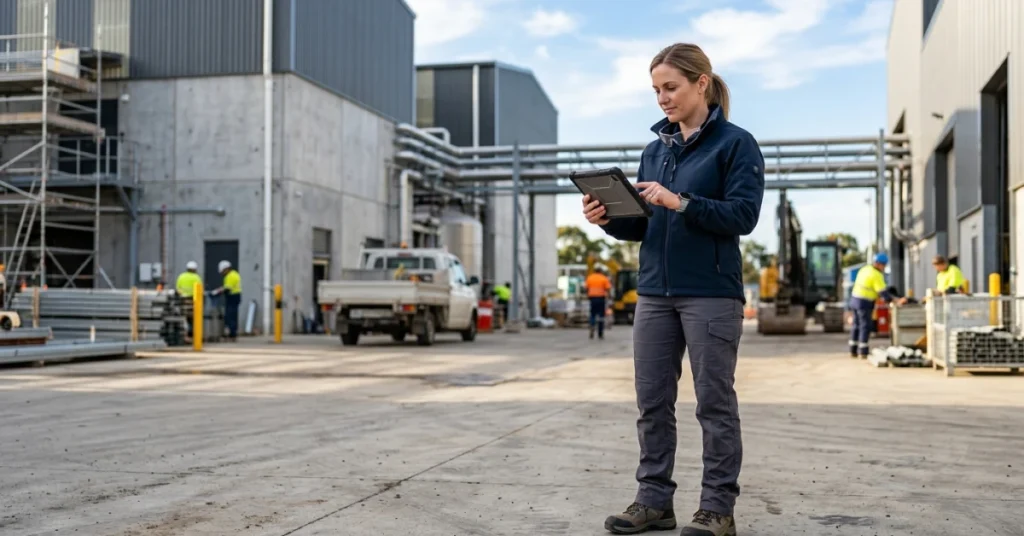
Outside sales is a selling model in which sales representatives meet prospects and customers face-to-face outside a traditional office environment — at client sites, trade shows, or other field locations. Unlike inside sales, it relies on in-person relationship-building to close complex, high-value deals.
What Is Outside Sales, and Why Does It Still Matter in 2026?
Despite the rapid rise of digital communication, field-based selling remains a cornerstone of B2B revenue strategy. According to Salesforce research, more than 90% of B2B companies have adopted a virtual or hybrid sales model — yet the same data confirms that face-to-face engagement still drives stronger trust, faster deal closure, and larger average contract values than remote-only approaches.
The reason is straightforward: when a sales representative sits across the table from a decision-maker, body language, tone, and real-time responsiveness create a persuasive dynamic that no video call fully replicates. For organizations selling complex solutions — industrial equipment, enterprise software, medical devices, or financial services — outside sales remains the highest-leverage channel available.
As you explore proven field sales strategies for your team, understanding the mechanics of this model is the essential first step.
How Does Outside Sales Differ from Inside Sales?
The two models are often confused, but they operate on fundamentally different principles. The table below clarifies the core distinctions:
| Dimension | Outside Sales | Inside Sales |
|---|---|---|
| Work Location | Client sites, field, travel | Office or remote desk |
| Primary Communication | Face-to-face meetings | Phone, email, video calls |
| Deal Complexity | High-value, complex | Transactional, shorter cycle |
| Sales Cycle Length | Weeks to months | Days to weeks |
| Typical Industries | Manufacturing, medical, SaaS enterprise, construction | SaaS SMB, e-commerce, financial products |
| Compensation | Higher base + commission | Moderate base + commission |
| Autonomy | High — self-managed schedules | Structured, managed environment |
Outside reps typically manage a defined geographic territory, plan their own routes, and carry a smaller number of high-value accounts. Inside reps work a higher volume of leads with shorter cycles.

What Does an Outside Sales Representative Actually Do?
A sales representative in a field role carries a broad set of daily responsibilities. According to the Outside Sales Representative Job Description published by Betterteam, the core duties include:
- Prospecting and qualifying leads within an assigned territory
- Scheduling and conducting in-person client meetings and product demonstrations
- Preparing and delivering tailored sales proposals
- Negotiating pricing, terms, and contracts
- Resolving customer complaints and managing post-sale relationships
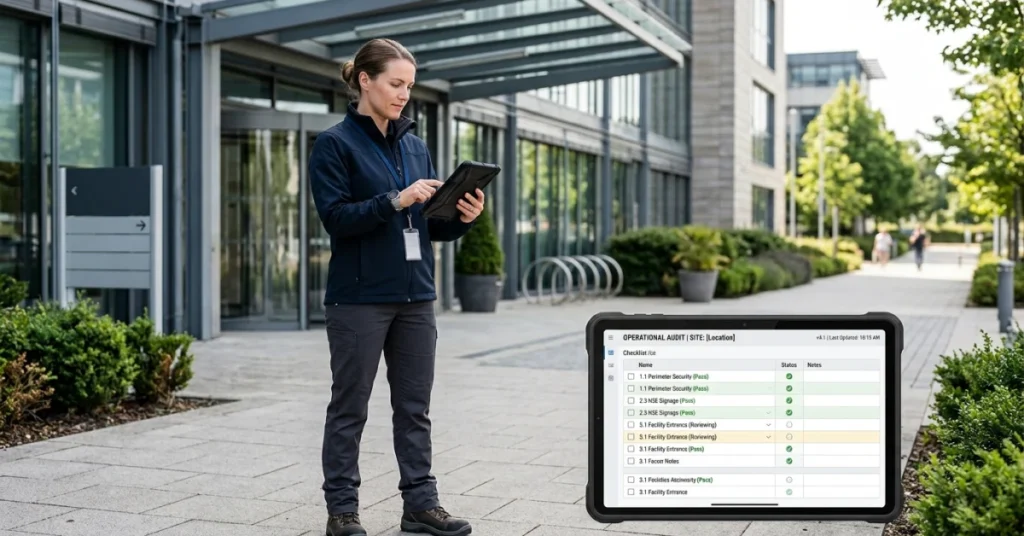
- Submitting accurate sales activity reports to management
- Collaborating with internal teams on order fulfillment and customer success
Beyond these formal duties, effective outside reps spend significant time on territory planning, competitive research, and relationship maintenance with existing accounts. The job demands both strategic thinking and tactical execution — often in the same afternoon.
What Skills Does an Outside Sales Rep Need to Succeed?
Success in this role is not accidental. The following skills separate top performers from average reps:
Hard Skills
- Territory and route planning: Maximizing face time with high-value accounts while minimizing windshield time
- CRM proficiency: Logging activities, tracking pipeline stages, and forecasting revenue accurately
- Product expertise: Demonstrating solutions with technical confidence
- Proposal writing: Crafting persuasive, customized documents that address specific customer pain points
Soft Skills
- Active listening: Understanding what customers need before pitching a solution
- Resilience: Handling rejection without losing momentum
- Adaptability: Pivoting a pitch when a meeting takes an unexpected direction
- Time management: Self-directing a full day of field activity without managerial oversight
As Salesforce notes in its field sales guide, the ability to connect with people is the foundational skill underlying all outside sales success. Technical knowledge and process discipline amplify that foundation — they cannot replace it.
What Are the Key Outside Sales Job Requirements?
Education and Experience
Most outside sales job postings require:
- A bachelor’s degree in business, marketing, communications, or a related field (some industries accept equivalent experience)
- 1–3 years of prior sales experience for entry-level field roles; 3–5+ years for senior or enterprise positions
- A valid driver’s license and reliable transportation — a non-negotiable for field work
- Willingness to travel within a defined territory, which may involve overnight stays
Compensation Structure
Outside sales roles typically combine a base salary with commission and performance bonuses. According to the U.S. Bureau of Labor Statistics, the median annual wage for sales representatives in wholesale and manufacturing exceeded $61,000, with top performers in enterprise roles regularly earning six figures through commission.
Compensation packages often include a car allowance or mileage reimbursement, a mobile device, and a technology stipend for field tools.
Outside Sales Representative Job Description: A Ready-to-Use Template
If you’re hiring, Betterteam’s outside sales representative job description framework offers a strong structural starting point. Adapt the template below to your specific industry and territory:
Job Title: Outside Sales Representative
Reports To: Regional Sales Manager
Territory: [Define geographic region]
Responsibilities:
- Generate new business through prospecting, cold calling, and referrals within the assigned territory
- Conduct in-person meetings, product demonstrations, and site visits with prospective and existing customers
- Develop and present customized sales proposals aligned to customer needs
- Negotiate contracts and close deals in line with company pricing guidelines
- Maintain accurate records of all sales activity in the CRM system
- Meet or exceed monthly and quarterly sales quotas
- Build and sustain long-term customer relationships to drive repeat business
Requirements:
- Bachelor’s degree or equivalent sales experience
- Proven track record in a field sales or outside sales role
- Excellent interpersonal, negotiation, and presentation skills
- Valid driver’s license and ability to travel up to 70% within the territory
- Proficiency with CRM software and Microsoft Office Suite
For teams scaling their hiring, connecting with specialized sales recruitment experts can significantly reduce time-to-fill for field roles.
What Industries Rely Most Heavily on Outside Sales?
Not every industry benefits equally from field-based selling. The model delivers the highest ROI in sectors where:
- Deal values are large enough to justify travel costs
- Products require physical demonstration or complex explanation
- Buyer decisions involve multiple stakeholders and long evaluation cycles
- Relationship and trust are primary purchasing drivers
The industries that rely most heavily on outside reps include:
- Manufacturing and industrial distribution — capital equipment, components, raw materials
- Medical devices and pharmaceutical — product demonstrations require physical presence with clinical staff
- Construction and real estate — site visits are inherent to the sales process
- Enterprise SaaS and technology — complex implementations require stakeholder alignment across departments
- Financial services and insurance — high-trust, high-value products sold to business owners and executives
- Food and beverage distribution — route-based selling to retail and restaurant accounts
What Are the Biggest Challenges in Outside Sales — and How Do You Solve Them?

Challenge 1: Time Wasted on Non-Selling Activities
Field reps spend an estimated 65% of their time on activities that don’t directly generate revenue — driving, administrative tasks, and internal meetings. The solution is route optimization software combined with CRM automation that handles follow-up emails and activity logging automatically.
Challenge 2: Lack of Visibility for Sales Managers
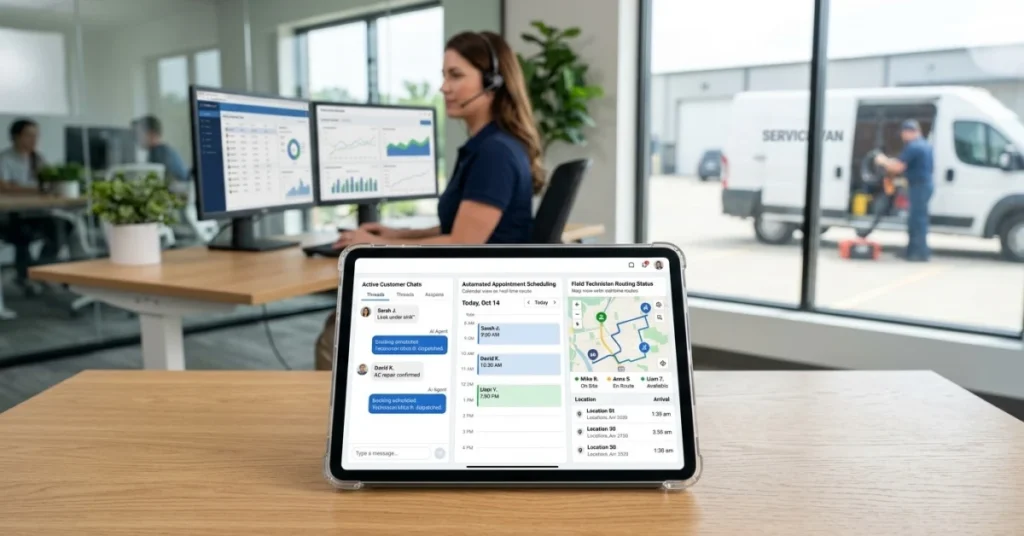
When your team is in the field, it’s difficult to know whether reps are executing the plan or going off-script. This is where purpose-built field sales management platforms become critical. FieldPie, for example, gives managers real-time GPS tracking of field activity, automated visit verification, and live pipeline dashboards — eliminating the visibility gap without micromanaging reps. Teams using FieldPie report faster identification of underperforming territories and more accurate weekly forecasts.
Challenge 3: Inconsistent Follow-Up After Meetings
Studies consistently show that most deals require five or more follow-up touchpoints after an initial meeting. Outside reps, juggling travel schedules and back-to-back appointments, frequently let follow-up slip. Automated CRM sequences triggered by meeting completion solve this problem at scale.
Challenge 4: Territory Conflict and Account Overlap
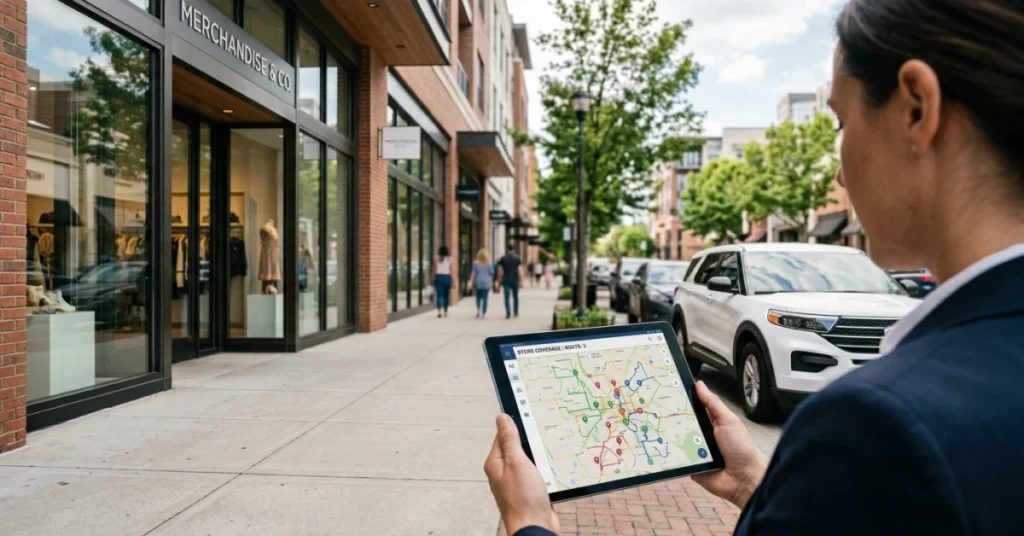
Without clearly defined boundaries, reps compete for the same accounts — damaging both customer relationships and team morale. Quarterly territory reviews supported by mapping software prevent this from becoming a chronic issue.
For organizations managing distributed field teams, understanding how to structure sales territories effectively is one of the highest-leverage investments a sales leader can make.
Outside Sales vs. Inside Sales: Which Model Is Right for Your Business?
The decision is not binary. Most high-growth companies in 2026 run a hybrid model — inside reps handle inbound leads, qualification, and transactional renewals while outside reps focus on enterprise prospecting, strategic accounts, and complex deal cycles.
Choose a predominantly outside sales model when:
- Your average deal size exceeds $10,000
- Your product requires physical demonstration or on-site assessment
- Your customer base is geographically concentrated enough to make territory coverage cost-effective
- Relationship depth is a primary competitive differentiator in your market
Choose a predominantly inside sales model when:
- Your product is self-explanatory and transactional
- Your customer base is geographically dispersed with no concentration advantage
- Your average deal size doesn’t justify field travel costs
- Speed and volume are more important than depth of relationship
For most B2B companies selling to mid-market or enterprise customers, the answer is a structured hybrid — and learning how to align inside and outside sales teams is the strategic challenge that defines whether the model scales.

Frequently Asked Questions (FAQ)
What is the difference between outside sales and inside sales?
Outside sales representatives meet customers face-to-face in the field — at client offices, job sites, or events — and typically handle complex, high-value deals with longer sales cycles. Inside sales reps work remotely or from an office, using phone, email, and video to manage higher volumes of shorter, more transactional deals.
What qualifications do you need for an outside sales job?
Most outside sales job postings require a bachelor’s degree in business or a related field, a valid driver’s license, and prior sales experience. Strong interpersonal skills, self-motivation, and comfort with extensive travel within a defined territory are non-negotiable practical requirements for success in the role.
How much do outside sales representatives earn?
Compensation varies significantly by industry and experience level. Base salaries typically range from $45,000 to $75,000, with total on-target earnings — including commission and bonuses — frequently reaching $90,000 to $150,000+ for experienced reps in high-value industries such as medical devices, enterprise technology, or industrial manufacturing.
Conclusion
Outside sales remains one of the most powerful revenue-generating models available to B2B organizations in 2026 — not despite the rise of digital channels, but alongside them. When structured correctly, with clearly defined territories, disciplined hiring, strong technology infrastructure, and consistent coaching, a field sales team delivers deal sizes, retention rates, and customer relationships that remote-only models struggle to match.
The organizations that win are those that treat outside sales not as a legacy function but as a strategic asset — one that deserves the same investment in tools, process, and talent development as any other growth lever.