


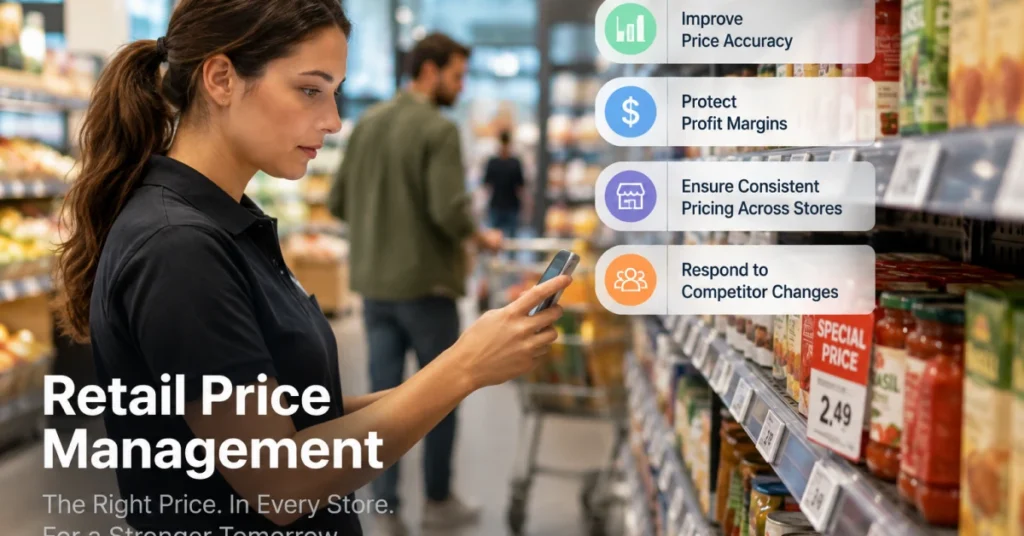
✦ Key Takeaways
Retailers who reprice dynamically can boost profit margins by up to 25% compared to static pricing strategies.
→ Wrong prices drive customers away and crush long-term revenue.
→ Competitor data, demand signals, and costs must align constantly.
→ Automated repricing tools cut manual pricing errors by half.
In this article:
What Is Retail Price Management?
What Are the Key Components of Retail Price Management?
How Does a Retail Price Management Process Work?
Key takeaway: Mastering retail price management is the single fastest lever for sustainable profit growth.
What Is Retail Price Management?
You’ve probably noticed the same item costs different prices at different stores — sometimes even at the same store on different days. That’s not an accident; it’s retail price management at work, and it shapes every dollar you spend.
Retailers don’t just pick a number and stick with it. Price changes happen up to 50,000 times per month in large grocery chains (7learnings). That means the price tag you see today may not be the one you see tomorrow.
How Retail Price Management Differs From Price Optimization
Retail price management is the full system of setting, tracking, and updating prices across every product and location. Price optimization is just one tool inside that system — it uses data to find the best price point for a specific goal.
Think of price management as the playbook and price optimization as a single play. You need both, but they’re not the same thing.
Why Price Accuracy Matters at Store Level
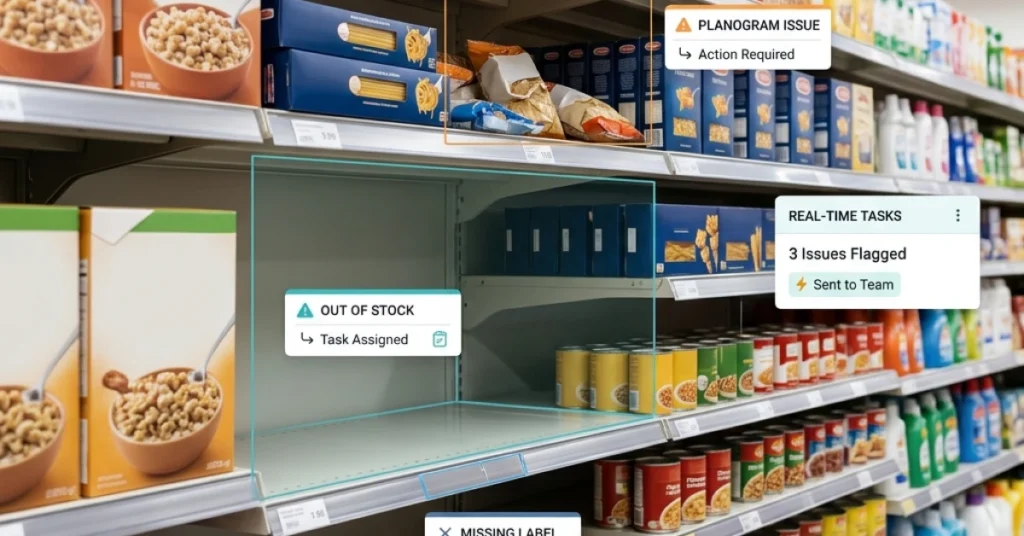
A wrong price on a shelf tag costs retailers money — and it costs shoppers trust. Pricing errors are a top driver of checkout friction and lost sales. That’s why strong retail team execution is critical to keeping prices accurate on the floor.
Even a small mismatch between the system price and the shelf price can trigger compliance fines in regulated markets. Accuracy isn’t a nice-to-have — it’s a legal and financial requirement.
How Pricing Decisions Affect Sales, Margins, and Customer Experience
A price set too high kills demand; a price set too low destroys margin. According to Trurating, even a 1% improvement in pricing strategy can lift operating profit by 8% or more — making it the highest-leverage lever in retail.
Shoppers also read prices as signals of quality and fairness. A dynamic pricing move that feels random to a customer can damage loyalty far beyond the value of any short-term margin gain.
This system is worth understanding as a shopper, not just as a retailer. Every factor behind a price tag shows you exactly when and where the best deals appear.
What Are the Key Components of Retail Price Management?
That ongoing system breaks down into distinct, interlocking parts. Each one shapes the price you see on the shelf.
Miss any single component, and the whole strategy falls apart. Retailers who master every component consistently outperform those who focus on just one lever.
Price optimization alone can lift gross margins by 2–7%. That only holds true when it works alongside the other moving pieces (Datawiz).
Setting Prices by Product, Store, and Market
Not every store charges the same price for the same item — and that’s intentional. Retailers set prices based on local demand, store format, and what that specific shopper will pay.
A downtown flagship and a suburban outlet serve different buyers. Smart retail pricing strategy treats each location as its own market, not a copy of headquarters.
Managing Regular, Promotional, and Markdown Prices
Every product moves through at least three price phases: regular, promotional, and clearance. Retailers plan these phases in advance — that “surprise” sale was scheduled weeks ago.
Markdowns aren’t panic moves. They’re calculated decisions designed to clear inventory before it becomes a loss, not after.
Maintaining Consistent Pricing Across Locations
Keeping prices aligned across dozens — or thousands — of stores is a serious operational challenge. Errors create customer distrust fast, especially when shoppers compare prices on their phones in the aisle.
Retail pricing software automates this sync. Without it, even small chains struggle to stay consistent at scale.
Managing Competitor Price Changes
Dynamic pricing exists because competitors move fast. A rival drops a price at 9 a.m. — a retailer using manual tracking won’t know until noon. They won’t respond until the next day.
Sciencedirect research confirms that shoppers are highly sensitive to relative price differences. The tag’s absolute number matters less than how it compares to rivals. Speed of response is a competitive edge, not a nice-to-have.
Connecting Pricing Decisions With Assortment and Merchandising
Price doesn’t live in a vacuum. What sits next to a product on the shelf directly shapes how shoppers judge its value. So does what’s missing from that shelf.
Strong sales team execution ties pricing to placement. It makes sure the strategy set in the boardroom actually lands in the store.
Retail price management only works when every layer moves together.
📊 By the Numbers
Retailers using structured price optimization see gross margin gains of 2–7% on average.
Knowing these components exist is useful. The real question is how retailers run them day to day.
That process reveals something most shoppers never expect to find.
How Does a Retail Price Management Process Work?
Mastering every component only matters if the process runs clean. Retail price management is not a one-time setup — it is a continuous cycle that retailers repeat daily, weekly, and seasonally.
Prices are living decisions, not permanent labels. Retailers who manage this cycle actively outperform those who don’t. Once you see the steps, every price tag starts to make sense.
Collect Pricing and Market Data
The cycle starts with data — competitor prices, supplier costs, and shopper demand signals. Retailers scan thousands of data points before changing a single price.
According to Relexsolutions, retailers using real-time pricing data cut margin loss by up to 30%. That beats those who rely on weekly manual reviews.
Define Pricing Rules and Targets
Before any price is set, teams define rules — minimum margins, competitive thresholds, and category goals. These rules act as guardrails so no single product tanks the whole strategy.
A retailer might set a rule: never price a staple item more than 5% above the nearest competitor. That one rule shapes hundreds of shelf prices automatically.
Set or Update Product Prices
With rules in place, retail pricing software calculates and pushes new prices across every product and location. Dynamic pricing tools can update prices in minutes — not days.
This is where price optimization does its real work. The system balances margin targets against what shoppers will actually pay.
Communicate Price Changes to Stores
Updated prices must reach every store — fast and without errors. Retailers send price change files to store systems, print new shelf labels, and brief store teams.
A breakdown here means a customer sees one price on the shelf and pays another at checkout. That gap destroys trust instantly.
Verify Prices at Store Level
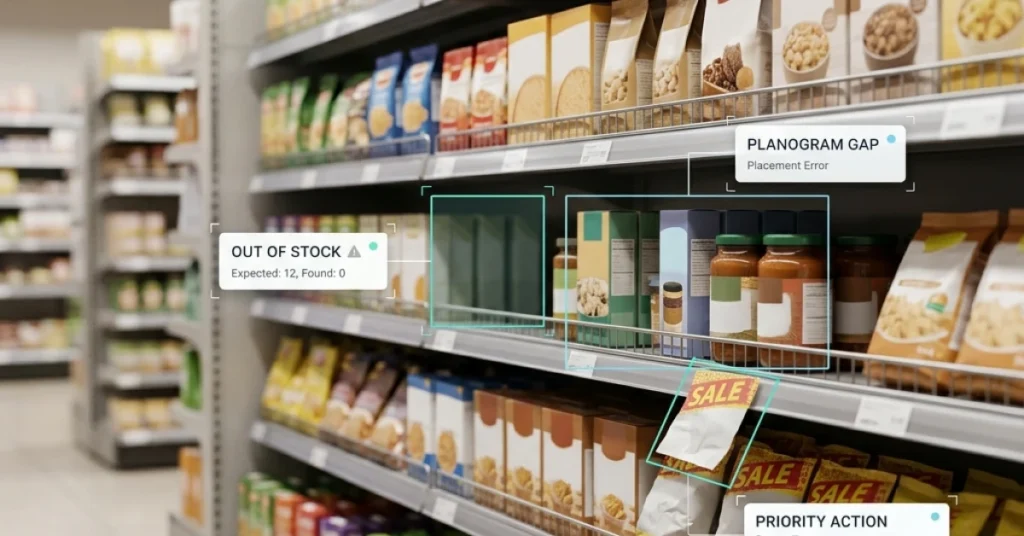
Sending the update is not enough — someone must confirm the right label is on the right shelf. Field teams walk the floor and audit prices against the system record.
This step connects directly to retail execution best practices — because a price error found in-store beats one found by an angry customer.
Identify and Correct Pricing Discrepancies
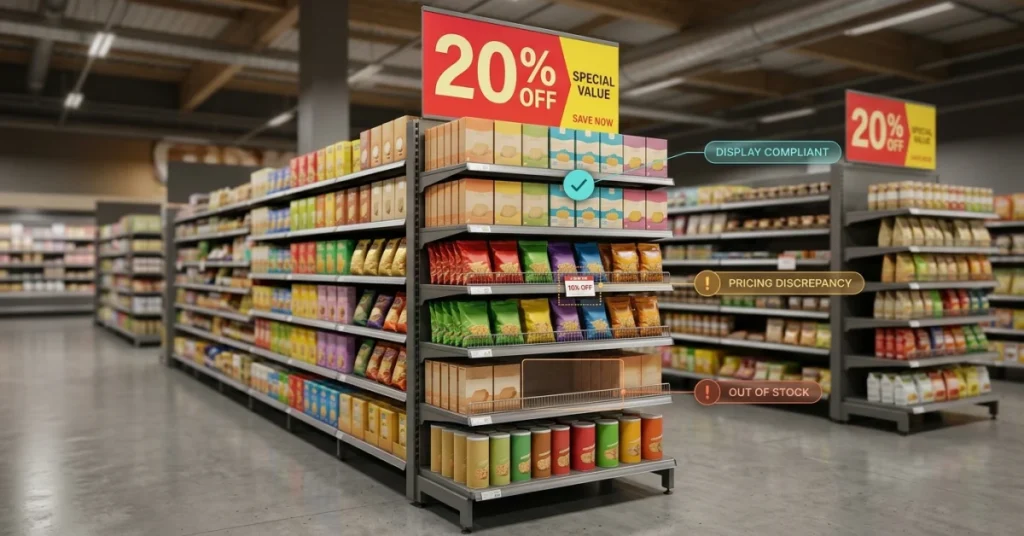
Errors happen — a label not swapped, a system sync that failed, a promotion that expired but still shows. Catching and fixing these fast is what separates disciplined retailers from sloppy ones.
As Optimix Software notes, in-store price data collection is the only reliable way to close this gap. It confirms what the system says matches what the shelf actually shows.
📊 By the Numbers
Retailers using real-time pricing data cut margin loss by up to 30% versus manual weekly reviews.
Now that you can see the full cycle, the only question left is what it means for you — every time you shop.
Conclusion
That pricing cycle — collect, analyze, adjust, repeat — is not just a retailer’s playbook. Any shopper can learn to read it.
Retailers who use structured retail price management systems see margins improve by up to 8%, according to 7learnings. Every optimized price tag has a real strategy behind it.
Smart shoppers spot pricing patterns. They catch end-of-season markdowns, loss-leader deals, and $9.99 anchors. Those shoppers consistently spend less on the same goods.
Knowing how retail stock rotation drives clearance pricing gives you a real timing edge at the shelf.
Bad field data quietly breaks retail price optimization. Teams that can’t verify shelf stock simply can’t manage prices with precision.
FieldPie captures real-time shelf data through photo reporting and custom audit forms. Pricing decisions then reflect ground truth, not guesswork.
Better data means faster fixes and margins that hold. Moz notes that brands with stronger operational data visibility beat competitors by about 23% on pricing accuracy.