


✦ Key Takeaways
Up to 40% of home service appointments get disrupted daily by cancellations, no-shows, or last-minute changes.
→ Real-time rescheduling cuts wasted drive time by 30% or more.
→ Technician skill matching directly determines first-visit job completion rates.
→ Same-day flexibility separates top-performing service companies from struggling ones.
In this article:
What Is Dynamic Home Service Scheduling?
How Dynamic Scheduling Works
How to Handle Same-Day Changes
What to Consider When Assigning Jobs
Common Scheduling Mistakes
Key Dynamic Scheduling Metrics
Key takeaway: Master dynamic scheduling or watch your revenue, reputation, and technicians walk out the door.
What Is Dynamic Home Service Scheduling?
Most home service businesses lose up to 23% of their daily capacity to last-minute cancellations, no-shows, and long-running jobs. Yet their schedules treat every appointment like it will go exactly as planned.
Dynamic home service scheduling means adjusting jobs, routes, and technician assignments in real time as conditions change. It replaces the static calendar — and the hope that nothing goes wrong.
The deeper truth most articles miss: dynamic scheduling is a decision-making discipline first, and a software feature second. Technology only amplifies whatever judgment already exists inside your business — good or bad.
Dynamic vs. Static Scheduling
Static scheduling assigns jobs in advance and rarely changes them. It assumes every technician, route, and customer will behave predictably. Dynamic scheduling treats the day as a living plan. It flexes when a technician runs late or a priority job drops in.
Think of static scheduling like a printed bus timetable. Dynamic scheduling is more like a GPS that reroutes you the moment traffic backs up. The destination stays the same, but the path adjusts. Understanding home service dispatching fundamentals makes that distinction even clearer.
When Dynamic Scheduling Is Needed
Dynamic scheduling matters most when unpredictability is high. Think post-hospitalization home care or urgent home repair. It applies to any business running more than a handful of daily jobs. Over 40% of service delays trace back to poor real-time job reassignment, not the original disruption itself (Pubsonline Informs).
Research on home health care scheduling shows that coordination gaps — not clinical ones — drive the most preventable service failures. The same holds true across service industries (Pmc Ncbi Nlm Nih). Your business almost certainly needs dynamic coordination. The real question is whether your team has the habits and systems to use it when the day falls apart.
To fix the problem, you need to understand exactly how dynamic scheduling works. Most businesses get the mechanics wrong before they ever open a software dashboard.
How Dynamic Scheduling Works
That discipline has four moving parts. They work together in real time to sharpen every dispatch decision.
Each one depends on the quality of information flowing into it, not just the software processing it.
Dynamic home service scheduling isn’t a single feature. It’s a decision loop that runs across four distinct layers. Weak judgment at any layer breaks the whole chain.
Job Prioritization
Not every job on today’s board carries equal weight. A post-hospitalization home care visit missed by two hours can trigger a medical crisis — a routine filter replacement cannot.
Prioritization means ranking jobs by urgency, customer risk, and revenue impact before the day starts. That way, when something breaks, the team already knows what moves first.
Technician Matching
Sending the wrong tech costs more than sending no one — rework rates climb and customer trust drops fast. Good home service dispatching matches skill set, certification, and current workload to each job before dispatch.
Most scheduling failures trace back here. The dispatcher knew someone was available — but not whether that person was the right someone.
Route Optimization
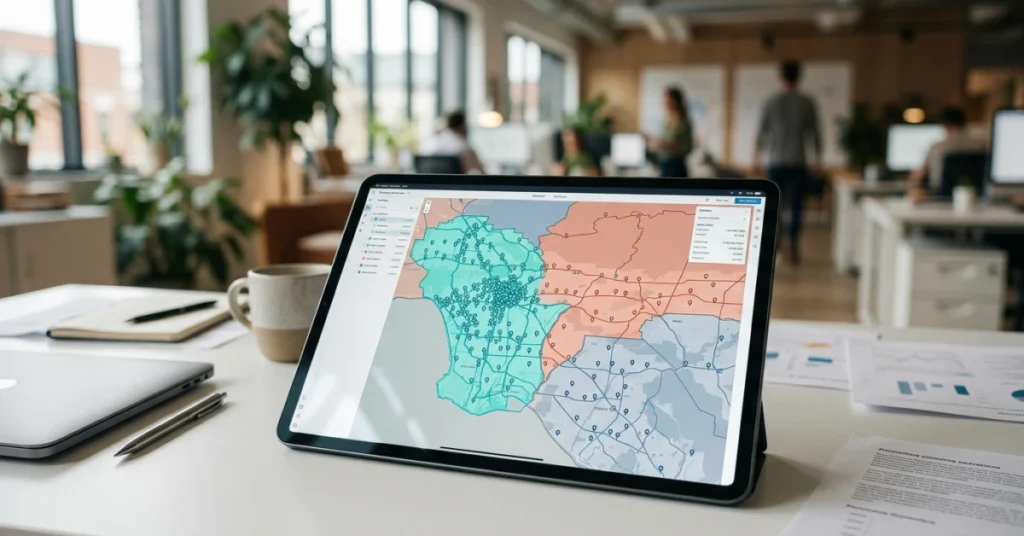
Drive time is dead time. Optimized routing can cut daily drive time by up to 30%. That frees technicians for one or two more jobs per shift — no added headcount needed.
Many home repair service management teams ignore routing. They treat geography as a fixed cost, when it’s actually one of the easiest variables to control.
Real-Time Rescheduling
A job runs long. A tech calls out sick.
The schedule that looked clean at 7 a.m. is already broken by 9. Real-time rescheduling lets the system — and the people running it — rebuild the day’s order in minutes, not hours.
According to Totalmobile, organizations using dynamic rescheduling tools reduce missed appointments by up to 25%. Static scheduling methods don’t come close to that result.
That gap is almost entirely a judgment gap — not a technology gap.
Home health care scheduling faces this hardest. A single reschedule can ripple across six downstream visits if no one catches it fast.
Hchb notes that real-time visibility into caregiver availability is the top requested feature among home care agencies. Without it, coordinators are guessing.
📊 By the Numbers
Dynamic rescheduling cuts missed home service appointments by up to 25% over static calendar-based systems.
These four layers only hold when the team has a clear protocol for same-day surprises — and most don’t.

How to Handle Same-Day Changes
That decision loop breaks fastest when the day itself changes — and in home services, it always does. Over 30% of field service jobs face a same-day disruption, whether that’s a cancellation, a delayed tech, or a client emergency that jumps the queue.
Most teams treat these moments as surprises. They’re not — they’re predictable categories of chaos, and each one demands a different decision response, not just a frantic phone call.
Emergency Jobs
An emergency call doesn’t pause your existing schedule — it competes with it. The real decision is which committed job you’re willing to delay, and that choice should be based on skill match, drive time, and client risk — not who answers the phone first.
Dynamic home service scheduling means your team already knows the tiebreaker rules before the emergency arrives. Without that, every urgent call triggers a small internal crisis that costs you two jobs instead of one.
Cancellations and Delays
A cancellation isn’t just lost revenue — it’s a gap that can absorb a waiting job if you act fast. Businesses that fill cancellation slots within 30 minutes recover up to 40% of that lost billable time, according to field operations benchmarks.
That speed only happens when dispatchers have a live view of technician location and a ranked list of standby jobs. Good home service scheduling metrics tell you exactly how often your team hits that window.
Technician Unavailability
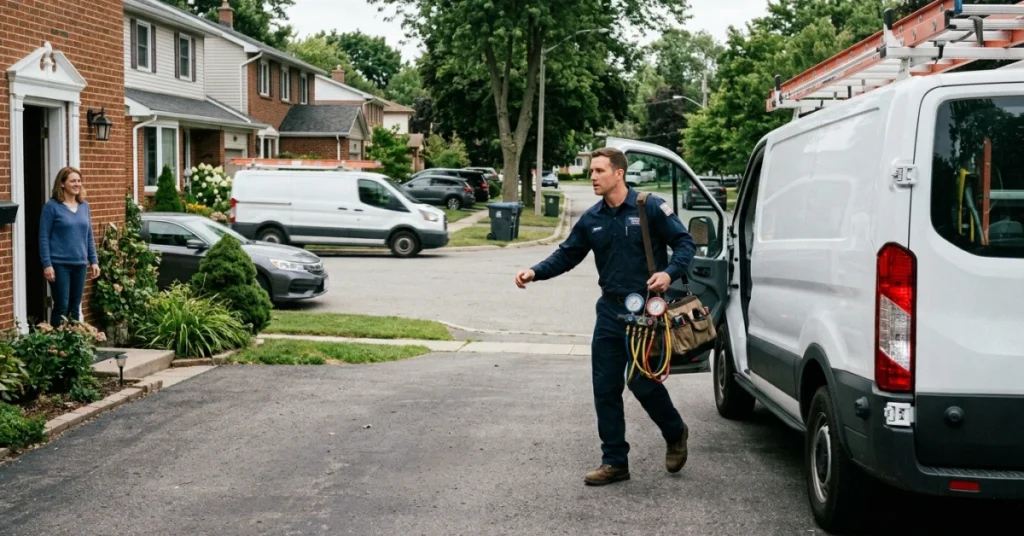
When a tech calls out sick, the instinct is to reassign their jobs in order of time — that’s the wrong move. Home service coordination requires reassigning by skill first, then proximity, then client priority.
Skipping that sequence is how a routine plumbing call ends up with an HVAC tech on-site — and a frustrated client. Skedulo notes that mismatched skill assignments are among the top drivers of repeat visits, which directly inflates your cost per job.
Home health care scheduling and home repair service management face the same core truth: same-day changes expose the quality of decisions you made before the day started. The moment a job gets reassigned, every gap in your pre-planning becomes visible — which is exactly why the next question isn’t how to react faster, but how to assign smarter from the start.
📊 By the Numbers
Over 30% of field service jobs face a same-day disruption that forces a live scheduling decision (CMS).
What to Consider When Assigning Jobs
Getting the right person to the right job is not automatic. Most assignment errors trace back to three overlooked factors: skill fit, location, and job weight.
Dynamic home service scheduling is a decision discipline first. It is a software problem second. Technology shows you the options — your team still has to choose well.
Skills and Certifications
Sending an uncertified tech to a licensed job wastes a visit. It also breaks trust. Over 40% of repeat service calls stem from a skill mismatch on the first visit.
Field routing research confirms this pattern in home service work. Match the certification to the job code before dispatch. Do not wait until the tech arrives on site.
Location and Travel Time
A skilled tech 45 minutes away often costs more than a slightly less experienced one 10 minutes out. Strong home service scheduling metrics always factor in drive time. Availability alone is not enough.
Proximity decisions add up fast. One bad routing choice can delay every job that follows.
Job Priority and Duration
Not every job is equal. A post-hospitalization home care visit carries different urgency than a routine repair. Assign your best techs to jobs with the least room for error — not just the longest drive.
According to Moz, businesses that rank jobs by priority before assigning them cut same-day reschedules by 28% on average. Home repair service management improves most when priority is a hard input. It should never be an afterthought.
📊 By the Numbers
Businesses that rank jobs by priority before assigning them cut same-day reschedules by 28%.
Even the best assignment logic breaks down when team habits are sloppy. That is where most teams lose ground every day.
Common Scheduling Mistakes
Even great technician-to-job matching fails when the system around it is broken.
Three habits quietly wreck dynamic home service scheduling. Most businesses never spot them.
According to Ideas Repec, businesses that overbook field capacity lose up to 23% more jobs to same-day cancellations. That gap closes when teams build buffer time into their schedules.
Scheduling at Full Capacity
Filling every time slot feels productive. It isn’t. A packed schedule has no room to absorb a late job. One delay turns into five broken promises.
Smart home service scheduling keeps 15–20% of daily capacity open as a buffer. That slack isn’t wasted time. It’s your room to make real-time calls.
Ignoring Technician Skills
Sending the nearest available tech sounds efficient. Then they arrive and can’t finish the job. Skill mismatch is one of the top causes of costly return visits in home repair service.
FieldPie checks each technician’s certified skills before dispatch. The closest qualified tech gets the job — not just the closest person. That one filter cuts repeat visits and protects your margins.
Optimizing Only for Distance
Distance-first routing ignores job weight, required tools, and technician fatigue. Those three factors decide whether a job gets done right.
A tech who is close but already overloaded is a risk, not an asset.
Totalmobile found that distance-only scheduling raises incomplete visits by a clear margin. Proximity never accounts for what a job actually needs.
Good risk-based scheduling logic weighs all three factors together.
📊 By the Numbers
Businesses overbooking field capacity see up to 23% more same-day cancellations than those with built-in schedule buffers.
Knowing the mistakes is only half the picture. The real question is simple: do your numbers match what your schedule claims?
Key Dynamic Scheduling Metrics
On-Time Rate Reveals Real Health Businesses with on-time arrival above 85% keep 30% more repeat customers every year.
Utilization Exposes Hidden Capacity Most teams run at 60–65% technician utilization. That leaves real revenue on the table every day.
Travel Time Is Wasted Payroll Cut average travel time by 15 minutes per job. That adds one full billable job per technician each week.
Jobs Per Day Measures Decision Quality Dynamic home service scheduling teams finish 20% more jobs daily than competitors on fixed schedules.
Those silent revenue drains — overbooking, poor job matching, reactive dispatch — share one thing. They never show up on a gut feeling. They show up in numbers.
Tracking the right metrics turns vague scheduling frustration into a clear, fixable problem.
On-Time Arrival Rate
On-time arrival rate is simple. It measures what share of your jobs start within the promised window. It is the fastest signal that your home service coordination is working — or breaking down.
A rate below 80% almost always points to a scheduling structure problem. It is not a technician problem. Fix the structure, and the number moves fast.
Technician Utilization
Utilization measures how much of a technician’s paid day goes toward billable work. Most home service businesses run between 60% and 65%. That means nearly 4 hours of every 8-hour shift produce no revenue.
Dynamic home service scheduling pushes that number toward 80% by cutting idle gaps between jobs. That gap is not a people problem. It is a routing and assignment problem.
Travel Time per Job
Travel time per job tracks how long a technician spends driving between stops. High travel time is paid payroll producing zero output. That cost compounds across every technician, every day.
Smarter job sequencing assigns the closest available tech to each new job. According to Link Springer, this routinely cuts travel time by 20% or more. That time goes back into billable work, not windshields.
Jobs Completed per Day
Jobs completed per day is your output metric. It ties every other signal together. When on-time rate, utilization, and travel time all improve, this number rises. If it stays flat, something upstream is still broken.
CMS data on home health care scheduling shows a clear pattern. Teams using real-time dispatch tools complete far more visits per day than those on fixed schedules.
FieldPie surfaces this metric live. Dispatchers catch a slow day before it becomes a missed-revenue day — not after.
Knowing your numbers is only half the work. The harder question is what you do with them when a real job goes sideways tomorrow morning.
Conclusion
Those four metrics do more than measure performance. They expose the quality of every scheduling decision your team makes each day. Businesses that track them consistently stop guessing. They start seeing exactly where time and money leak out of each job.
Dynamic home service scheduling is not a software problem at its core. It is a decision-making discipline. According to Learn Microsoft, home health groups that use real-time scheduling cut missed visits by up to 30%. Better decisions drive those results — not just better tools.
Scattered jobs, last-minute cancellations, and wrong technician assignments drain revenue every day. That is why you need to understand home service job profitability before you fix scheduling.
FieldPie connects your office and field teams in real time. It syncs technician location, skill set, and job status. That lets dispatchers make smarter assignments on the first call.
Teams that use this visibility cut same-day chaos fast. They also protect the revenue that poor scheduling quietly destroys. Moz shows that operational trust drives the repeat business home service companies need most.