✦ Key Takeaways
Merchandising service providers that misprice by even 15% risk losing contracts or operating at a loss within 6 months.
→ Labor and travel costs alone consume 60–70% of service pricing.
→ Service scope directly determines whether flat-rate or hourly models win.
→ SLA penalties can erase profit margins if not priced in upfront.
In this article:
How Should You Price Merchandising Services?
What Costs Should Be Included?
How Do You Calculate Cost per Store Visit?
How Should Pricing Change by Service Scope?
How Do SLAs Affect Pricing?
Key takeaway: Build every cost into your rate before negotiating — guessing destroys your business.
How Should You Price Merchandising Services?
Most merchandising providers copy competitors or go with gut feel. That’s why so many lose money on accounts they thought were profitable.
The single unit that controls every pricing decision is cost per store visit. Failing to isolate it causes chronic underbidding across the industry.
Over 60% of merchandising service contracts are repriced or dropped within the first year. That’s a clear sign initial quotes rarely reflect true costs (Statista).
Sustainable retail merchandising pricing strategy starts from the ground up. It does not start from what the competitor down the street charges.
Understanding merchandising ROI fundamentals gives you the base to build rates that hold up in the real world. Without that base, every quote is just a guess with a dollar sign on it.
Per Visit vs Hourly vs Project Pricing
Per-visit pricing ties your rate directly to the unit of work — one store, one visit, one clear cost. It forces you to know your numbers before you quote.
Hourly billing feels safer, but it hides waste and makes scope creep hard to catch. Project pricing works for one-time resets but breaks down when frequency or task complexity shifts mid-contract.
When to Use Hybrid Pricing
Hybrid pricing combines a base per-visit rate with hourly overage. It protects your margin when scope grows beyond the original agreement.
Uri Libguides notes that retail labor costs vary sharply by region. A flat national rate is a liability for multi-market providers.
A merchandising subscription pricing model works well for recurring accounts with stable visit schedules and task lists. Add a clear change-order clause to protect both sides when conditions shift.
The real question isn’t which model you choose. It’s whether your model accounts for every dollar spent before a rep walks through that store door.
What Costs Should Be Included?
Building from true ground-up costs means knowing exactly which costs to count. Most providers miss three to five cost categories per account.
That gap is where margin disappears. It happens before the contract even starts.
Skipping hidden costs is the root cause of chronic underbidding in retail merchandising service pricing. Providers who track every dollar per store visit consistently win better accounts and hold their rates (Tandfonline).
Labor, Travel, and Management
Labor is the biggest line item — but most providers only count field rep wages. They also forget supervisor time and mileage reimbursement. On top of that, there is a 15–20% burden cost on every hourly rate. That burden covers payroll taxes, benefits, and workers’ comp.
Travel alone can add $8–$18 per store visit in dense urban markets, and more in rural routes. That cost must be isolated and assigned per visit — not averaged away into overhead.
Reporting, Technology, and Training
Software subscriptions, photo-capture tools, and retail execution tools carry real per-user costs. Most providers bury these in G&A instead of pricing them into accounts. That quietly erodes margin on every contract.
Training new reps costs real money. Onboarding one field rep runs $500–$1,200 in time and materials (Uschamber).
That cost must factor into how you price merchandising services. It matters most on high-turnover accounts.
📊 By the Numbers
Field rep turnover in retail merchandising averages 35–40% annually — making onboarding a recurring, priceable cost.
Once every cost has a home in your model, one question becomes clear. What does a single store visit actually cost you to deliver?
How Do You Calculate Cost per Store Visit?
Those hidden cost categories are just the start. The real damage happens when you never add them up into one usable number.
Every sustainable merchandising service pricing model traces back to one unit. That unit is what it actually costs you to walk into one store and do the job.
Most providers skip this math entirely. They quote a monthly rate or a per-store fee based on what competitors charge.
That is exactly why chronic underbidding is so common. Copying rivals instead of running your own numbers is a losing habit.
Visit Time and Travel Time
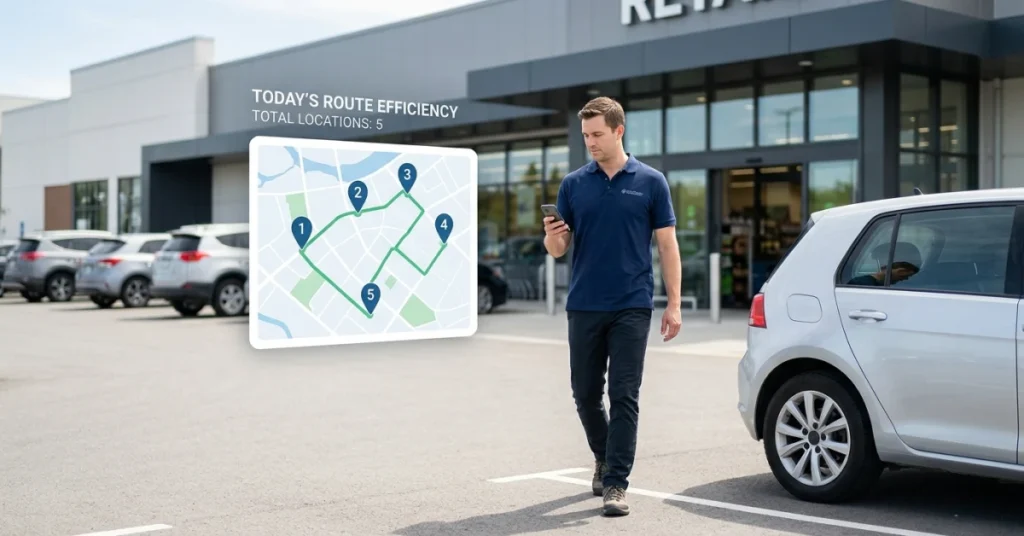
Start with total time on the clock — not just time inside the store. A rep who spends 45 minutes in-store but 30 minutes driving each way costs you nearly two hours of paid labor per visit.
Multiply total hours by your fully loaded hourly rate — wages, payroll taxes, benefits, and mileage. Understanding visit frequency and cost drivers keeps this number from being guesswork.
Fully Loaded Cost and Margin
Add your overhead allocation — management time, reporting tools, insurance — then divide by total monthly visits. According to Trocglobal, labor and travel together account for over 70% of total merchandising service costs.
Getting that ratio wrong wrecks your margin fast. Track it every month, not just at contract time.
Once you have a true cost per visit, apply your target margin on top. Most retail merchandising pricing strategy targets 25–35% gross margin to stay viable.
Driveresearch confirms that pricing built from cost data produces far more stable and defensible rates. Copying market prices instead leads to rates you cannot sustain.
📊 By the Numbers
Labor and travel make up over 70% of total merchandising visit costs — price without isolating them and you lose before you start.
Your cost per visit is now a fixed anchor. When scope changes, that shift must drive the price — not just the conversation.
How Should Pricing Change by Service Scope?
Once you know your true cost per store visit, scope changes must move your price — not just your workload.
Every added task, extra frequency, or remote location has a real dollar value. Ignore that math and you will lose money on your best clients.
Providers who learn merchandising ROI fundamentals price scope expansions with more confidence and fewer margin surprises. Retail merchandising pricing strategy only holds up when every scope variable ties back to that single unit cost.
Shelf Checks vs Full Execution
A basic shelf check might take 20 minutes per store. Full execution — restocking, rotating product, and correcting displays — can run 90 minutes or more.
That difference isn’t a footnote in your quote; it’s a 4x labor multiplier that must show up in your merchandising service rates. Price both scopes from the same cost-per-visit base, then scale up by actual time and complexity.
Planogram, POSM, and Audit Work
Planogram resets and point-of-sale material installs need skilled labor and precise timing. They often need a second set of hands — costs a flat visit rate will never cover.
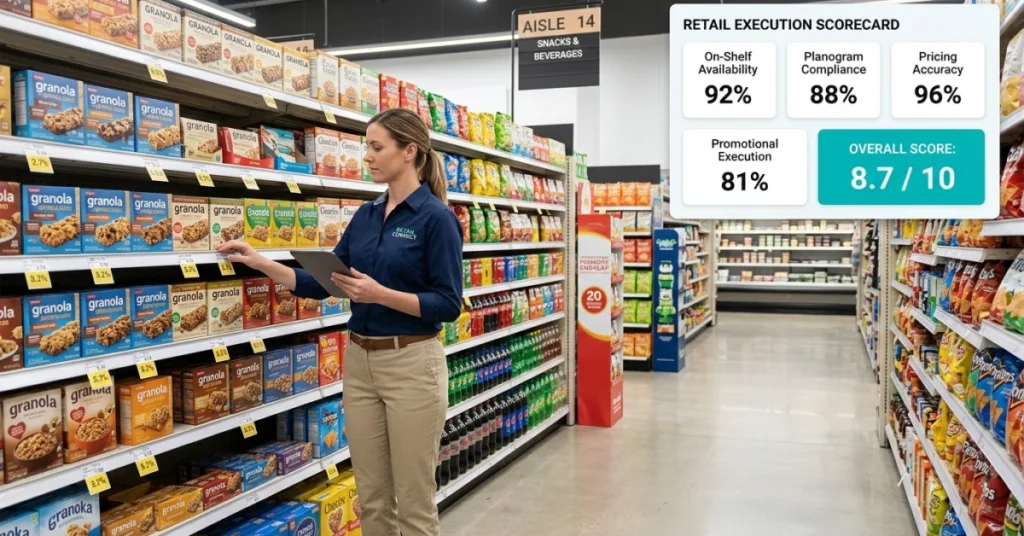
Audit-only work carries lower labor cost but higher reporting overhead. Its rate structure still differs from standard execution.
Merchandising subscription pricing works well here: bundle task tiers into defined service levels, each with its own per-visit floor. According to Moz, businesses that use tiered service models see up to 23% less revenue leakage than those quoting flat rates across all scope types.
📊 By the Numbers
Full execution visits average 90+ minutes — yet many providers quote them at the same rate as 20-minute shelf checks (Statista).
Scope defines cost — and cost defines price. When a client asks for faster response windows or guaranteed compliance rates, you are no longer just managing scope.
You are taking on financial risk. That risk needs its own pricing layer.
How Do SLAs Affect Pricing?
Lock in your unit cost per visit. Map scope to price. Then tackle SLA commitments — they are the next layer of financial risk. Most providers never measure this exposure.
A compliance rate guarantee of 95% or higher isn’t a sales promise. It’s a liability you absorb into every contract you sign.
Retailers increasingly write penalty clauses directly into service agreements. Those penalties hit your margin fast.
According to UBC Library’s pricing guide, pricing structures that ignore risk exposure underestimate true service cost by 15–25% on average.
Visit Frequency and Response Times
A 24-hour response window sounds reasonable until you price the labor it actually requires. Tight response SLAs force you to hold buffer capacity. Idle capacity costs money whether or not a call comes in.
When building your retail merchandising pricing strategy, every response time commitment must become a dollar figure. Add it to your base visit cost — never absorb it as overhead.
Reporting and Revisit Requirements
Mandatory photo reports, compliance audits, and revisit windows all carry real labor costs. Most providers treat them as free.
U.S. Chamber of Commerce notes that service businesses consistently undercharge when deliverable scope isn’t tied to a defined cost unit. Revisit requirements are exactly the trap that creates this problem.
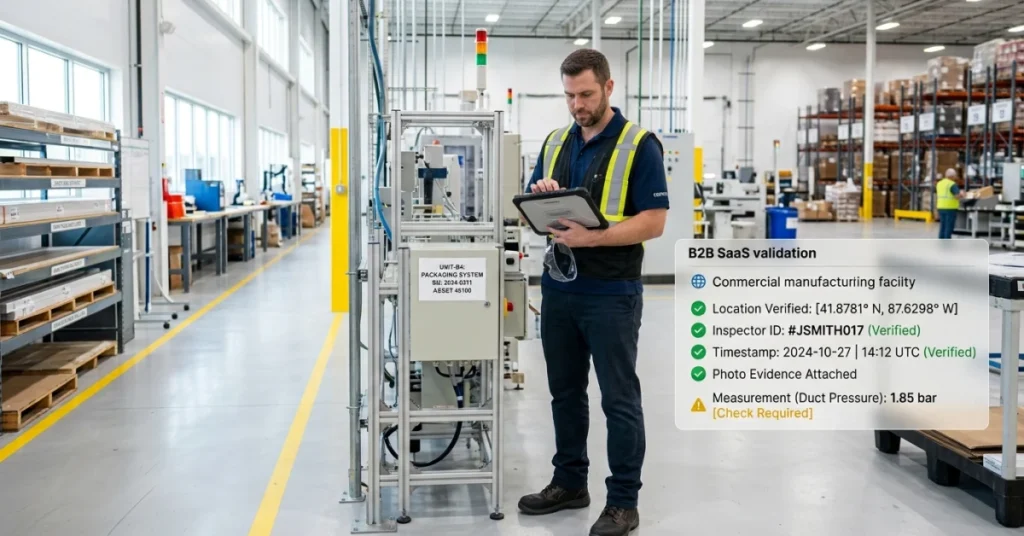
FieldPie’s photo-based reporting and real-time compliance tracking let you document SLA fulfillment at the visit level. That means you can prove delivery and defend your price when disputes come up.
Price every SLA clause the same way you price a store visit. Isolate the cost first, then build your margin on top.
A contract you can’t fulfill at a profit is worse than no contract at all. Know your numbers before you sign.
📊 By the Numbers
Providers who ignore SLA risk exposure underestimate true service cost by up to 25%.
Conclusion
That 25% margin erosion from unpriced SLA risk is not a rounding error. It is the difference between a profitable contract and one that slowly drains your business dry.
Every pricing decision you make on retail merchandising services must trace back to one number: your true cost per store visit.
According to Qualtrics, businesses that anchor pricing to a validated unit cost reduce underbidding errors by up to 30%. They stop guessing and start calculating.
That is the core shift this framework demands. Build your merchandising service rates from the ground up, then layer in scope, frequency, and risk.
Most providers still price by gut feel or competitor copy. Trocglobal data confirms chronic underbidding remains the industry’s most common margin killer.
Audit your current quotes against your real cost per visit today. If the math doesn’t close, your pricing model needs a full rebuild — not a small fix.