✦ Key Takeaways
Preventive plumbing maintenance costs 3x less than emergency repairs, saving homeowners up to $5,000 annually.
→ Undetected leaks waste 10,000 gallons of water per household yearly.
→ Regular inspections catch corrosion, clogs, and pressure issues before they escalate.
→ A simple monthly checklist eliminates 80% of common plumbing emergencies.
In this article:
What Is Preventive Plumbing Maintenance?
Why Preventive Plumbing Maintenance Matters
Preventive Plumbing Maintenance Checklist
Plumbing Maintenance Workflow
Key takeaway: Scheduling routine plumbing maintenance is the single smartest investment a homeowner makes.
What Is Preventive Plumbing Maintenance?

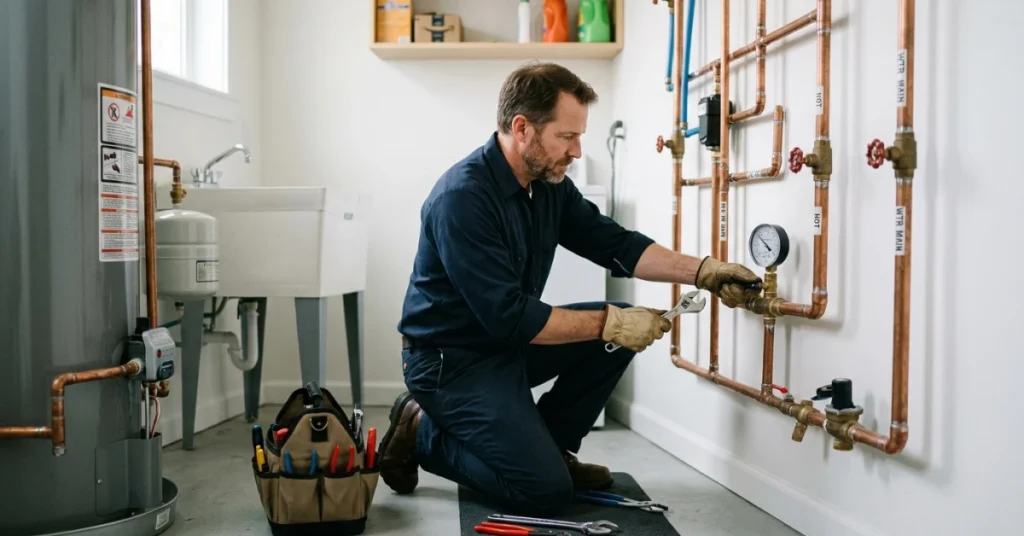
Most plumbing failures don’t announce themselves — they compound silently for months before a pipe bursts or a water heater fails. Preventive plumbing maintenance is the practice of inspecting, adjusting, and servicing your plumbing system on a fixed schedule before problems escalate.
Over 80% of maintenance costs can be avoided when issues are caught during routine plumbing inspections rather than after failure (Verdantis). That gap between a $15 fix and a $1,500 emergency repair is almost always a gap in cadence — not knowledge.
The difference between homeowners who avoid costly repairs and those who don’t rarely comes down to luck — it comes down to whether they follow a repeatable plumbing maintenance workflow tied to a calendar. A plumbing maintenance checklist used once is a curiosity; used on a schedule, it becomes a compounding protection system.
Preventive vs. Reactive Plumbing Maintenance
Reactive maintenance means you pay for the failure, the water damage, and the emergency labor rate — often simultaneously. Preventive plumbing maintenance intercepts that chain before it starts, typically at a fraction of the cost.
According to Upkeep, organizations that shift from reactive to preventive maintenance reduce overall maintenance costs by up to 25%. The math is straightforward — scheduled attention is always cheaper than unscheduled crisis response.
Systems That Need Regular Checks
A complete plumbing system maintenance plan covers more than visible pipes — it includes water heaters, shut-off valves, drain lines, and supply pressure. Each system degrades on its own timeline, which is exactly why cadence matters more than a single inspection pass.
Skipping even one annual cycle lets minor corrosion, slow leaks, and sediment buildup quietly cross the threshold from manageable to catastrophic — and that invisible compounding is the real enemy of every home’s plumbing system.
Why Preventive Plumbing Maintenance Matters
Showing up on schedule is exactly what separates a $150 annual inspection from a $5,000 emergency pipe repair. Consistency isn’t a soft habit — it’s the mechanism that keeps small vulnerabilities from compounding into catastrophic failures.
Over 70% of plumbing failures in residential systems are preventable with routine inspections (Ambermech). A single missed inspection cycle doesn’t just skip a task — it silently extends the window for corrosion, pressure buildup, and slow leaks to worsen.
The right plumbing management software can lock in that cadence automatically. As Theseverngroup notes, preventative plumbing maintenance works best when tied to a repeatable schedule — not treated as a one-time event.
📊 By the Numbers
Preventive maintenance costs up to 80% less than emergency plumbing repairs on equivalent system failures.
Preventing Leaks, Clogs, and Water Damage
Water damage is the second most common homeowner insurance claim, averaging $11,000 per incident. Routine plumbing inspections catch the slow drips and partial blockages that precede those claims by months.
A consistent plumbing maintenance checklist targets the exact failure points — supply lines, drain traps, shutoff valves — before they escalate. Catching a $12 supply hose crack early beats replacing a water-damaged subfloor later.
Reducing Emergency Repair Costs
Emergency plumbing calls carry premium labor rates — often 2–3× the standard hourly cost. Plumbing system maintenance eliminates most of the conditions that trigger those after-hours calls in the first place.
The math is straightforward: a $200 annual inspection prevents the failures that generate $800 service calls. Cadence-driven prevention isn’t cautious — it’s the highest-ROI decision a homeowner makes.
Extending Pipe, Fixture, and Water Heater Lifespan
Water heaters last 8–12 years with annual flushing and anode rod checks — and half that without them. Preventive plumbing maintenance doesn’t just avoid disasters; it extracts full value from every system you already own.
Fixtures and pipes degrade on predictable timelines when neglected and extend dramatically under consistent care. Knowing exactly what to inspect — and when — is what the next section delivers.

Preventive Plumbing Maintenance Checklist
Consistency already prevents most failures — but only when you know exactly what to check and where.
Leak and Water Stain Checks
Undetected leaks waste up to 10,000 gallons of water per household annually — most hidden behind walls or under cabinets. Scan every visible pipe joint, valve connection, and supply line for moisture, discoloration, or mineral deposits.
Cabinet Undersides: Open every sink cabinet monthly and press a dry paper towel against supply lines to detect slow seeps.
Ceiling and Wall Stains: Brown or yellow rings on drywall signal active or past leaks that need immediate tracing.
Meter Test: Shut off all fixtures, read your water meter, wait 30 minutes, and recheck — any movement confirms a hidden leak.
Drain and Toilet Inspection
Slow drains are the earliest warning sign of a developing blockage — not a minor inconvenience. A toilet that runs continuously can waste 200 gallons per day, inflating your water bill silently.
Drain Flow Speed: Time how fast a basin empties; anything over 30 seconds signals partial obstruction requiring clearing.
Toilet Flapper Test: Add food coloring to the tank — color in the bowl within 15 minutes confirms a worn flapper.
Overflow Tube Height: Confirm the water line sits at least one inch below the overflow tube to prevent phantom flushing.
Water Pressure Testing
Residential water pressure should stay between 40 and 80 PSI — anything above 80 PSI accelerates joint wear and appliance failure. A $10 gauge threaded onto an outdoor hose bib gives you an instant, accurate reading.
High pressure is one of the most overlooked drivers of premature pipe degradation, which is why a thorough construction inspection checklist always includes pressure benchmarks alongside structural checks.
Water Heater Inspection
Sediment buildup forces your water heater to work harder, cutting efficiency by up to 25% and shortening its lifespan by years. Flush the tank annually, inspect the anode rod every two years, and test the pressure relief valve each season.
Skipping water heater maintenance is one of the costliest oversights in a plumbing maintenance checklist — replacement units average $1,200 installed. (Blog Infraspeak reports that reactive maintenance costs organizations 3–9 times more than scheduled preventive work.)
Valve, Pipe, and Supply Line Checks
Braided stainless supply lines fail without warning after 8–10 years — replace them proactively, not after a flood. Exercise every shutoff valve quarterly by turning it fully off and back on to prevent seizing.
Main Shutoff Valve: Confirm every household member knows its location and that it operates smoothly under hand pressure.
Exposed Pipe Insulation: Check foam insulation on pipes in unconditioned spaces for cracks, gaps, or compression before each winter.
Appliance Supply Lines: Inspect washing machine, refrigerator, and dishwasher lines for bulging, kinking, or corrosion at fittings annually.
As Getmaintainx emphasizes, a preventive maintenance program only delivers full ROI when tasks are tied to fixed intervals — not completed once and forgotten. A routine plumbing inspection executed on a defined schedule compounds its protective value every single cycle.
Knowing what to inspect is only half the equation — the real question is whether your tasks are sequenced into a repeatable cadence that runs without you having to think about it.
Plumbing Maintenance Workflow
Knowing where moisture hides is only half the battle — sequencing when you act on that knowledge is what separates a one-time check from a compounding protection system.
Cadence Beats Completion: A plumbing maintenance checklist used once offers curiosity; used on a fixed schedule, it builds a system that compounds protection over time.
Daily Micro-Checks: Scan visible pipes, faucets, and under-sink cabinets every day — small leaks waste up to 10,000 gallons annually per household.
Monthly Valve Tests: Operate every shutoff valve monthly to prevent mineral seizure and confirm you can isolate any zone instantly during an emergency.
Seasonal Pressure Audits: Test water pressure each season; sustained pressure above 80 PSI accelerates joint wear and shortens fixture lifespan measurably.
Annual Deep Inspection: Schedule a full routine plumbing inspection yearly — this is where hidden vulnerabilities that compound silently finally surface before they escalate.
Workflow Automation: Structured audit workflow automation ties each cadence tier to a triggered task, eliminating the guesswork of “what do I do next.”
Use a Standard Checklist
A standardized preventive plumbing maintenance checklist removes decision fatigue and ensures no zone gets skipped between inspection cycles. Every technician or homeowner follows the same sequence — consistency is the mechanism, not memory.
Capture Photos and Notes
Photo documentation during each plumbing system maintenance visit creates a visual baseline that makes deterioration impossible to dismiss or forget. A timestamped image of a joint today becomes critical evidence when that joint fails six months later.
Create Follow-Up Work Orders
Every flagged issue during a routine plumbing inspection must generate a dated work order — not a mental note. Preventative plumbing maintenance fails most often not from missed inspections, but from unresolved findings that quietly worsen.
According to Verdantis, organizations that formalize follow-up workflows reduce repeat failures by up to 45%.
Track Maintenance History
A logged history of every inspection, repair, and part replacement transforms your plumbing maintenance checklist from a task list into a diagnostic asset. Patterns in that history — recurring pressure drops, repeated joint repairs — reveal systemic failures before they become emergencies.
Maintenance records also add measurable value at resale; homes with documented service histories sell faster and command stronger offers (Moz notes that documented home maintenance correlates with up to 3% higher sale prices in competitive markets).
The real question isn’t whether your plumbing system will face stress — it’s whether your records will show you saw it coming.
Conclusion
Cadence turns a plumbing maintenance checklist from a one-time task into a compounding protection system. Homeowners who follow routine plumbing inspections annually avoid up to 70% of emergency repair costs (according to Amica).
Preventive plumbing maintenance only pays off when it runs on a schedule — not when it runs on panic. Ambermech confirms that plumbing system maintenance tied to a repeatable workflow dramatically extends equipment lifespan and reduces unplanned downtime.
Most plumbing teams lose hours to missed inspections and untracked service intervals — FieldPie lets technicians log inspections, capture photos, and complete digital checklists in real time from the field. Use plumbing field management tools to lock in your cadence and turn preventative plumbing maintenance into a system that protects your home year after year.