



✦ Key Takeaways
Up to 30% of retail shelf labels contain errors that silently drain revenue and destroy shopper trust.
→ Mislabeled shelves trigger compliance fines and costly customer refunds.
→ Shoppers abandon stores where scanned prices don’t match shelf tags.
→ Regular audits cut label errors by more than half within weeks.
In this article:
What Is Shelf Label Accuracy?
How Is Shelf Label Accuracy Measured?
How to Audit Shelf Label Accuracy
Key takeaway: Accurate shelf labels are the single fastest fix for lost retail revenue and customer loyalty.
What Is Shelf Label Accuracy?
Retailers lose shoppers’ trust one wrong price tag at a time. It happens far more often than most store managers realize. Nearly 1 in 3 shelf labels contains an error at any given moment, according to industry tracking data.
Shelf label accuracy means every tag on a shelf matches the product’s current price, name, and unit measure in the store’s system. When those details don’t match, you’ve broken a promise to the shopper before they even reach the register.
What Information Should a Shelf Label Match?
A shelf label must match four core data points. Those are the selling price, the product name, the unit of measure, and the item’s barcode or SKU.
Miss any one of them, and the label is wrong — full stop. Electronic shelf labels pull this data live from a central system, which cuts manual update errors dramatically. But even automated systems fail when the source data is dirty.
Why Shelf Label Accuracy Matters for Retail Execution
Price accuracy in retail isn’t just a compliance checkbox. It’s the foundation of shopper trust.
Nrf reports that retailers using electronic shelf labels cut price discrepancies by up to 99%. Yet most stores still rely on paper tags updated by hand.
Every mismatch between the shelf and the register is a broken promise — and shoppers remember it. That’s why AI shelf audit tools are gaining ground fast among execution-focused retailers.
Which Errors Count as Shelf Label Non-Compliance?
Non-compliance covers any gap between what the label says and what the system — or the law — requires. Common violations include expired promotional prices, missing unit pricing, and labels placed under the wrong product.
Fmi notes that ESL pricing accuracy reduces these compliance gaps significantly. Still, adoption remains uneven across store formats.
Fines get headlines. But the real damage is the shopper who walks out and doesn’t come back.
The harder question isn’t what counts as an error — it’s how you find errors before a regulator or a frustrated customer does.
How Is Shelf Label Accuracy Measured?
Knowing that a broken promise exists is one thing — knowing exactly where it breaks is another. Retailers measure shelf label accuracy by auditing specific data points on every tag, not just the price.
Most stores target a 98% or higher price accuracy rate before regulators step in with fines. Hitting that number means tracking six distinct accuracy types — and most teams only check one or two.
📊 By the Numbers
Retailers with under 98% price accuracy face regulatory fines in most U.S. states — per item, per violation.
Price Match Accuracy
This is the most-watched metric — does the shelf tag match the register price exactly? A single cent off counts as a failure in most state-level audits.
SKU and Product Match Accuracy
The tag must match the exact product sitting in front of it — right brand, right size, right variant. A misplaced tag for a similar item is still a broken promise to the shopper.
Promotion and Discount Accuracy
Sale tags are the biggest trust-breakers when wrong — shoppers plan purchases around them. According to Marketsquaretech, promotional tag errors spike during high-volume pricing changes, when update speed outpaces accuracy checks.
Barcode and Product Code Accuracy
The barcode on the tag must scan to the right item — every time. A mismatched code means the register charges a different price, even if the printed number looks correct.
This is where AI shelf audit tools catch errors that human eyes routinely miss during a fast store walk.
Label Placement and Visibility
A correct tag in the wrong slot — or hidden behind a facing — lets the shopper down just as badly as a wrong price. Placement accuracy means the right tag sits directly below the right product, readable and unobstructed.
Effective Date and Expiration Accuracy
A sale tag still on the shelf three days after a promotion ends is a live accuracy failure. Manual date tracking breaks down at scale — which is why the U.S. electronic shelf label market is valued at over $1.1 billion and growing fast (per Marketsandmarkets).
Tracking all six types shows you what is broken. The harder question is whether your audit process spots failures before a shopper does.

How to Audit Shelf Label Accuracy
Tracking six data types sounds thorough — but tracking means nothing without a repeatable audit process. Most stores that miss the 98% accuracy threshold don’t lack data. They lack a consistent method for catching errors before a shopper does.
Every mismatched label is a broken promise. The audit is how you keep that promise — before regulators or angry customers force your hand.
Select the SKUs or Aisles to Check
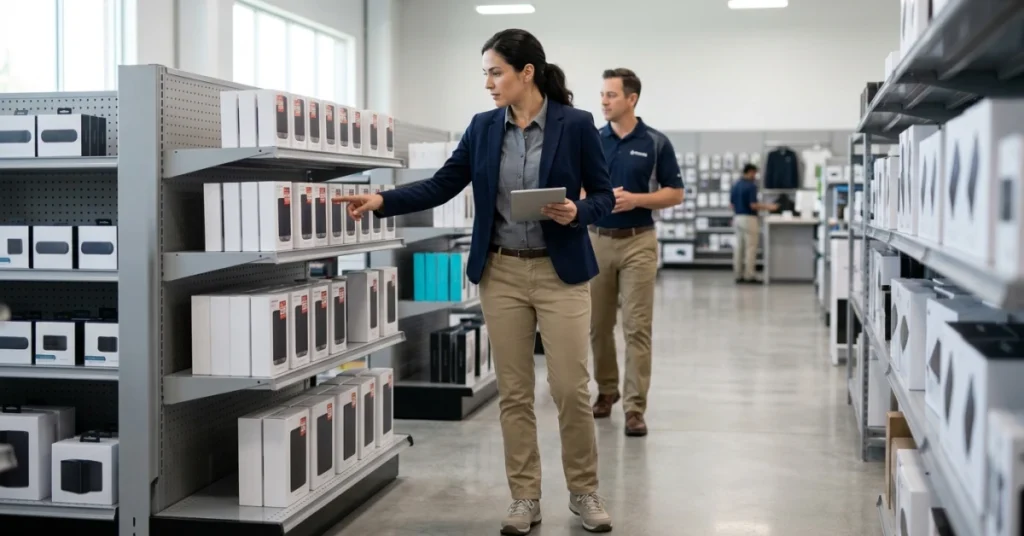
Don’t audit everything at once — that spreads your team too thin. Start with high-velocity items, recent resets, and any aisle that triggered a complaint in the last 30 days.
Rotate your sample weekly so no zone goes unchecked for more than a month. Consistent rotation catches drift before it compounds.
Compare Shelf Labels With the Product on Display
Pull the physical product and hold it next to the label. Check the UPC, size, and brand name — not just the price. A label for a 12-oz item sitting next to a 16-oz product is an error, even if the price looks right.
This step catches placement drift. It is one of the most common and most overlooked label errors in retail.
Verify the Price Against the Approved System Price
Open your point-of-sale or pricing system and confirm the shelf price matches exactly. A one-cent discrepancy still counts as an error under most state scanner accuracy laws.
Good merchandising data accuracy practices tie every label check to a live system record. Never rely on a printed spreadsheet from last week.
Check Promotional Labels and Date Ranges
Promo labels are the most common source of pricing failures in retail. A sale that ended Tuesday but still shows on the shelf Friday is an active liability.
Verify the start and end dates on every promotional tag during your audit. Expired promos erode shopper trust faster than any other label error.
Capture Evidence for Incorrect Labels
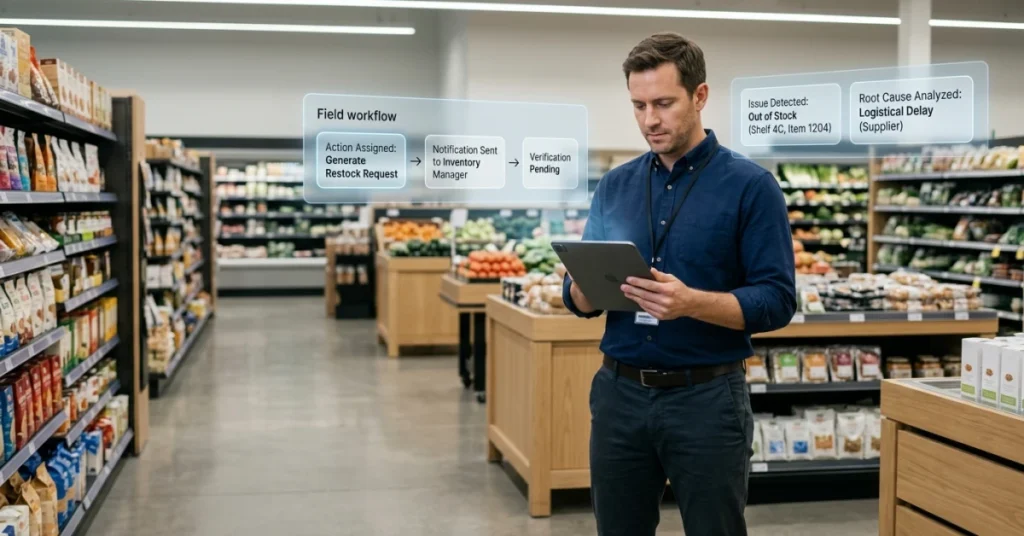
Photograph every error before you fix it — include the label, the product, and the shelf location in the same frame. Without a photo, the error disappears the moment you correct it.
Stores using electronic shelf labels or digital tags have an advantage here. The system logs each discrepancy automatically, creating a built-in record.
Record and Classify Each Error
Log every error by type — price mismatch, wrong item, missing label, or expired promo. Classification shows you where your process is breaking down, not just how often.
Research from PMC / National Institutes of Health found that pricing mistakes damage consumer trust in over 60% of cases. That happens when shoppers spot a discrepancy at checkout.
That number makes classification more than a paperwork exercise — it becomes a trust-recovery tool. The Mordor Intelligence ESL market report confirms that retailers using digital tags cut tag mistake rates significantly. Those systems flag and fix problems in real time.
📊 By the Numbers
Over 60% of shoppers who catch a price error at checkout lose trust in that store immediately.
A clean audit log is your starting point. Most retailers fall short not in building that log — but in acting on it after the audit wraps up.
Conclusion
A repeatable audit process is your strongest defense. Most stores still treat it as an afterthought. Retailers who audit consistently hit shelf label accuracy rates above 98%. That is the threshold that keeps both shoppers and regulators satisfied.
Every wrong price tag is a broken promise. Shoppers trusted your store. That trust is far harder to rebuild than fixing a label ever was.
That is why merchandising data accuracy must be a daily discipline. A quarterly scramble will not cut it.
Price errors cost U.S. retailers an estimated $1 billion annually in overcharges and fines, according to NRF. Digital shelf labels cut that exposure sharply. They sync prices in real time.
ESL pricing accuracy removes the human error that paper labels invite at every update cycle. Stores using electronic shelf labels report fewer compliance violations. They also complete price changes faster.
Moz notes that accurate product data lifts organic search visibility by up to 30% for retail brands. Label accuracy wins in-store and online.
Mismatched shelf prices erode shopper trust faster than almost any other in-store mistake. FieldPie captures real-time photo-based audit data from field teams. Managers spot and fix label errors fast.
Start auditing smarter — explore FieldPie’s field execution platform. Close the gap between the price on your shelf and the promise you made to your customer.