✦ Key Takeaways
Up to 70% of new product launches fail due to poor in-store execution, costing brands millions annually.
→ Poor shelf placement kills sales before shoppers ever notice your product.
→ Field teams catch compliance gaps that headquarters dashboards completely miss.
→ Tracking 5 core KPIs separates successful launches from costly failures.
In this article:
What Is New Product Launch Retail Execution?
How Do You Plan Retail Execution for a New Product Launch?
What Should Field Teams Check in Stores?
Which KPIs Should You Track?
Key takeaway: Flawless retail execution is the single factor that turns a great product into a winning launch.
What Is New Product Launch Retail Execution?
Most new products fail not because the formula was wrong, but because the shelf was. Up to 80% of new consumer goods miss the mark within their first year — and poor in-store performance is one of the top culprits (NielsenIQ).
New product launch retail execution is the discipline of getting your item onto the right shelf, at the right price, with the right display — and verifying it actually happened. It is not a checklist you run after go-live; it is a system you build and stress-test before the first case ships.
The debut window is short and brutally expensive. Retailers give new items a narrow trial period, and brands that treat that window as a learning opportunity rarely earn a second chance.
What Makes a Retail Launch Successful?
Success comes down to one thing: every store looks exactly like the plan on day one. According to Retailvelocity, brands that achieve full retail compliance at launch generate up to 3x more revenue in the first 90 days than those with inconsistent follow-through.
A strong retail execution strategy locks in shelf placement, pricing, and display standards before field teams ever walk into a store. Every gap discovered after go-live is revenue already lost.
Who Owns In-Store Execution?
Field sales reps, merchandisers, and retail partners all share the work — but without a clear rollout plan, accountability disappears fast. Someone has to own each store, each shelf, and each compliance check from day one.
Winning brands assign ownership before the product ships, not after the first scan data report comes back disappointing. The real question is: does your go-to-market strategy tell your field team exactly what to do — or does it just tell them where to show up?
How Do You Plan Retail Execution for a New Product Launch?
Building the system before launch day is the only move that actually works. Over 70% of new product launches miss their first-year sales targets (Researchgate) — and most of those failures trace back to execution gaps, not product flaws.
The launch window is short, expensive, and unforgiving. Every week a shelf tag is wrong or a display is missing, you burn velocity data you can never get back.
Set Store, Distribution, and Placement Targets
Start with hard numbers — not ranges. Define exactly how many stores must carry the product, which shelf position it owns, and what a compliant display looks like.
According to Circana, products that hit at least 80% weighted distribution in week one are far more likely to sustain velocity through the critical 90-day window. Set that number before the first case ships — not after scan data disappoints you.
Prioritize Stores and Schedule Field Visits
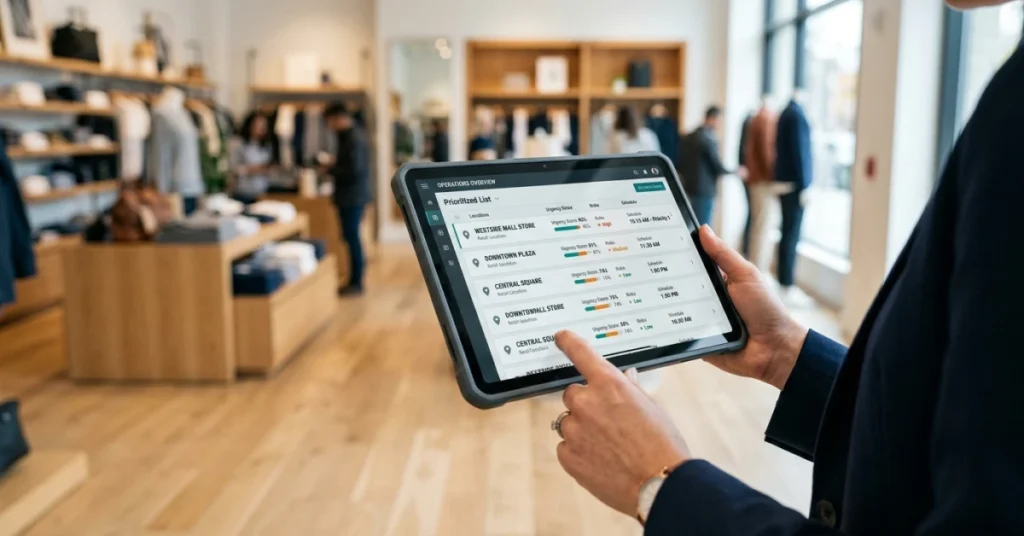
Not every store carries equal weight. Rank locations by volume, banner priority, and competitive risk — then build your visit schedule around that list, not around geography alone.
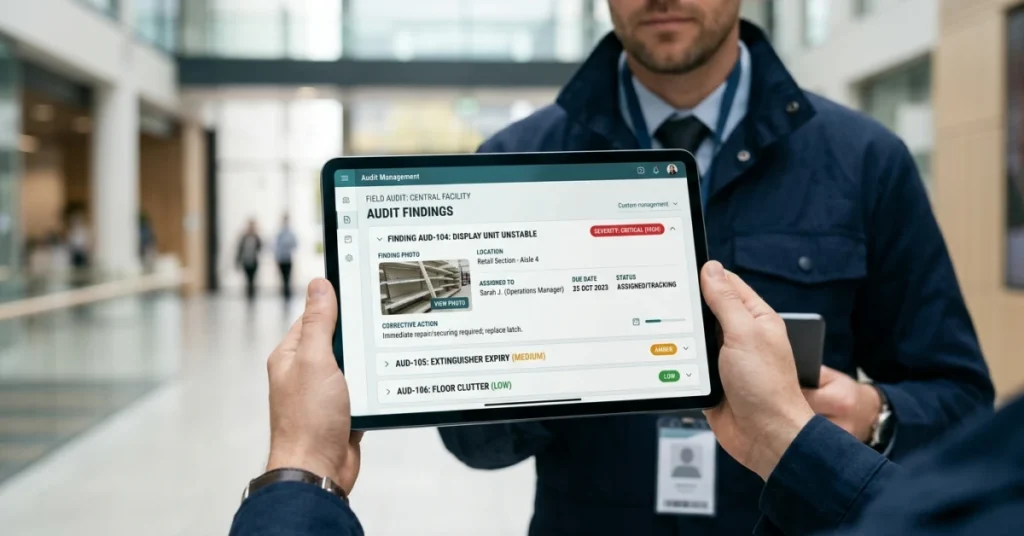
Strong retail execution tools let field teams log visit data in real time, so managers catch compliance gaps in days — not weeks.
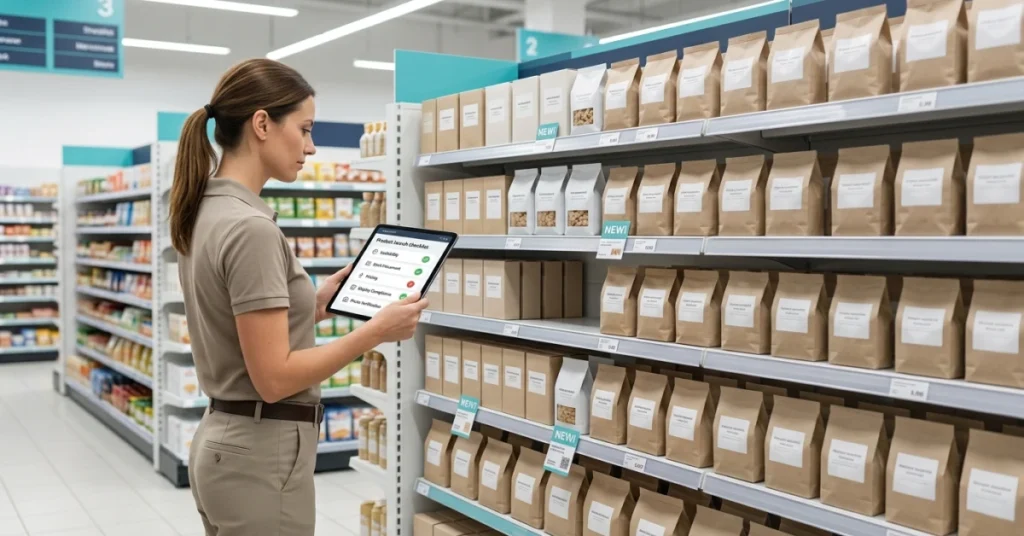
Create a Standard Launch Checklist
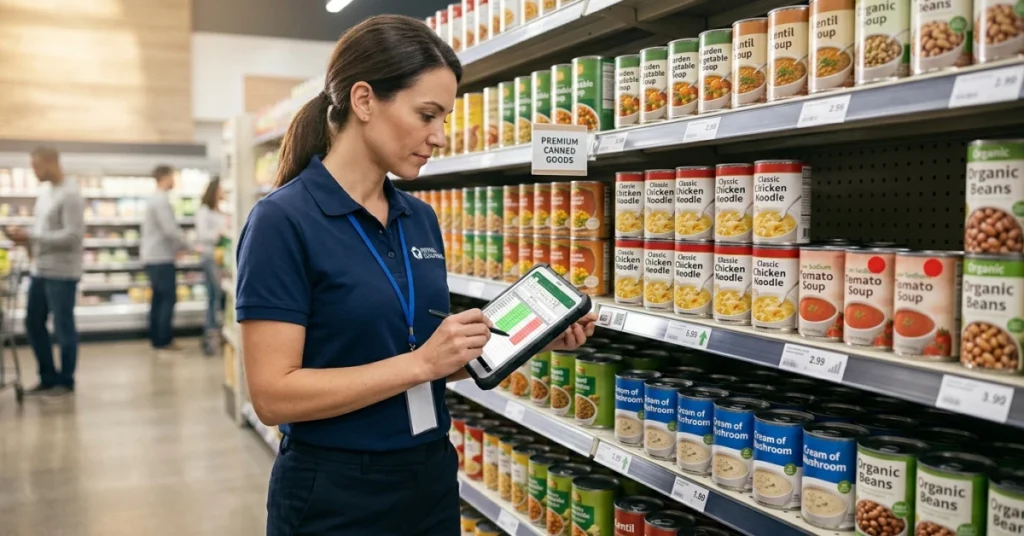
Every field rep needs the same checklist — one built for this product, this launch, these standards. A generic store audit form produces anecdotes, not action.
The checklist should cover shelf placement, pricing accuracy, POS materials, and stock levels. If a rep can’t complete it in under ten minutes, it’s too long.
📊 By the Numbers
Products reaching 80% weighted distribution in week one are significantly more likely to sustain 90-day velocity.
Once your targets, visit plan, and checklist are locked, the real question becomes: what exactly should reps look for when they walk into a store?
What Should Field Teams Check in Stores?
Build the system before launch day. Then make sure your field team knows exactly what to look for. Without a product-specific checklist, reps collect impressions — not data.
A strong new product launch retail execution audit covers four non-negotiable areas. Skip any one of them and you lose the ability to diagnose why velocity is stalling.
Retail execution tools exist to close that gap. Use them from day one.
Product Availability and Stock
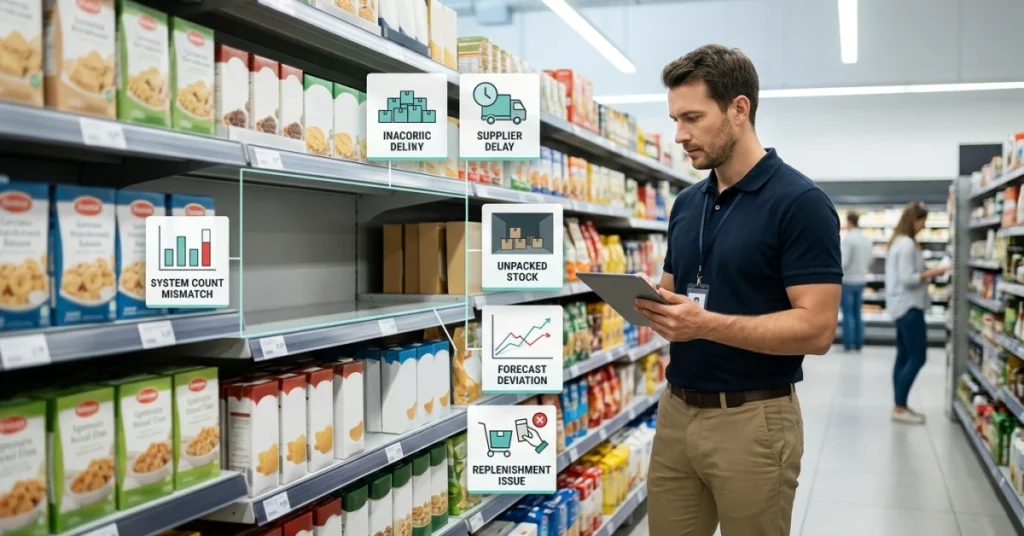
An empty shelf on launch week is a permanent loss — that shopper rarely comes back. Teams must confirm on-hand stock, check back-room inventory, and flag replenishment gaps right away.
Out-of-stocks during a launch window cost brands far more than one missed sale. They destroy the velocity curve that buyers use to judge reorder potential.
Shelf Placement and Planogram Compliance
Your product must land in the exact shelf position your product launch execution plan set. That means eye level, correct facings, and right adjacencies. Planogram drift happens fast, especially in high-traffic stores during the first two weeks.
Reps should photograph every shelf visit and log deviations by store ID. Photos create accountability; verbal reports create noise.
Pricing, Promotions, Displays, and Point-of-Sale Materials
Wrong shelf pricing on day one trains shoppers to expect a discount — or worse, sends them to a competitor. Field teams must verify the promoted price, confirm display placement, and check that all point-of-sale materials are up and undamaged.
Promotional compliance rates below 70% mean your go-to-market retail strategy is running at half power (Shno). Every missing shelf talker or broken display is a conversion you already paid for and will never get back.
Competitor Activity and Store Conditions
Competitors move fast when they see a new product launch in their category. Reps should log any price cuts, added facings, or new displays from rival brands. That data is gold for your trade team.
Store condition notes — aisle cleanliness, fixture damage, traffic flow — round out the picture. Resources Rework shows that brands tracking competitor activity during launch windows adjust faster. They also protect early velocity more than brands that don’t.
📊 By the Numbers
Brands with structured in-store audit programs recover from execution gaps 3x faster than those relying on anecdotal rep feedback.
Knowing what to check is only half the battle. The real question is which numbers show you whether any of it is working.
Which KPIs Should You Track?
Those four audit areas only matter if you tie them to numbers that signal trouble before scan data confirms a failed launch. Most brands track the wrong metrics — lagging indicators like weekly sales velocity that arrive days too late to act on.
A strong product launch execution plan pairs field audit scores with store-level leading indicators, so your team can fix problems in week one — not week six.
Distribution and Store Coverage
Track the percentage of authorized stores that have received and confirmed stock by day three of launch. A gap here means your go-to-market retail strategy is bleeding reach before a single shopper sees the product.
On-Shelf Availability
Out-of-stocks during a new product launch retail execution window are brutal — brands lose up to 8% of annual sales to shelf gaps alone (Retailvelocity identifies this as the top killer of in-store product launch momentum). Measure on-shelf availability daily in the first two weeks, not weekly.
Placement, Display, and Promotion Compliance
Compliance rate — the share of stores executing the agreed planogram, display, and price — is your clearest leading indicator of launch health. According to Moz, brands that track compliance in real time see up to 25% higher launch-period conversion than those relying on post-visit reports.
Low compliance in week one predicts poor velocity in week three — every time.
Issue Resolution Time
Speed of fix matters as much as speed of find. Measure the hours between a field rep flagging a problem and a store correcting it — because a display that stays wrong for 48 hours during launch week is revenue you never recover.
📊 By the Numbers
Brands lose up to 8% of annual sales from on-shelf gaps during a new product launch window.
The brands that win launches don’t just measure more — they measure earlier, and they build the response plan before the first store visit ever happens.
Conclusion
Catch problems in week one, not week six. That only happens when your execution system is ready before the product ships — not after scan data lets you down.
According to Productmarketingalliance, over 65% of product launches miss their first-90-day sales targets — most because field execution gaps go undetected until the window closes.
A strong retail execution strategy treats the launch window as too short and too costly to use as a learning period.
Circana data shows that brands who stress-test their in-store product launch plan before shelf date recover distribution gaps 40% faster. Brands that wait and react after the fact fall behind.
Most teams lose launch momentum because they have no real-time view of what is happening at store level. FieldPie captures photo-based audit data and field performance metrics in real time.
Your team spots a compliance gap on day three — not day thirty. Build your product launch execution plan before launch day.
Use FieldPie’s reporting tools to turn field visits into clear decisions. That protects your go-to-market retail strategy from the start.