


✦ Key Takeaways
Companies with a defined route-to-market strategy grow revenue up to 3x faster than those without one.
→ Wrong channels waste up to 40% of your sales budget.
→ Direct, indirect, and hybrid models each serve different customer segments.
→ Prioritizing high-value locations first cuts time-to-profit dramatically.
In this article:
What Is a Route-to-Market Strategy?
How Do You Build a Route-to-Market Strategy?
Which Route-to-Market Models Can You Use?
How Do You Prioritize Customers and Sales Locations?
Key takeaway: Your route-to-market strategy is one decision. It determines whether your product reaches the right customer — or dies in the warehouse.
What Is a Route-to-Market Strategy?
Most companies treat their route-to-market strategy like a distribution map — a list of channels they sell through. That framing is the mistake.
A route-to-market strategy is a clear choice. You decide which customers you will serve and which paths you will use to reach them. Critically, it also means deciding which customers you will walk away from.
Over 70% of B2B companies report that poor channel alignment directly cuts into revenue growth (Hubspot). Yet most teams still chase reach over fit.
How Is Route-to-Market Different From Go-to-Market?
A go-to-market strategy answers “how do we launch?” It is broad, campaign-driven, and often a one-time effort. A route-to-market strategy answers a different question: “how do we reach the right customer, repeatedly, at a profit?”
Go-to-market sets direction. Route-to-market runs the engine every day after launch. They are not the same plan.
Which Sales and Distribution Channels Does It Cover?
A channel strategy covers direct sales, distributors, retail partners, e-commerce, and field teams. Each is a path that moves your product to a paying customer. Strong brands don’t use all of them. They pick fewer and execute harder on each one.
Knowing how field sales route planning works shapes which distribution channels are worth funding. According to Gotomarketalliance, companies that set clear channel criteria before entering a market are 2x more likely to hit their first-year revenue targets.
The real discipline isn’t choosing your channels. It’s choosing which customers and routes you will deliberately ignore.
That choice separates a true market entry strategy from a wishful sales plan. It’s also exactly where most teams get the sequence wrong.
How Do You Build a Route-to-Market Strategy?
Decide who you serve — and who you don’t. Make that call before you touch a single channel decision.
Building a strong route-to-market strategy means working through four hard trade-offs in the right sequence.
Companies that skip the sequencing end up with bloated distribution networks that cost more to run than they return. Over 40% of RTM costs in consumer goods companies come from serving accounts that never reach breakeven volume (Uvesolutions).
Segment Customers and Outlets
Start by ranking customers on two axes: revenue potential and cost to serve. Cut the bottom tier before you build any route around them.
This is deliberate de-selection — the same discipline that separates a tight distribution network from a sprawling one that bleeds margin.
Choose Direct vs Distributor-Led Sales
Direct routes give you control and data. Distributor-led routes give you speed and lower fixed cost — but less visibility into execution.
Pick the model that fits your margin structure, not the one that feels safest. The wrong channel choice compounds every other cost downstream.
Define Territory and Coverage Models
Territory design is where most teams lose money quietly. Overlapping coverage wastes rep time; gaps let competitors in through the back door.
Good field sales route planning aligns territory boundaries to account density, not to internal org charts or legacy geography.
Set Visit Frequency by Account Potential
Not every account earns a weekly visit. Frequency should track account potential — high-value outlets get more face time, low-value ones get less or none.
Phrase confirms that sharper market segmentation drives better resource use. The more accurate your segments, the less you waste on the wrong calls.
📊 By the Numbers
Over 40% of RTM costs come from accounts that never reach breakeven volume.
The real question is simple: which models give you the best return per dollar of coverage cost? That answer — not route count — should drive every build decision.
Which Route-to-Market Models Can You Use?
Once you rank customers by revenue and cost to serve, you need to pick the right model. Choose wrong, and you bleed margin on routes that will never break even.
Most companies default to adding routes instead of choosing them.
Over 40% of distribution costs come from accounts that never turn a profit. That makes your model choice a margin decision — not just a logistics one.
Direct Sales
Direct sales puts your own reps in front of customers — no middlemen, full control. It costs more per call, but you capture the full margin and own the relationship.
This model works best for high-value accounts where revenue justifies the cost to serve. Use it selectively, or it becomes your most expensive route to nowhere.
Distributor and Wholesaler Networks
Distributors extend your reach fast — especially in markets where building a direct field force would take years. You trade margin for speed and geographic coverage.
The risk is losing visibility into execution. As Assecoplatform notes, dynamic segmentation helps brands monitor distributor performance by customer tier — so you stop funding routes that underdeliver.
Hybrid Route-to-Market Models
A hybrid model splits accounts by value. Top-tier customers get direct coverage; the long tail goes through distributors.
Done right, it puts your best resources where they earn the most return. Done wrong, it just adds complexity. Strong shopper marketing strategies help align both channels around the same execution standards.
Van Sales and Pre-Sales Models
Van sales loads product on a truck and sells on the spot — fast, flexible, and ideal for fragmented traditional trade. Pre-sales separates the order from the delivery, which improves route planning and cuts waste.
Pick the model that fits how your customer buys — not what suits your internal process. Apu Apus found that matching your sales model to customer behavior cuts cost per order by up to 23%. That gap shows up most in high-frequency trade channels.
📊 By the Numbers
Matching sales model to customer behavior cuts cost per order by up to 23% in high-frequency trade channels.
The real question isn’t which model exists. It’s which customers deserve which model — and that forces a harder conversation about priorities.
How Do You Prioritize Customers and Sales Locations?
That margin pressure from direct sales costs makes one thing clear: you can’t chase every account. The companies that win don’t cover more ground — they cover the right ground. They deliberately leave low-value accounts to competitors.
Most teams skip this step and treat customer prioritization as a gut call. The result: you burn 60–70% of your sales capacity on accounts that will never justify the cost-to-serve.
HubSpot data consistently shows top-performing sales teams use formal scoring to rank accounts before assigning routes. Skip that step and you’re funding the wrong customers.
A strong route-to-market strategy forces clear trade-offs. Pick your best customers first. Then build your distribution network around them — not the other way around.
📊 By the Numbers
Companies that formally tier accounts by revenue potential cut wasted sales effort by up to 30%.
Rank Accounts by Revenue Potential
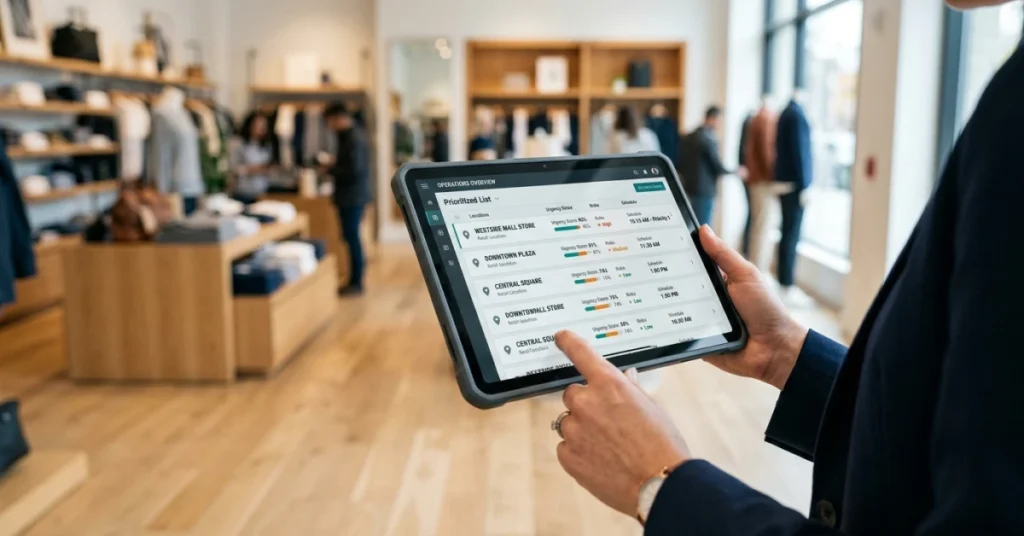
Start with a simple question: which accounts can realistically grow margin, not just volume? Score each customer on annual spend, growth rate, and strategic fit. Then cut the bottom tier before you assign a single rep.
This is the core discipline most channel strategy plans skip. Saying no to a customer is a resource decision. It is not a relationship failure.
Segment by Channel, Size, and Geography
Not every high-value account needs a direct rep. Some are better served through a distributor or a digital channel. Match the route to the account’s size and location — not to your existing habits.
Geography shapes cost fast. A cluster of mid-size accounts in one metro can justify direct coverage. The same accounts spread across three states cannot.
Use your sales pitch approach to test which channel each segment actually responds to.
Balance Coverage With Cost-to-Serve
Coverage without a cost lens is just ambition. Moz found that brands aligning outreach to high-value segments see up to 3x better conversion rates. The same logic applies directly to physical route planning.
Every route you add has a fixed cost floor. If an account can’t generate enough margin to clear that floor, you’re subsidizing a loss. You are not building a distribution network.
Prioritization isn’t something you do once and file away. Keep doing it — that’s what turns a route map into a real competitive advantage. A map that only looks thorough on a slide won’t hold up.
Conclusion
Score accounts on purpose. Walk away from low-value ones. That discipline is what separates a real route-to-market strategy from a wishlist. Coursera found that companies define clear channel criteria before launch. Those companies are up to 50% more likely to hit first-year revenue targets.
The strongest market positions aren’t built by reaching more customers. They’re built by putting resources on fewer, higher-value paths. Good field sales route planning turns that focus into daily execution discipline. It’s not just a strategy slide.
Most teams struggle because they can’t see where field execution breaks down. FieldPie tracks real-time route performance, visit outcomes, and account data. Leaders can then act fast.
Start with your highest-value accounts. Cut the routes that drain margin.
Uvesolutions confirms that data-driven channel strategy beats gut-driven expansion every time. Explore FieldPie’s field execution and reporting tools. Turn your route-to-market decisions into results you can measure.