



✦ Key Takeaways
Over 65% of multi-location retailers face chargebacks directly tied to inconsistent regional compliance failures.
→ Non-compliance chargebacks cost retailers millions in avoidable penalties annually.
→ Routing guide requirements shift dramatically by retailer, region, and distribution center.
→ Standardized compliance playbooks cut violations by up to 40% across locations.
In this article:
Why Regional Compliance Breaks Multi-Location Retailers
How Do Routing Guides Vary by Retailer and Region?
How to Maintain Consistent Compliance Across Multiple States
Key takeaway: Master regional routing rules first — every other compliance effort builds on that foundation.
Why Regional Compliance Breaks Multi-Location Retailers
Retailers lose millions each year to chargebacks, pulled products, and broken partnerships. The root cause is simple: no single system ties all the rules together.
Non-compliance chargebacks cost suppliers an average of 3% of gross revenue annually (Rila). That number climbs fast when you ship across multiple states.
The real problem is not regulatory. It is organizational.
Most multi-location retailers treat routing guide rules and state laws as two separate headaches. That split is exactly where compliance falls apart.
Federal vs. Regional Requirements: The Critical Gaps
Federal rules set a floor — but state laws often raise it significantly. A label requirement legal in Texas may trigger a fine in California before your truck even unloads.
Most teams assume federal standards are enough. That assumption is one of the most expensive mistakes in retail regulatory adherence today.
Most Common Violations That Trigger Chargebacks or Fines
Wrong label formats, late shipments, and incorrect pallet configurations top the list of chargeback triggers. These are not random errors. They happen when teams apply one retailer’s rules to a different retailer’s shipment.
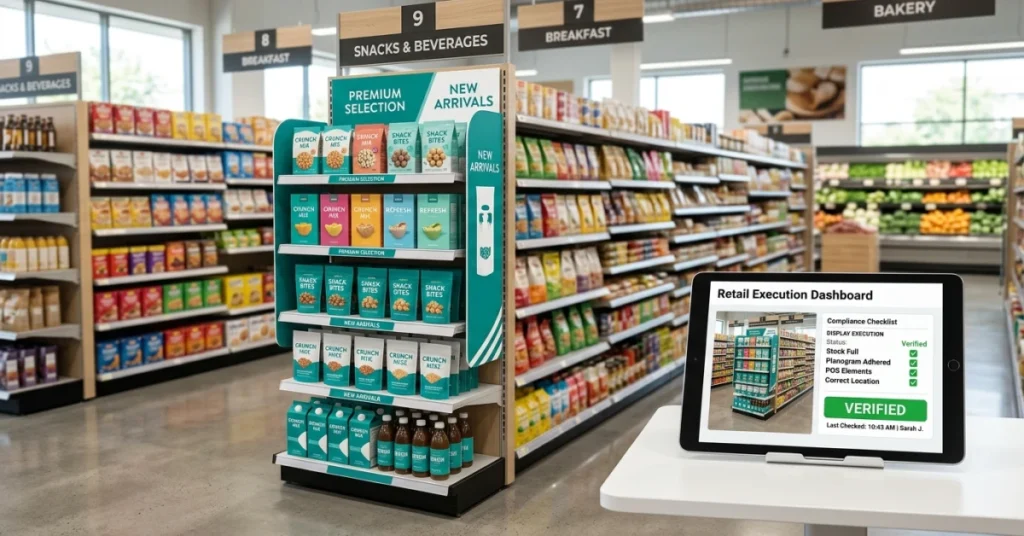
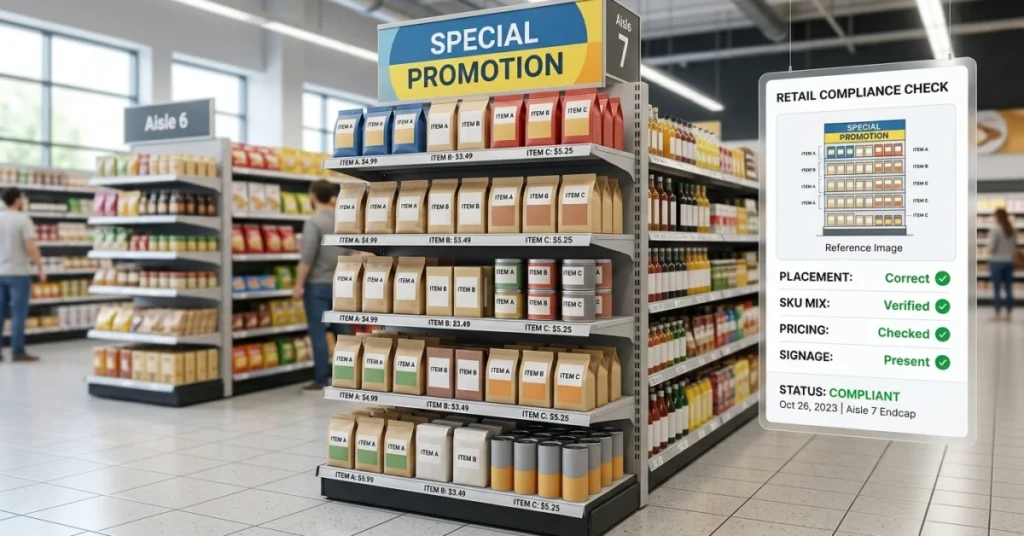
Using display compliance verification tools catches these mismatches before product leaves the warehouse. That beats finding out after a chargeback hits your inbox.
How State Laws Quietly Override Your Federal Baseline
State-level retail rules do not announce themselves. They update quietly, and your team rarely hears about it in time. According to Rila, retailers in five or more states face rule changes at a pace that outpaces most internal review cycles.
Smartwarehousing points out that each state must be treated as its own distinct regulatory environment. It is not a variation of one master rulebook. It is a separate rulebook entirely.
Without that mindset, every new market becomes a fire drill. The deeper question is not which laws apply. It is why the rules shift so sharply from one retailer’s dock to the next.
How Do Routing Guides Vary by Retailer and Region?
That gap shows up fast when you open two routing guides side by side. They rarely look alike.
Walmart’s routing guide runs over 100 pages. Target’s covers different carrier needs, lead times, and label specs. Walmart never mentions those same details.
Every retailer writes its own rulebook. Regional distribution centers often add local layers on top.
Suppliers managing five or more retail accounts routinely track dozens of conflicting requirements — with no single system connecting them.
What a Routing Guide Actually Controls
A routing guide tells you exactly how a retailer wants your product delivered. It covers carrier choice, pallet setup, label placement, and appointment windows.
Miss one detail, and you trigger a chargeback. That happens before your product ever hits the shelf.
These rules are not suggestions. Retailers treat them as binding contracts.
Regional assortment strategy breaks down fast when routing rules conflict with how your warehouse runs.
Consequences of Routing Guide Violations by Region
Routing violations average 1–3% of invoice value per shipment. That looks small per order. At scale, it’s devastating (according to Mitti).
A supplier shipping to 10 regional DCs can bleed six figures annually from avoidable errors.
Regional buyers in the Southeast may enforce label rules differently than buyers in the Pacific Northwest. That gap is not a bug — it is the system.
Retail compliance management must account for it.
Comparing Major Retailer Routing Guide Requirements
No two major retailers share the same retail compliance standards. Not even close.
The table below shows how three top retailers differ on core requirements.
|
Requirement |
Walmart |
Target |
Kroger |
|---|---|---|---|
|
Carrier selection |
Walmart-approved only |
Preferred carrier list |
Regional carrier options |
|
Label format |
GS1-128 required |
GS1-128 + SSCC |
Store-specific barcodes |
|
Appointment window |
Strict 2-hour window |
4-hour window |
Varies by DC region |
|
Pallet height max |
60 inches |
65 inches |
58 inches |
Research from the National Institutes of Health confirms that supply chain fragmentation directly raises error rates in multi-partner distribution networks.
Best practice: give each retailer’s rules their own tracked profile. A shared spreadsheet that nobody owns will fail you.
📊 By the Numbers
Routing violations cost suppliers an average of 1–3% of invoice value per shipment across retail accounts.
Your routing guides will always differ by retailer. That part is certain.
The harder problem: can your internal systems hold those differences steady as you scale across state lines?

How to Maintain Consistent Compliance Across Multiple States
Dozens of conflicting routing guides with no unified system is not a routing problem. It is an infrastructure problem.
Multi-location retailers fail at regional retail compliance best practices for one core reason. No single living document ties retailer routing rules to state-level legal requirements.
Most suppliers treat each new retail partner as a one-off fire drill. That approach collapses fast. It falls apart especially when you operate across five or more states with different labor, labeling, and distribution rules.
📊 By the Numbers
Retailers issue chargebacks averaging $1,000–$10,000 per violation — costs that compound fast across multiple states (Goaudits).
Build a Centralized Compliance Program With Local Flexibility
A centralized program gives every team member one source of truth for retail compliance standards. Local flexibility means that source of truth bends — without breaking — when a regional DC adds its own rules.
Think of it like a franchise model. The core playbook stays fixed. Each location gets a short addendum for local retail regulatory compliance rules.
Step 1: Map Every Jurisdiction Your Stores Operate In
Start by listing every state, county, and DC your products touch. Each one may carry unique labeling, packaging, or delivery window rules. Those rules can override your default process.
This map becomes the foundation of your retail compliance management system. Without it, you are guessing.
Step 2: Assign Regional Compliance Owners Accountable for Updates
Every region needs one named person who owns compliance updates. Not a committee — one person. When a retailer changes its routing guide, that owner catches it before a shipment goes out wrong.
Without clear ownership, updates get missed. Missed updates become chargebacks.
Step 3: Standardize SOPs With State-Specific Addenda
A standard operating procedure (SOP) is a step-by-step guide your team follows every time. Build one master SOP for retail compliance requirements. Then attach a short addendum for each state’s unique rules.
This structure cuts onboarding time. It also keeps your team from inventing new processes for every new retail partner.
How Often Should You Run Internal Compliance Audits?
Run a full internal audit at least once per quarter. Audit more often if you added a new retail partner or entered a new state.
Secureframe reports that companies with regular audit cycles catch violations 60% faster than those without a set schedule. Quarterly audits are the cheapest form of chargeback prevention available.
What a Retail Compliance Audit Should Actually Cover
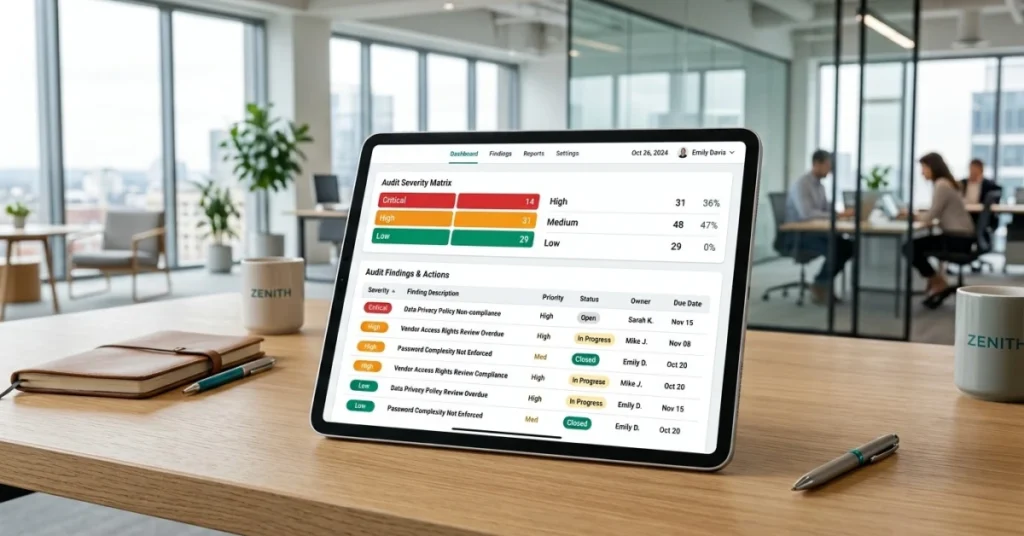
Most teams audit product labels and stop there. A real retail compliance audit goes further. It checks routing guide adherence, delivery window accuracy, and pallet and case pack specs. It also covers state-level labeling laws — all in one pass.
Routing guide version in use (is it current?)
Delivery window compliance by DC location
Label accuracy against state-specific requirements
Pallet configuration and case pack counts
Regional owner sign-off on all recent changes
The gap between a good audit and a useless one is scope. Cover all five areas above every single cycle.
One living document links routing rules, state law, and internal SOPs together. That document is the only fix that holds as your retail footprint grows.
Conclusion
That infrastructure failure isn’t a logistics problem you patch. It’s a structural gap you build around.
Retailers reject roughly 3% of supplier shipments because of compliance errors. That number climbs fast when routing rules and state regulations live in separate spreadsheets (Decisionpointresearch).
The real fix is connecting retailer-specific routing rules to state-level legal requirements in one living document. Don’t manage them as two separate fires.
Rila confirms that suppliers who treat retail compliance management as an ongoing system cut chargeback rates significantly. A one-time checklist won’t get you there. This holds true across multi-state operations.
Managing retail display compliance across regions means your team needs real-time photo capture, customizable audit forms, and instant reporting. Email threads and guesswork won’t cut it.
FieldPie connects field audits, photo evidence, and compliance checklists in one platform. Every store visit produces a verifiable record.
Start closing your compliance gap today. Explore FieldPie’s field execution tools. See real improvement in your regional retail compliance best practices within the first 30 days.