✦ Key Takeaways · 6 min read
Perfect store execution turns brand standards into measurable shelf checks, clear task ownership, and verified corrections.
→ Shelf gaps silently erode sales before anyone notices.
→ Compliance standards mean nothing without real-time shelf visibility.
→ Connecting audit data to shopper behavior changes everything.
In this article:
The Gap Between Standard and Shelf Reality
What Is a Perfect Store in CPG and Retail?
How to Measure Perfect Store Compliance at Scale
How Shelf Data Connects Audits to Shopper Outcomes
Perfect Store Execution FAQ
Conclusion
Key takeaway: Perfect store execution is the single most controllable driver of retail revenue growth.
The Gap Between Standard and Shelf Reality
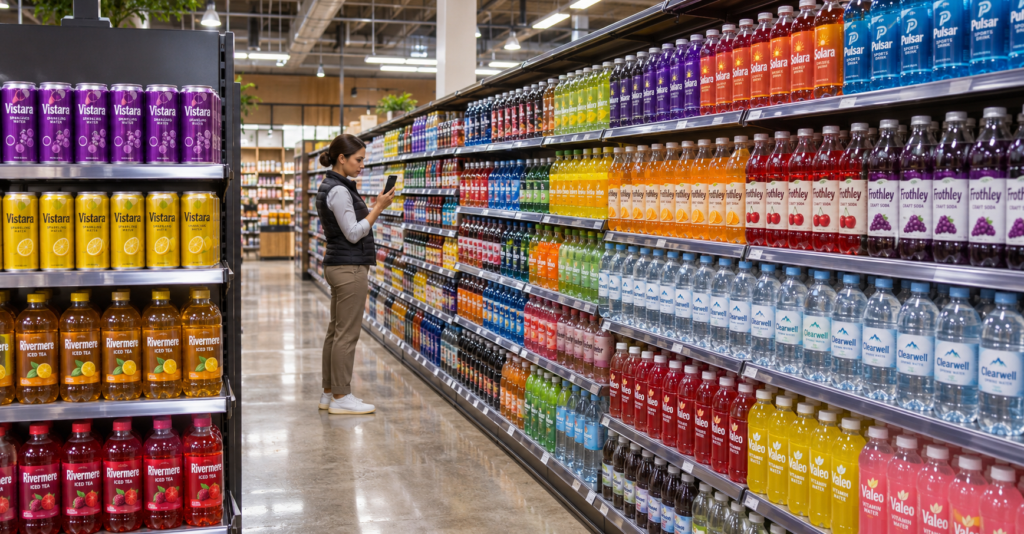
A perfect store standard defines the exact level of availability, visibility, and compliance a brand requires at each channel. What field teams actually find on the shelf is almost always something different. That gap between the written standard and the physical reality is where revenue quietly disappears.
Nearly 70% of large-scale execution programs fail to hold their gains past the initial rollout, according to Paralleldots. The strategy is rarely the problem. Day-to-day execution simply can’t keep pace with real-world complexity.
Why Execution Breaks Down at Store Level
Field teams rely on manual audits that are too slow and too infrequent to catch compliance failures in time. Those audits are also too subjective to stop problems before they cost sales. A rep visiting a store once a week sees a snapshot, not a pattern. By the time a fix is logged, the window to act has already closed.
Understanding perfect store execution principles makes clear why measurement is the real bottleneck, not the strategy sitting behind it.
What This Gap Costs CPG Brands
Every point of non-compliance is a measurable loss.
Spread that shortfall across hundreds of stores and multiple SKUs, and the revenue impact becomes a strategic problem. It is far too big to treat as a field ops footnote. To close that gap, you first need a clear definition of what a perfect store actually requires. Most frameworks never get that specific.
What Is a Perfect Store in CPG and Retail?
That gap between the written standard and the shelf is exactly what a perfect store framework is designed to close. A perfect store is a defined execution standard. It specifies what a brand’s presence must look like at every store, every visit, every day. It’s not a checklist; it’s a revenue system with measurable conditions that either pass or fail.
Say your team sells beverages through 2,000 convenience stores. Your perfect store standard might require a specific shelf position and a minimum of four facings. It may also call for a price tag within a defined range and a secondary display near the checkout. When any one of those conditions slips, perfect store execution breaks down, and so does your sales velocity at that location.
Shopper behavior makes this urgent. An estimated 76% of purchasing decisions are made in-store, according to Neurolabs. That means the shelf is your last real chance to win the sale. A perfect store strategy turns that moment into a controlled, repeatable outcome rather than a lucky one.
📊 By the Numbers
An estimated 76% of purchasing decisions are made in-store, making shelf execution a direct revenue driver.
Core KPIs That Define Execution
A perfect store program lives or dies by the KPIs it tracks. These metrics turn your brand standard into field-level pass/fail conditions that reps can act on right away.
On-shelf availability (OSA): The percentage of eligible SKU observations where the product is available for shoppers to purchase.
Share of shelf: The brand’s share of the measured category shelf space, using a consistent method such as facing counts or linear shelf width.
Planogram compliance: The percentage of applicable placement and facing requirements that match the approved layout.
Pricing accuracy: Does the shelf price match the agreed rate?
Promotional display execution: Is the secondary display built, positioned, and stocked?
Each KPI connects directly to a shopper decision point. Tracking all five gives you a composite compliance score per store, per visit. That score is the foundation of any serious CPG retail execution program.
Perfect Store Standard vs. Actual Execution
Most brands have a well-written standard. The problem is the distance between that document and what field teams actually find on the shelf. That gap grows wider as store count rises, SKUs multiply, and promotions run more often. Shelf data captured at the point of sale is the only reliable way to see that distance clearly.
The five steps below build a program that measures that gap and closes it systematically. Don’t rely on quarterly audits to catch problems before they cost you sales.
Define KPIsSet specific, binary conditions for availability, placement, price, and display.
Set store-level benchmarksAssign a target compliance score to each store tier or channel.
Deploy mobile auditsEquip field reps with structured digital forms tied directly to your KPIs.
Use image recognition for shelf dataReplace manual counting with AI-driven photo analysis for speed and accuracy.
Close the loop with field teamsPush real-time alerts and corrective tasks back to reps before they leave the store.
Your standard is almost certainly good enough. The real question is whether your measurement system can show you, right now and at store level, how far reality has drifted from it.
How to Measure Perfect Store Compliance at Scale
That revenue engine only runs if you can measure what’s happening on the shelf, across every store, every week. Measuring perfect store compliance at scale requires repeatable, structured checks tied to clearly defined store-level KPIs. Visit-based audits show conditions at the time of capture; continuous visibility requires additional monitoring. That data must tie directly to your defined KPIs at the store level.
Manual spot-checks can’t keep up. A field rep visiting a store once a month captures a snapshot, not a trend. By the time the report lands on your desk, the shelf has already changed three times.
📊 By the Numbers
A store that’s fully compliant three weeks out of four shows a 75% compliance trend, per Visiongroupretail. That means one bad week quietly erodes your numbers without a single alert.
5 Steps to a Measurable Perfect Store Program
Building a measurement system that holds up across hundreds of locations takes more than a scorecard. You need a connected operating model where data flows from the shelf to the decision-maker without a two-week lag.
Step 1: Define Channel-Specific KPIs
A convenience store and a hypermarket don’t share the same shopper mission, so they shouldn’t share the same compliance scorecard. Define KPIs by channel first. On-shelf availability, planogram adherence, and secondary display placement will carry different weights depending on where the shopper is buying.
Step 2: Set Store-Level Benchmarks
Aggregate scores hide the real problem. Set a minimum threshold per store rather than relying on a portfolio average, and flag every location that misses it two weeks in a row.
Step 3: Deploy Mobile Audit Tools
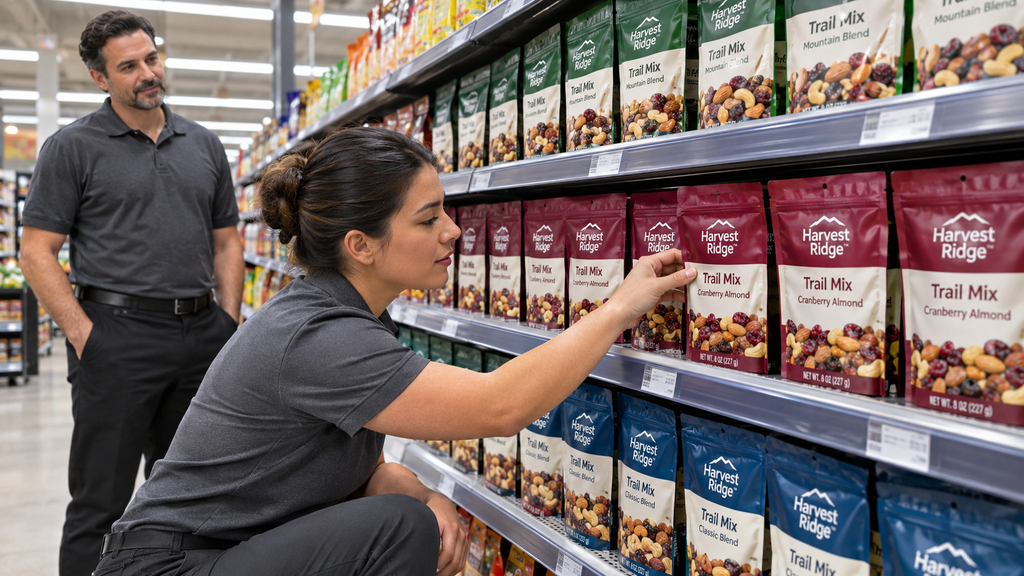
Paper forms and spreadsheet uploads introduce delay and human error at every step. Mobile audit apps let reps log compliance data in real time with photo evidence attached. Your merchandising execution data is current by the time the rep walks out the door.
Step 4: Use AI Image Recognition for Shelf Data
AI image recognition can help standardize product identification and facing counts from shelf photos. Results depend on image quality, assortment coverage, and model performance. Review uncertain detections before using them in store compliance scores.
Step 5: Close the Loop With Field Teams
Data without a feedback loop is just a report nobody acts on. Push compliance scores directly to field reps’ mobile dashboards and assign corrective tasks with deadlines. Track resolution rates the same way you track the original audit score. Review open tasks every week so nothing sits unresolved past the next store visit.
The real question isn’t whether you can collect shelf data at scale. It’s whether that data is precise enough to predict what a shopper will find, and do, when they reach your category.
How Shelf Data Connects Audits to Shopper Outcomes
Shelf data closes the loop between what your audit records and what a shopper actually does at the fixture. A product that’s out of position, mispriced, or missing costs you a sale. Research shows that 70% of shopping decisions are made in-store, so shelf conditions shape revenue right now, not at the end of a reporting cycle.
The problem with treating audits as a compliance exercise is that compliance data without a feedback loop is just a record of what went wrong. Say your team audits a store on Tuesday and flags a planogram violation. If that signal doesn’t trigger a fix before the weekend traffic peak, the audit was a cost, not an investment.
Image Recognition vs. Manual Audit Accuracy
Manual audits capture a narrow slice of shelf reality. AI image recognition scans every facing in a photo and flags every deviation in seconds. It logs each issue against your perfect store standard with no scorer variance between reps or regions.
That consistency matters because CPG retail execution depends on comparing data across hundreds of stores. When every data point is collected the same way, you can rank stores by compliance and spot regional drift early. You can also prioritize field visits using AI store visit forecasting instead of gut feel.
Feeding Shelf Signals Back Into Execution Decisions
Shelf data only drives outcomes when it flows upstream fast enough to change behavior before the next shopper arrives. The model is straightforward: an image is captured in-store and a deviation is flagged automatically. A task goes to the nearest rep or store associate, and a follow-up photo confirms the fix.
That loop, run daily, is what separates a perfect store framework from a folder of audit PDFs. Perfect store execution is really about shortening the time between a shelf problem and a shelf fix. Every shopper interaction should reflect the standard you set, not the gap your last audit found.
📊 By the Numbers
70% of shopping decisions are made in-store, making real-time shelf conditions a direct driver of revenue. (Neurolabs)
Executives ask hard questions before committing to this kind of data infrastructure: cost, integration, change management. Those questions deserve direct answers, not reassurances.

Perfect Store Execution FAQ
Corrective action only matters if you know what to measure and where execution is actually falling short.
The KPIs that define perfect store execution are on-shelf availability, planogram compliance, share of shelf, promotional display placement, and price tag accuracy. Track these consistently and you have a real picture of execution health, not just a snapshot from last quarter’s audit.
Perfect Store Standard vs. Actual Execution: Common Gaps and Revenue Impact
Only Neurolabs reports that 44% of consumer goods companies are satisfied with their in-store execution, which means the majority are losing revenue to gaps they can name but can’t close fast enough.
|
Execution Standard |
Common Field Reality |
Revenue Impact |
|---|---|---|
|
Full on-shelf availability |
Out-of-stocks found days after depletion |
Lost sales at the moment of purchase intent |
|
Planogram compliance |
Facings reduced or products in wrong slots |
Lower visibility, reduced basket conversion |
|
Promotional display execution |
Displays missing, misplaced, or unbuilt |
Promotional spend wasted, volume targets missed |
|
Correct shelf pricing |
Price tags absent, outdated, or mismatched |
Shopper friction, compliance risk, margin leakage |
|
Agreed share of shelf |
Competitor facings encroaching on your space |
Direct share loss to competing brands |
Frequently Asked Questions
How often should perfect store audits run? High-velocity categories need store-level data at least weekly; monthly audits miss too many short windows of non-compliance.
Can small field teams realistically execute a perfect store framework? Yes, but only if they use a retail execution scorecard to prioritize the highest-impact stores first, rather than spreading effort evenly.
How does AI image recognition change the audit process? It replaces subjective rep observations with consistent shelf reads, so every store visit produces structured, comparable data instead of free-text notes.
What’s the biggest integration challenge? Connecting shelf audit data to your sales system in near real time is the hardest step, and it’s also where most CPG retail execution programs stall.
How does FieldPie fit into a perfect store strategy? FieldPie’s AI-powered platform connects scheduling, merchandising audits, and team tracking in one tool, so field managers can assign corrective tasks the same day a gap is flagged.
By then, you’ve already lost three weeks of sales on that facing. Faster data closes that window.
Every gap in the table above has a known fix, but fixing it consistently requires a data infrastructure that most brands haven’t built yet, which is exactly what the path forward demands.
Conclusion
Your field teams find something different on the shelf than your defined standard. That gap is a revenue problem, not a strategy problem. Perfect store execution fails at the measurement layer, where manual audits move too slowly and too rarely to drive real correction.
Say your team runs weekly store checks across 500 locations. By the time the data reaches a manager, the out-of-stock moment has already cost you the sale.
The path forward runs through AI-powered store visit data that connects shelf reality to commercial outcomes in near real time. A perfect store framework only delivers its full value when compliance signals flow continuously, not in weekly batches. Field teams need that data early enough to fix problems before shoppers leave without buying.
Most CPG and retail teams carry a persistent execution gap. Their data setup simply can’t keep pace with their perfect store strategy. FieldPie’s audit and merchandising tools capture shelf conditions on every store visit. They surface compliance gaps early, before those gaps grow into lost revenue.
FieldPie offers an AI-powered field operations platform built for businesses that need to manage scheduling, routing, audits, sales, merchandising, and team tracking. Everything runs through a single mobile-friendly tool.