✦ Key Takeaways · 6 min read
Seasonal display success hinges on urgency, so plan to intensify pressure during the last 10 to 14 days.
→ Poor timing kills seasonal displays before shoppers even notice them
→ Shopper psychology shifts dramatically as holidays approach peak moments.
→ Budget alignment with rollout schedules separates winners from wasted floor space.
In this article:
Why Most Seasonal Display Programs Underperform
How Far in Advance Should You Plan Seasonal Displays?
Designing Displays That Drive Measurable Sales Lift
How to Budget, Roll Out, and Measure ROI
Build a Smarter Seasonal Display Program
Conclusion
Key takeaway: Retailers who plan seasonal displays early and measure relentlessly outperform every competitor who guesses.
Why Most Seasonal Display Programs Underperform
Retailers lose up to 30% of potential seasonal revenue by switching displays too late, according to Fieldpie. That single stat points directly at the real problem. Most seasonal display programs fail not because they look bad, but because planning starts too late. They also measure too little.
A beautiful holiday display that goes up after shopper intent peaks is just expensive decoration.
Many retail teams treat floor planning as a creative exercise. They pour energy into color palettes and fixture choices while ignoring the calendar and the data. Consider what happens when your team finalizes a holiday floor plan in late November. By then, many shoppers have already decided where they’ll spend. Timing and measurement drive results far more than aesthetics ever will.
Three systemic failures show up again and again. Displays launch too late, success metrics are vague or absent, and each season’s lessons never feed into the next cycle’s plan. The retailers who consistently outperform don’t have bigger budgets or more creative staff; they start earlier and track more ruthlessly.
Understanding retail display compliance basics is one early step that separates disciplined programs from reactive ones. The real question is exactly how far back that planning clock needs to start.
How Far in Advance Should You Plan Seasonal Displays?
Planning discipline is the real gap between retailers who hit their seasonal numbers and those who don’t. Most teams start building holiday retail displays far too late, which means they’re already reacting to the calendar instead of controlling it. By the time a display goes up, the window to fix a bad plan has closed.
Think of seasonal merchandising changeover less like a creative project and more like a supply chain event with a hard deadline. Say your team wants a strong back-to-school floor set in late July. That means locking fixtures and signage in May, confirming inventory allocations in April, and setting your sales targets in March.
Seasonal retail display planning works backward from the sell date, not forward from an idea.
US Retail Calendar: Key Seasonal Periods
The US retail year runs on a handful of high-stakes windows, and each one demands a different lead time. Holiday retail displays for Christmas and Hanukkah need the longest runway, often four to six months of prep before the floor set date. Smaller seasons like Valentine’s Day or St. Patrick’s Day can move faster, but they still require confirmed stock and approved creative at least six to eight weeks out.
Missing a window by even two weeks can cost a full season’s margin on that category. Visual merchandising planning that treats every season as equally urgent ends up executing none of them well. Rank your seasons by revenue impact, then assign lead times accordingly.
Building a 12-Month Display Calendar
A 12-month display calendar is the single most practical tool for retail display strategy. Build it in January, map every major season and promotional period, then work backward to assign deadlines for creative approval, vendor orders, and store-level execution. Treat each deadline as fixed, not flexible.
Review the calendar every four weeks and flag anything that has slipped. Teams that do this catch problems while there’s still time to fix them. Teams that don’t review it end up scrambling, which produces the exact kind of rushed, unmeasured displays that fail to move product.
A tight plan tells you when to act. The harder question is what your display should actually do once it’s up. Design choices either earn their floor space or waste it.
Designing Displays That Drive Measurable Sales Lift
Once your supply chain is locked and your floor date is set, ask yourself one honest question. Is this display built to sell, or just built to look good? Those are two very different goals. Seasonal retail display planning fails most often not at the creative stage, but at the design stage. That’s where teams pick fixtures and layouts based on what feels exciting rather than what actually moves shoppers toward a purchase.
Think of it this way: a display is a silent salesperson. It needs to stop traffic, communicate value fast, and make the next step obvious. Good retail space planning principles treat every square foot as a conversion opportunity, not a canvas.
Modular vs. Bespoke Fixtures: Benchmark Comparison
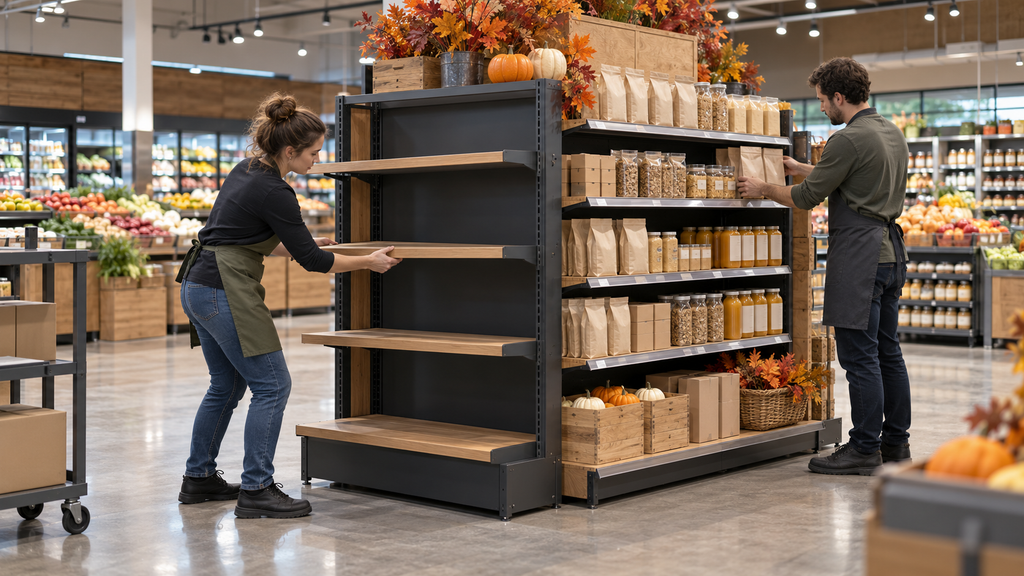
Modular fixtures are pre-built, reusable units you can reconfigure each season. Bespoke fixtures are custom-built for one campaign and then retired. Most mid-size retailers default to bespoke because it feels premium. But modular systems almost always win on speed, cost, and flexibility across multiple store formats.
Say your team needs to roll out a holiday retail display across thirty locations in two weeks. A modular system ships flat, assembles in under an hour, and reuses the same hardware next quarter. A custom build requires lead time, specialized labor, and a dumpster at season’s end.
Visual Merchandising Principles That Move Product
Effective visual merchandising planning starts with the shopper’s eye path, not the brand’s logo. Put your highest-margin item at eye level and use contrast to pull attention from the aisle. Keep the call to action (a price, a promo, a “grab one” sign) within arm’s reach of the product itself. Seasonal merchandising that buries the offer under decorative elements loses the sale before the shopper even stops walking.
Measure the display’s performance by tracking unit velocity, meaning how fast that product sells per day, before and after the display goes live. Without that before-and-after comparison, you can’t prove the display earned its floor space. That’s exactly the conversation the next section forces you to have.
How to Budget, Roll Out, and Measure ROI
A display that works as a silent salesperson still has to earn its floor space in dollars. Seasonal retail display planning fails most often not at the design stage, but at the budget and measurement stage. Teams spend freely on fixtures and graphics but track nothing after launch, and that gap is where margin disappears.
Retailers who win season after season treat every display as a financial bet with a clear payoff. Before you approve a single purchase order, write down the one number this display must move: units sold, basket size, or category lift. That decision forces every budget line to justify itself against a real outcome, not a mood board.
Calculating ROI Across Your Display Program
Start with total cost: fixtures, print, labor to build, and labor to replenish. Then set a target revenue the display must generate to cover that cost and return a margin you’d accept on any other investment. Know before launch what weekly unit velocity makes that number work, and check it every week the display is live.
Track display-level sales separately from baseline store sales. That is the only way to know whether the display drove the lift or the season did. Pull SKU-level sales from your POS for the display’s exact product mix. Compare that data to the same period last year, and flag any week where velocity drops.
A drop is your signal to restock, reposition, or pull the display early. Consistent display compliance tracking closes the gap between what you planned and what actually ran in stores.
Multi-Store Rollout and Vendor Briefing Essentials
A rollout across multiple locations fails when every store manager reads the plan differently. Send vendors and store teams a single one-page brief. It should cover placement zone, fixture assembly order, approved product mix, and a photo of the finished display. Attach a go-live date and a compliance photo deadline so you catch problems before peak traffic hits.
Stage your rollout by store volume. Get your highest-traffic locations live first, then use any execution issues you find there to fix the brief before lower-volume stores build theirs. This sequence turns your biggest stores into a live rehearsal and protects your visual merchandising planning investment across the whole chain.
A tight budget process and a staged rollout give you something most retail teams never have: real data ready before the calendar turns. You can carry those numbers directly into next season’s seasonal retail display planning and make sharper calls from day one. The question is whether you have a system to act on that data fast enough to matter.
Build a Smarter Seasonal Display Program
Once you have a single metric to track, your next move is building a calendar. That calendar must push every decision early enough to matter. Seasonal retail display planning fails most often not because teams lack creativity. It fails because they run out of time before they run out of ideas. A display approved two weeks before the holiday hits the floor late and gets stocked wrong. It never gets measured before it comes down.
Think of your planning calendar as working backward from the display’s first day on the floor. Say your team wants a Halloween display live by October 1. That means fixture orders go out in August, planogram sign-off happens in July, and the sales goal gets set in June. Visual merchandising planning done this way turns a creative project into a repeatable operational system.
Lock In Your Planning Calendar Before the Season Starts
Set four hard deadlines for every seasonal push: goal-setting, design approval, inventory confirmation, and display installation. Slippage in one stage compresses every stage that follows.
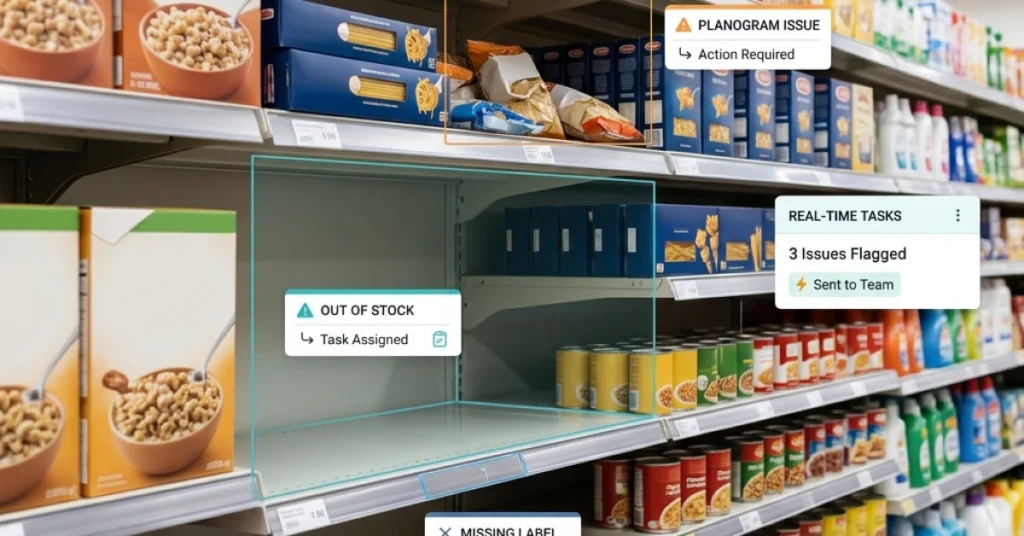
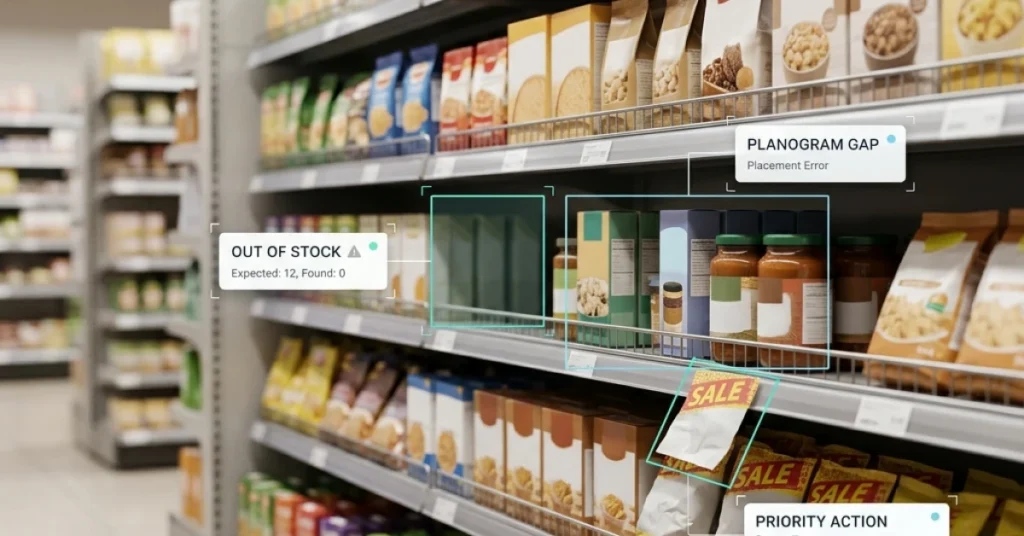
FieldPie’s audit and merchandising tools let field teams confirm display installation status in real time. A missed setup at one location won’t stay hidden until the season is half over. That kind of display compliance visibility closes the gap between what the planogram says and what actually sits on the floor.
Turn Each Season Into a Data Asset for the Next One
After the display comes down, hold a 30-minute debrief. Record what sold, what didn’t move, and what the team would change about the setup. That file becomes the starting point for next year’s seasonal merchandising plan, so you’re not rebuilding from zero every cycle.
The retailers who win consistently aren’t the most creative ones. They document everything and start earlier than anyone else. A program built on early deadlines, clear metrics, and honest post-season reviews compounds over time in a way that a last-minute creative sprint never can.
The only question left is whether the system you have right now is actually built to support it.
Conclusion
The retailers who consistently win at seasonal retail display planning are not the ones with the biggest creative budgets. They treat every display as a time-and-data problem. They start planning earlier than feels comfortable and measure results carefully enough to do better next season.
Say your team flopped a holiday display last December. The fix rarely lives in the creative brief. It lives in the planning calendar you built six weeks too late and the sell-through data you never pulled.
It also lives in the retail store digital twin tools that let you test layouts before a single fixture moves. Seasonal merchandising rewards the teams who build that feedback loop and repeat it, season after season.
Most display programs fail because teams run out of time before they run out of ideas. FieldPie’s AI-powered platform tracks field audits and merchandising execution across locations. Managers catch compliance gaps before a display goes live, not after.
FieldPie offers an AI-powered field operations platform built for businesses of every size. It handles scheduling, routing, audits, sales, merchandising, and team tracking, all from one mobile-friendly tool.