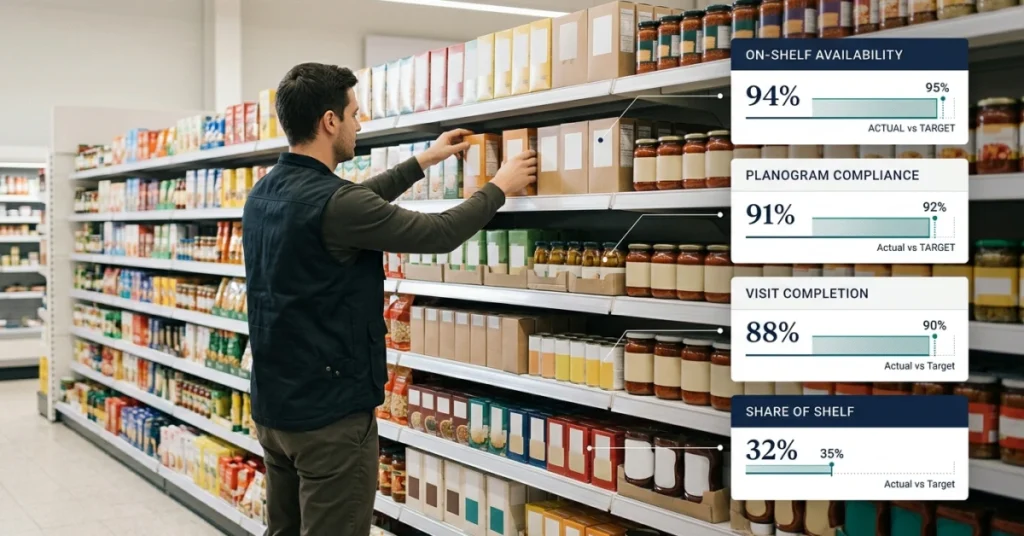



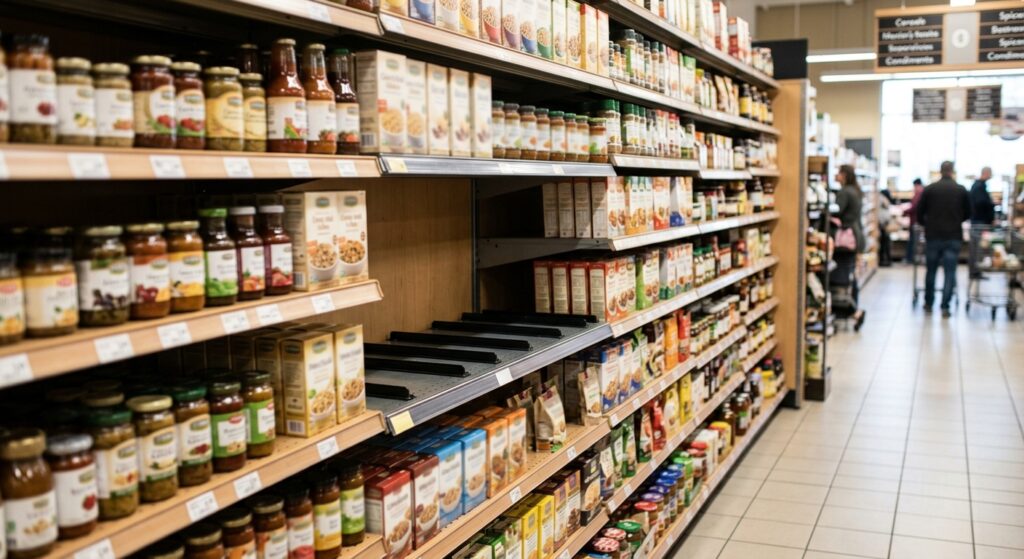
On-shelf availability (OSA) measures the percentage of SKUs that are physically present and purchasable on the retail shelf at any given moment. A product sitting in a back room or listed in a database but absent from the shelf counts as out-of-stock. Retailers with strong OSA programs consistently outperform competitors on revenue, customer retention, and replenishment efficiency.
What Is On-Shelf Availability — and Why Does It Belong in the Boardroom?
OSA is not a store-level housekeeping metric. It is a boardroom-level supply chain KPI. When a shopper cannot find a product, the consequences ripple across the entire value chain. According to research cited by SPS Commerce, 12% of consumers who encounter an out-of-stock event immediately switch to a competitor’s product, while 32% abandon the purchase entirely. That means nearly half of every stockout event translates to a direct, measurable revenue loss for the retailer and the supplier.
For CPG brands selling through major chains, including Walmart, the stakes are even higher. A single SKU gap across hundreds of Walmart stores can erase millions of dollars in weekly sales. Planning around OSA data is therefore not optional — it is a competitive necessity.
Why Do Traditional Methods Fail to Accurately Measure On-Shelf Availability?
Most retailers still rely on legacy measurement approaches that were designed for a slower, less complex retail environment. These methods generate lagging, incomplete data that makes effective replenishment and planning nearly impossible.
Manual Store Audits
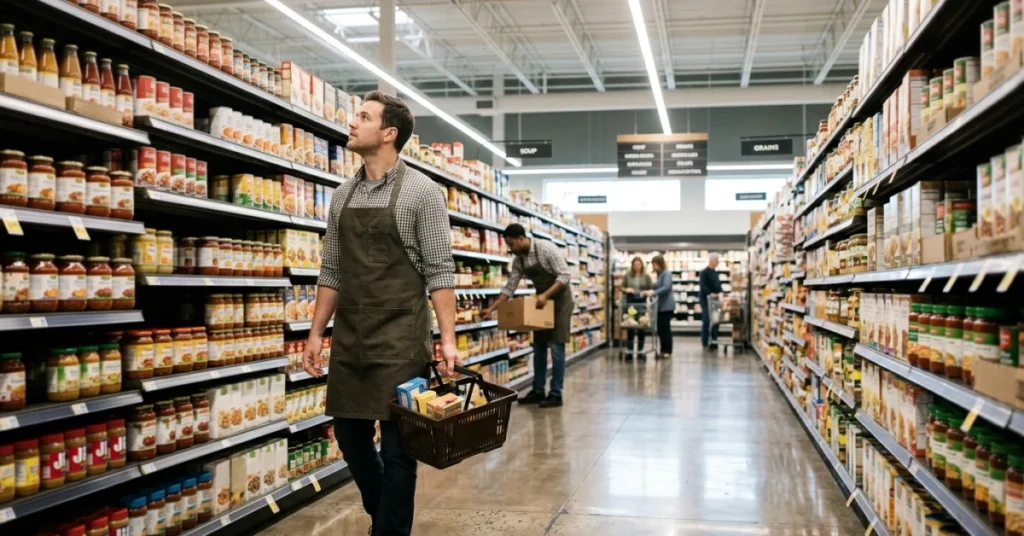
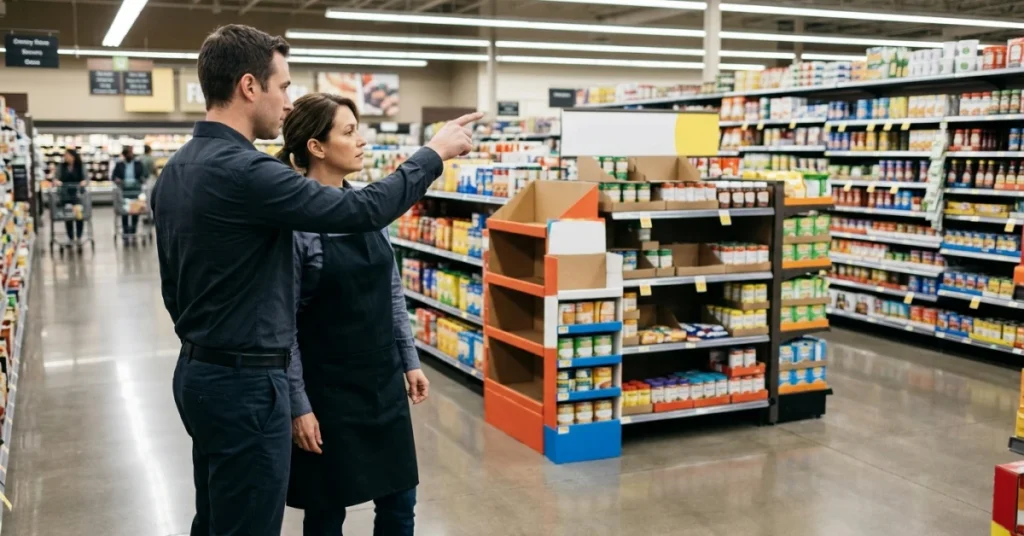
Physical store audits — where a team member walks the aisle and manually records empty facings — remain the most common OSA measurement tool. However, as SPS Commerce’s analysis of OSA measurement methods notes, manual audits are costly, highly vulnerable to human error, and cannot distinguish between a stockout caused by theft versus one caused by a genuine replenishment gap. RGIS, one of the largest inventory audit firms globally, has built an entire service line around solving this problem — but even RGIS-conducted audits deliver point-in-time snapshots, not continuous visibility.
POS-Based Sales Velocity Analysis
Analyzing point-of-sale data to infer stockouts (i.e., a SKU that stops selling mid-day likely ran out) is a smarter approach, but it only detects a gap after sales have already been lost. It also cannot differentiate between a shelf gap and a genuine demand lull.
Perpetual Inventory Systems
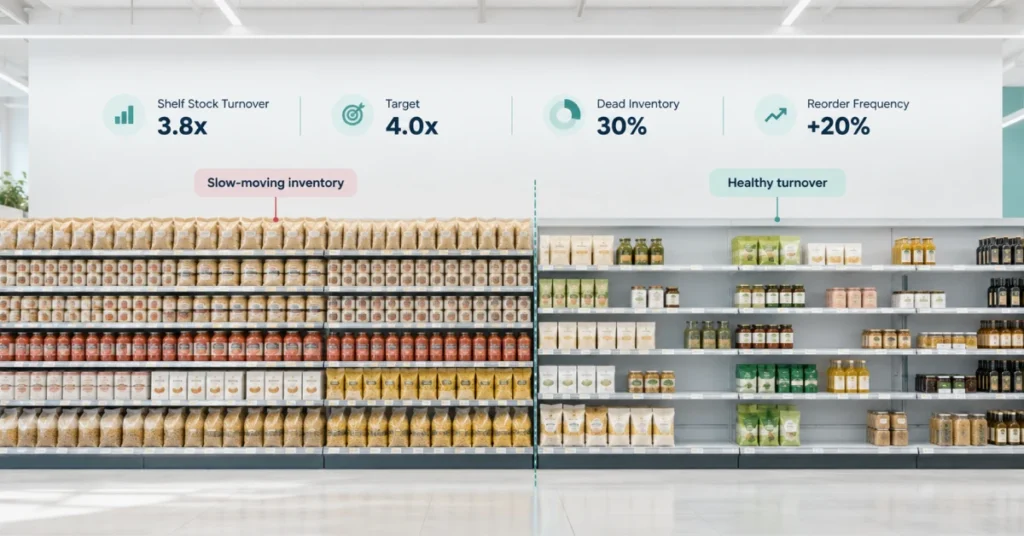
Perpetual inventory tracks stock movements in real time on paper, but phantom inventory — items that appear in the system as available but are physically missing or misplaced — routinely inflates OSA figures. RELEX Solutions estimates that phantom inventory is one of the leading causes of inaccurate OSA reporting, particularly in high-velocity grocery and FMCG environments.
How Do You Calculate the On-Shelf Availability Rate?
The standard OSA formula is straightforward:
OSA % = (Number of SKUs in stock on the shelf ÷ Total number of SKUs that should be on the shelf) × 100
For example, if a planogram calls for 200 active SKUs and a store audit finds 182 of them present and shoppable, the OSA rate is 91%.
Industry benchmarks vary by channel:
| Retail Channel | Target OSA Rate | Acceptable Threshold |
|---|---|---|
| Grocery / FMCG | 97–99% | 95% |
| Mass Merchandise (e.g., Walmart) | 95–98% | 93% |
| Convenience / Drug | 92–96% | 90% |
| Specialty Retail | 90–95% | 88% |
Any OSA rate below the acceptable threshold should trigger an immediate replenishment review and a root-cause audit of the gaps driving the shortfall.
What Are the Six Proven Methods to Measure On-Shelf Availability?
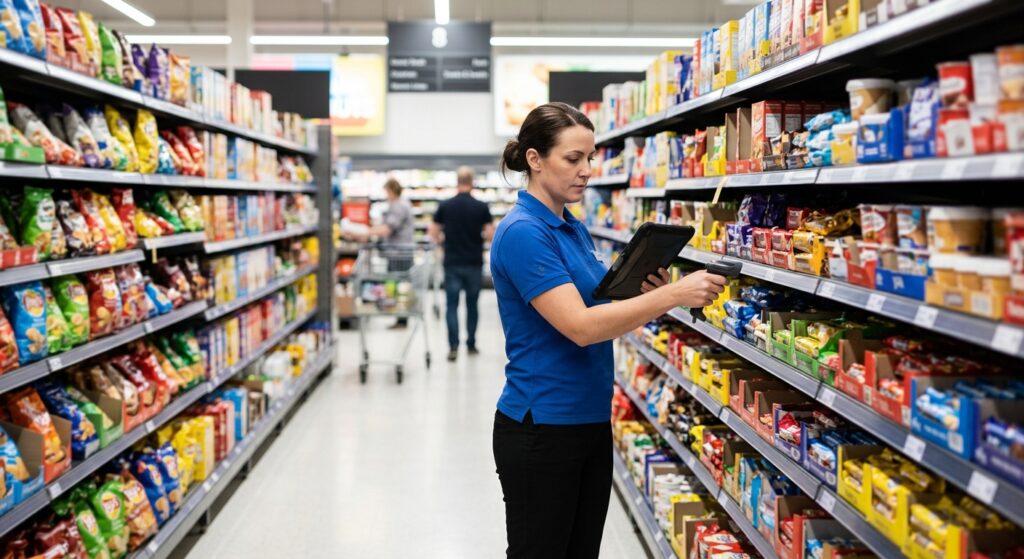
Understanding how to measure on-shelf availability requires evaluating both traditional and technology-driven approaches. Each method has distinct strengths, cost profiles, and data latency characteristics. Our analysis of the leading solutions covers six primary approaches.
1. Manual Shelf Audits
Trained field teams — often supplied by third-party firms like RGIS — walk store aisles on a scheduled basis, recording empty facings and shelf gaps against a planogram. These audits produce highly accurate point-in-time data and are particularly useful for compliance checks. The limitation is frequency: most retailers can only afford weekly or bi-weekly RGIS-style audits, leaving significant blind spots between visits.
Best for: Compliance audits, new store resets, planogram verification.
2. POS Data Analysis (Sales Velocity Monitoring)
By analyzing hourly or daily POS transaction data, retailers can flag SKUs whose sales velocity drops to zero during peak hours — a strong proxy signal for an out-of-stock event. This method is scalable and low-cost, but it only identifies gaps retroactively. For Walmart suppliers, Retail Link provides this data and many vendors use it as a baseline OSA monitoring tool.
Best for: High-volume SKUs, continuous monitoring at scale.
3. Perpetual Inventory Reconciliation
Comparing system-on-hand figures against expected sales curves helps identify phantom inventory situations. When the system shows stock but sales are zero, a shelf check is triggered. This approach works well when integrated with automated replenishment alerts, but requires clean, well-maintained inventory master data to be reliable.
Best for: DC-to-store replenishment planning, phantom inventory correction.
4. Computer Vision and AI-Powered Shelf Scanning
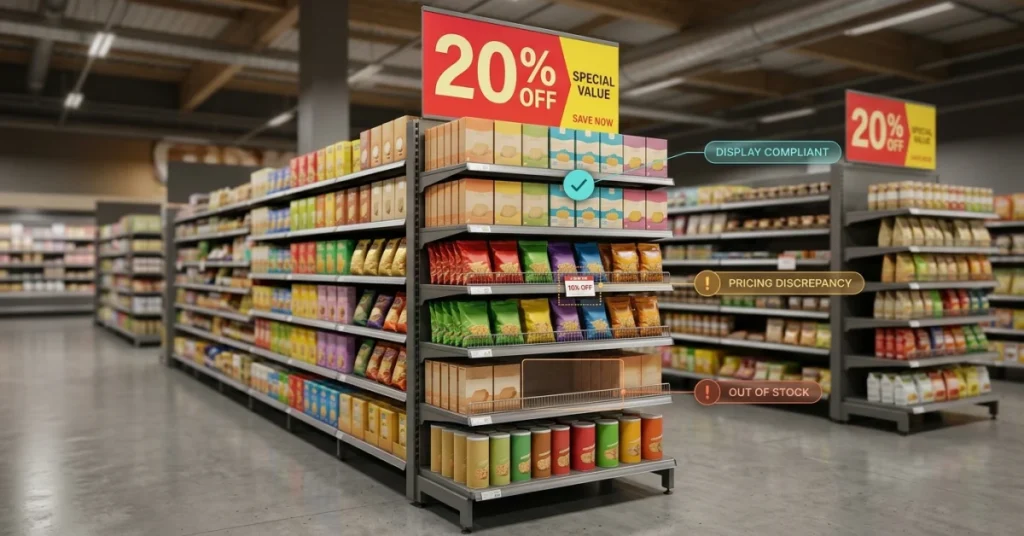
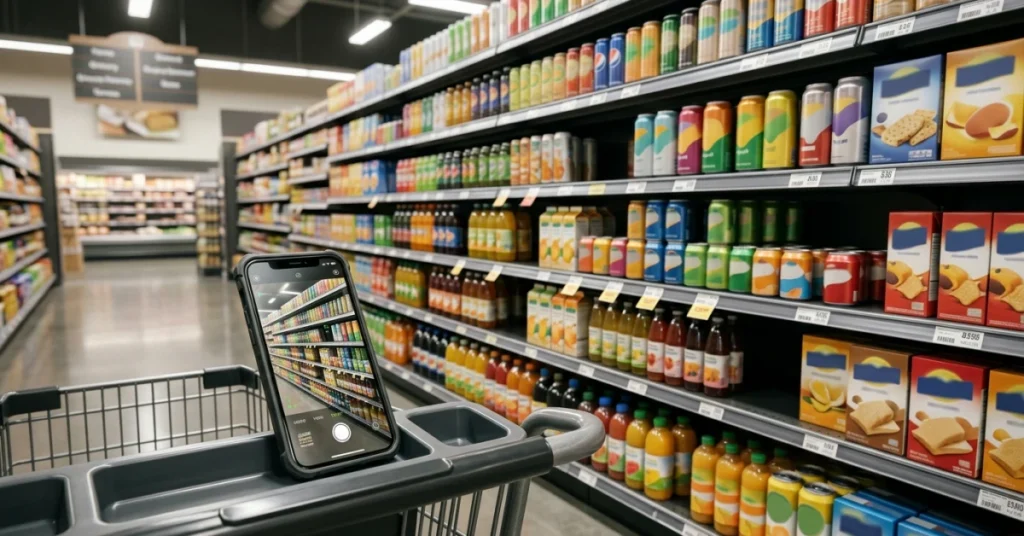
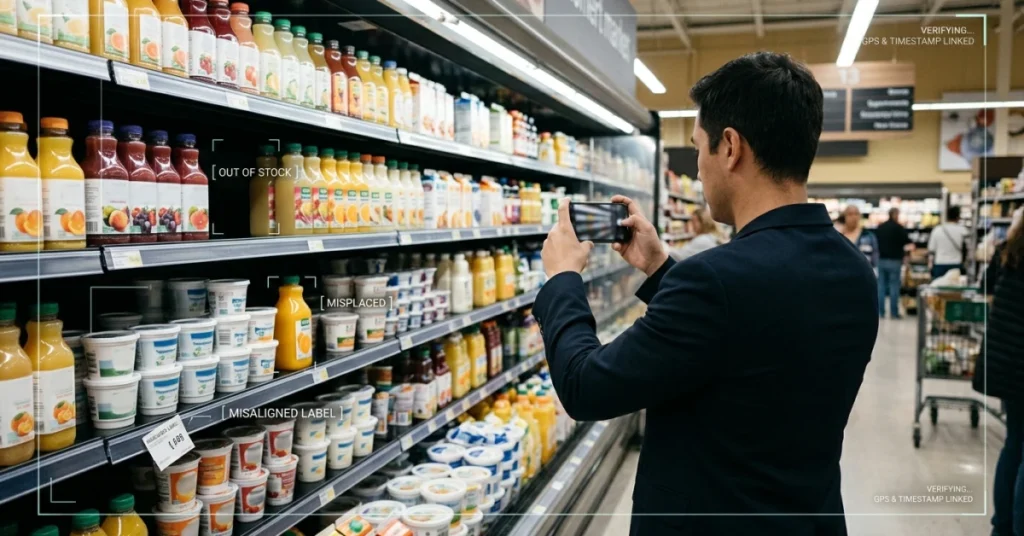
Image recognition technology — deployed via fixed cameras, shelf-scanning robots, or mobile apps used by store associates — can analyze shelf images in real time and automatically detect gaps, misplaced SKUs, and planogram violations. As Retail Insight’s OSA measurement research highlights, this approach delivers the highest-frequency, most actionable insights of any available method. Computer vision systems can process thousands of SKUs in minutes and push replenishment alerts directly to store associates’ devices.
Best for: High-SKU-count stores, grocery, promotional compliance.
5. RFID and IoT Shelf Sensors
Radio-frequency identification tags and smart shelf sensors provide continuous, item-level visibility without requiring manual scanning. When a product is removed from a shelf, the system logs the event. When the shelf weight or tag count drops below a threshold, a replenishment alert fires automatically. RFID is most cost-effective for high-value or high-velocity SKUs where the tag cost is justified by the revenue protection benefit.
Best for: High-value SKUs, pharmacy, electronics, premium FMCG.
6. Crowdsourced and Syndicated Audit Data
Platforms that aggregate data from mystery shoppers, brand ambassadors, or contracted field teams can provide broad geographic coverage at a lower cost than full-time field staff. These solutions deliver useful regional insights and planning benchmarks, but data freshness depends entirely on visit frequency and the reliability of the crowdsourced network.
Best for: Regional benchmarking, CPG brand tracking across multiple retail banners.

What Are the Root Causes of Poor On-Shelf Availability?
Before investing in measurement technology, teams need to understand what drives OSA gaps in the first place. Our breakdown of the most common root causes:
- Replenishment timing failures — Store associates replenish shelves on fixed schedules that don’t align with actual demand patterns.
- Phantom inventory — The system shows stock available, but the product is in the back room, damaged, or misplaced.
- Planogram non-compliance — Incorrect shelf layouts leave the wrong SKUs in the wrong positions, creating gaps in high-demand facings.
- Vendor lead time variability — Supplier delivery delays create downstream stockouts that even perfect in-store execution cannot prevent.
- Shrinkage and theft — Products removed without a sale transaction create invisible gaps in perpetual inventory systems.
- Demand forecasting errors — Inaccurate planning leads to insufficient stock allocation, particularly around promotions and seasonal events.
Understanding which root cause drives the majority of gaps in a specific store or category is essential for selecting the right measurement and remediation strategy. For teams managing complex store networks, an integrated store execution platform can help correlate audit findings with root cause data automatically.
Conclusion
On-shelf availability is no longer just an operational metric — it is a direct driver of revenue, customer loyalty, and retail execution performance. Retailers and CPG brands that rely on delayed audits or disconnected inventory systems struggle to react fast enough to prevent lost sales and shelf gaps.
The organizations leading retail in 2026 are building realtime OSA strategies powered by digital audits, computer vision, automated replenishment workflows, and store-level accountability. The goal is not simply to measure availability, but to create a continuous execution loop where issues are identified, verified, and resolved before they impact the customer experience.
As retail competition intensifies, the ability to maintain consistent shelf availability across every store, every SKU, and every day will increasingly separate high-performing retail networks from the rest.